

Try it in your pool for 30 days. Exchange it for another Dolphin for free, or return it with no restocking fee.
Your bag is empty.
By feature
Top pick: Dolphin Premier
$1949 today · Free shipping · 30 day trial
The short answer
All five Dolphins compared here climb walls, so the real questions are how high each one goes and what keeps it climbing month after month.
The Dolphin Premier leads: it climbs to the waterline, scrubs along it, and has the longest cycle here to spend on walls. The Dolphin Sigma brings three motors and four brushes at the highest price. The Dolphin Quantum is the lowest-priced pick that reaches the waterline. The Dolphin Escape climbs walls in above-ground and in-ground pools up to 33 ft and stops below the waterline.
A robotic pool cleaner with wall climbing is not hard to find. Every robot in this guide leaves the floor, drives up the wall and scrubs on the way. What separates them is where they turn around, and how well they keep climbing once the filter starts to fill.
Three of our picks, the Premier, Sigma and Quantum, go all the way to the waterline and scrub along it. The Escape and the Cayman scrub the floor and the walls and stop short of the waterline. For plenty of pools that is all the wall cleaning needed. For a tiled pool with a visible ring, it is not.
Our picks, in order
Temporarily out of stock
Most wall time per cycle
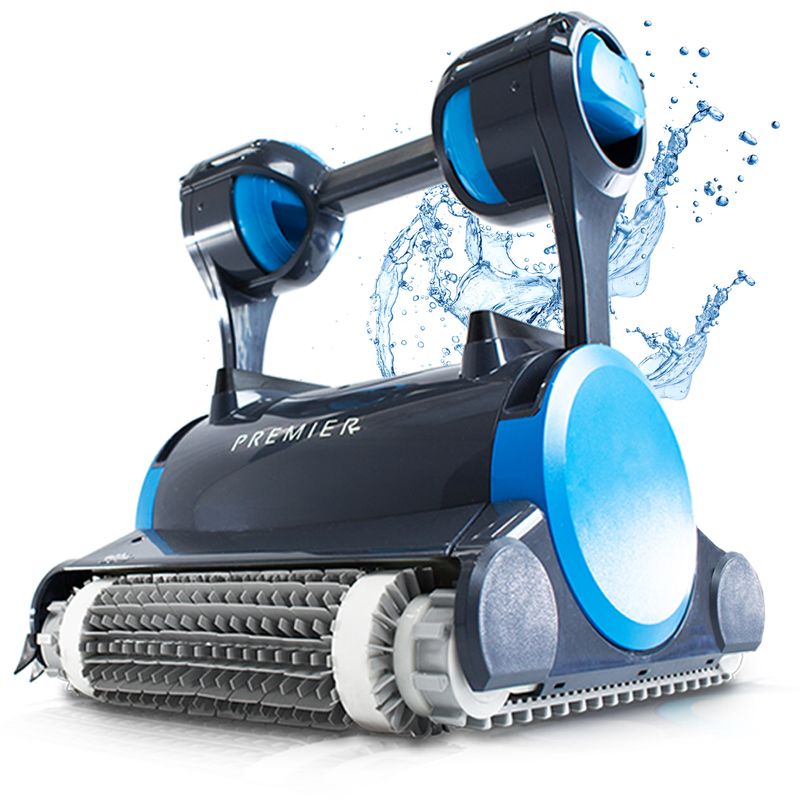
Coverage is floor, walls and waterline, the same as the Sigma. The Premier takes first place on what it spends on that coverage: a 3-hour cycle, longer than any other robot in this guide, so the walls get more passes before it ends. Dual commercial-grade ProLine motors move 4,500 GPH to hold it on the wall.
Its Multi-Media system helps the climbing too. Fit the oversized leaf bag when debris is heavy and flow stays open longer than it would through a fine filter packed with leaves. The 55 ft cable has a 360-degree swivel.
Temporarily out of stock
Strongest hardware on the wall
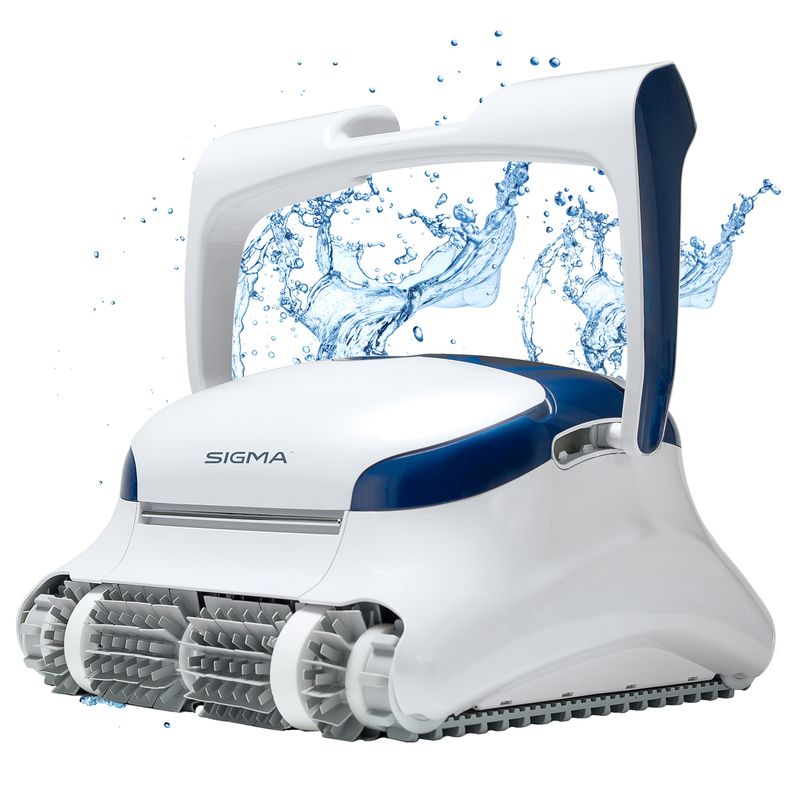
On paper the Sigma is the strongest climber here: three commercial-grade ProLine motors, four scrubbing brushes and SmartNav 3.0 navigation with an onboard gyroscope. It moves 4,500 GPH and cleans floor, walls and waterline on a 2.5-hour cycle.
Its app earns a mention on a page about climbing for one reason: the filter alert. The Sigma tells your phone when the cartridges need rinsing, and rinsing is the habit that keeps any robot on the wall. It is second because it is the highest-priced pick, and for wall coverage alone the Premier matches it for less.
Temporarily out of stock
Lowest price to the waterline
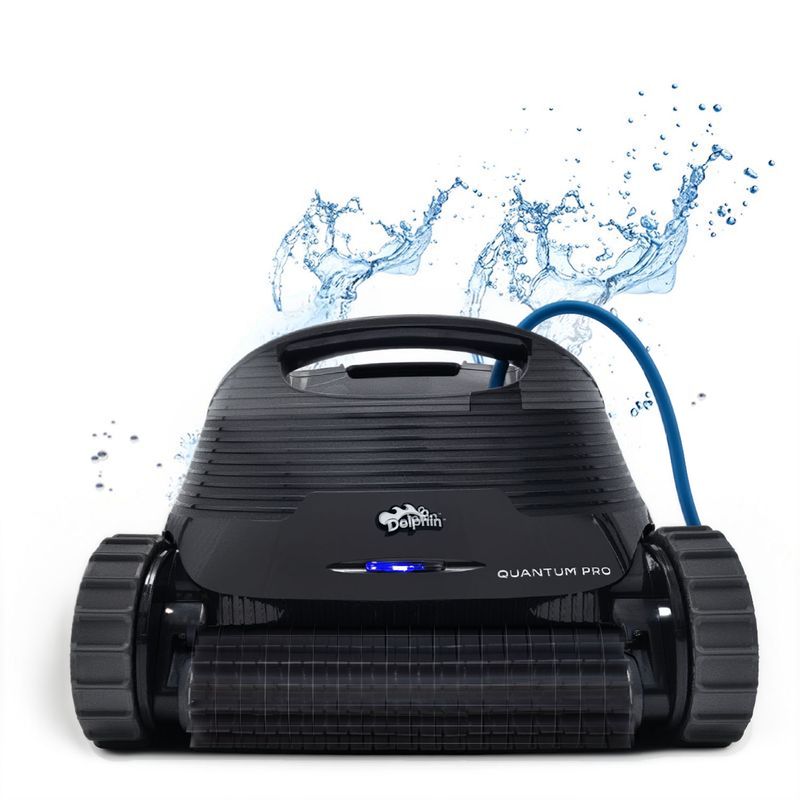
The Quantum is the lowest-priced robot here that climbs to the waterline. It does it with dual HyperBrushes spinning at twice the speed of standard brushes, continuous HyperGrip rubber tracks and 4,000 GPH from dual commercial-grade motors. At 18.3 lb it is the lightest of the three waterline climbers.
It is also the pick for walls that are not simple. The Quantum lists sun shelves, Baja ledges and stairs among the areas it cleans. Its XXL MaxBin, with over 400 square inches of filter area, takes longer to load up than a small filter, which helps it hold its grip through the 2-hour cycle.

Temporarily out of stock
Least robot that climbs your walls
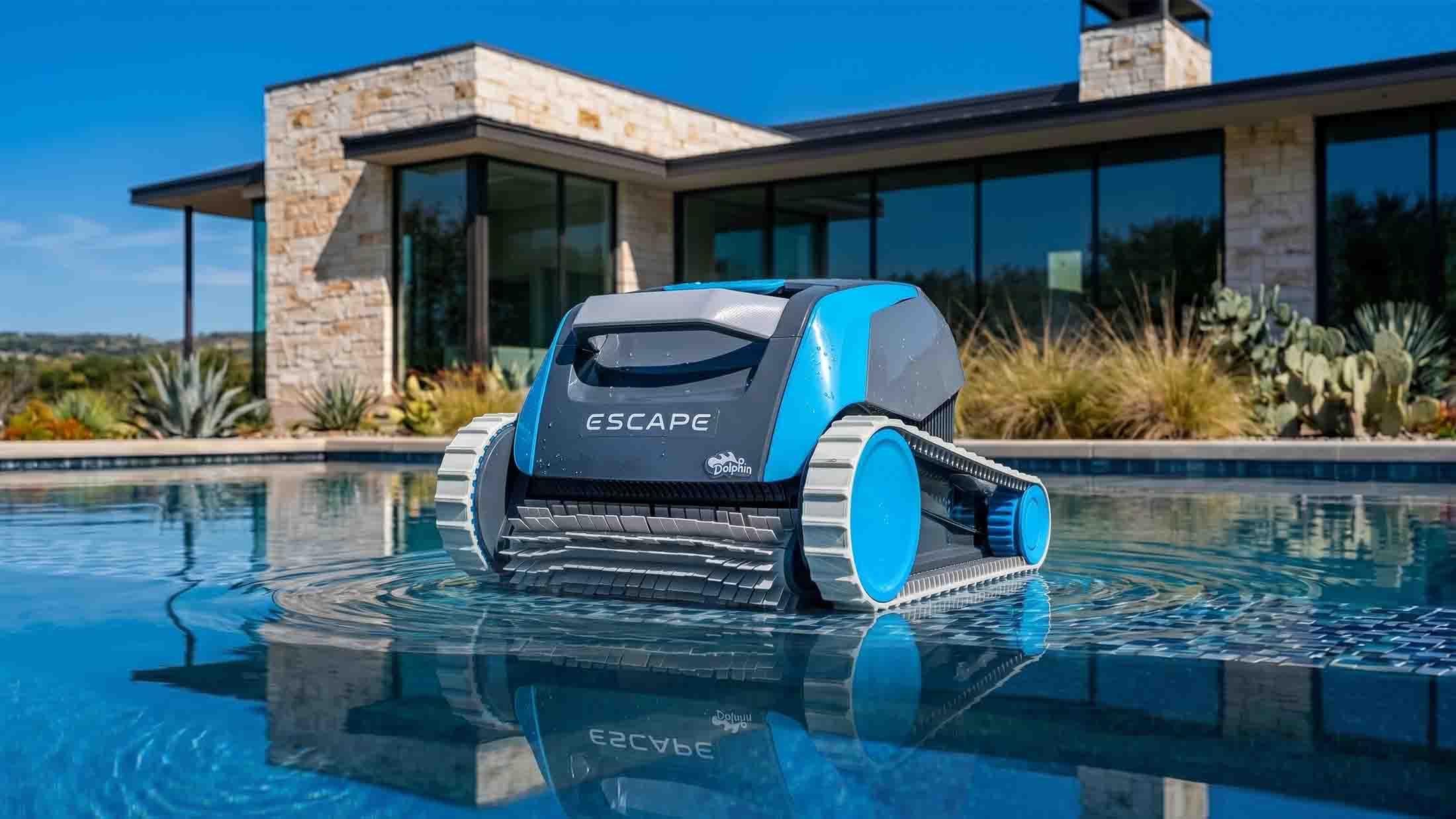
The Escape climbs with the same ingredients in a smaller package: HyperGrip tracks, one HyperBrush spinning at twice the speed of a standard Dolphin brush, and dual 24-volt DC motors moving over 4,000 GPH. It cleans the floor and walls and turns back short of the surface.
It is fourth on height, not on climbing. It is the only pick here rated for above-ground pools as well as in-ground, up to 33 ft, and at 14.2 lb it is the lightest robot in this guide. If the wall you need cleaned is a vinyl above-ground wall, this is the robot built for it, at the lowest price here.
How to judge a robot for this
A robot does not cling by friction alone. Its pump pulls water in underneath and pushes it out the top, and that flow presses the machine against the wall. That is why flow figures matter: 4,500 GPH on the Premier and Sigma, 4,000 on the Quantum, over 4,000 on the Escape.
The same flow has to pass through the filter. As the media loads up, flow drops and so does the robot's hold. A clogged filter is the number-one reason a healthy robot stops climbing. Fine media clogs soonest, so match the filter to the debris.
All five Dolphins compared here drive on HyperGrip tracks, which put a long strip of rubber against the wall. Brushes add contact as they scrub. Worn brushes and loose tracks lose that contact, and wall climbing is the first thing to suffer.
Plaster and pebble give tracks plenty to bite. Tile, fiberglass and vinyl are slicker, and a thin algae film makes any wall slippery. All four picks list tile, fiberglass and vinyl among their published surfaces, but none climbs well on a wall that feels slimy to your hand.
Side by side
| Specification | Dolphin Premier | Dolphin Sigma | Dolphin Quantum | Dolphin Escape |
|---|---|---|---|---|
| Price today | $1949 | $2349 | $1599 | $659 |
| Cleans | Floor, walls and waterline | Floor, walls and waterline | Floor, walls, waterline, sun shelves and stairs | Floor and walls |
| Scheduling | Weekly timer: every day, every 2 days or every 3 days | Weekly scheduler by day and time | Weekly timer: every day, every 2 days or every 3 days | Optional Automation Timer: every 24, 48 or 72 hours |
| App | No app; controls on the power supply | myDolphin Plus (Wi-Fi and Bluetooth) | myDolphin Plus (Wi-Fi) | No app |
| Filtration | Multi-Media: NanoFilters, oversized leaf bag and standard fine filters | NanoFilters and standard filter cartridges | XXL MaxBin basket with standard and NanoFilter panels | MaxBin basket; NanoFilter panels optional |
| Brushes | Dual scrubbing brushes | Quad scrubbing brushes | Dual HyperBrush | HyperBrush |
| Navigation | SmartNav 2.0 | SmartNav 3.0 with gyroscope | SmartNav 2.0 | SmartNav 2.0 |
| Cable | 55 ft with 360° anti-tangle swivel | 55 ft with 360° anti-tangle swivel | 55 ft with anti-tangle swivel | 40 ft |
| Warranty | 3 years | 3 years | 2 years | 2 years |
A robot that climbed well in May and turns back halfway in July usually has nothing wrong with it. Work through this list in order.
Picture the top of your wall. On a tiled in-ground pool, the band at the surface is what guests look at, and it is where oils and pollen collect. That pool wants a robot that scrubs the waterline.
On an above-ground pool the wall is a plain vinyl face, usually 48 to 54 inches tall. A floor-and-wall robot cleans it from the bottom up and turns back just under the surface. What is left is a narrow strip you can wipe with a soft brush. The mistake is paying for waterline reach on a pool with no waterline problem, or skipping it on a pool that plainly has one.
Wall climbing is not step climbing. Most robots do not clean top steps, benches or shallow ledges, and of these four picks only the Quantum lists stairs, sun shelves and Baja ledges among the areas it cleans. Everywhere else, brush those surfaces down to the floor by hand and let the next cycle collect what falls.
A loose or wrinkled liner is the other limit. It bunches under the tracks and stops the climb. Fix the liner, because a different robot will not help.
Questions, answered
Not every robot on the market does, which is why it is worth checking. All five Dolphins compared in this guide climb walls. The Premier, Sigma and Quantum go on to scrub the waterline. The Escape and Cayman clean the floor and walls and turn back below it.
Check the filter first. A robot holds itself to the wall with water flow, and a clogged filter chokes that flow. Empty it, rinse the media and run again. If that does not fix it, feel the walls for algae film and look for worn brushes.
Yes, if it is rated for one. The Escape is rated for above-ground pools up to 33 ft and cleans the floor and the vinyl walls on a 1.5-hour cycle. The Cayman is rated for them too. The Premier, Sigma and Quantum are in-ground robots and are not the right choice for an above-ground wall.
No. Fiberglass is on the published surface list for all four picks. It is smoother than plaster, so the margin is thinner: a half-full filter or a trace of algae shows up as a shorter climb sooner than it would on a rough wall. Keep both in check and a tracked robot handles fiberglass.
Not by itself. Climbing comes from flow, tracks and brushes, not weight. The Sigma is the heaviest pick at 24.6 lb and the Escape the lightest at 14.2 lb, and both climb. Weight matters more to you than to the wall: it is what you lift out to empty the filter.
The verdict
Decide how high the cleaning has to go, then buy the least robot that gets there. For the waterline on an in-ground pool, take the Premier first, the Sigma if four brushes and a filter alert are worth the top price, or the Quantum if the budget is tighter. For floor and walls only, or any above-ground pool, take the Escape. Whichever you choose, the filter decides how well it climbs in August.
Keep reading
