

Try it in your pool for 30 days. Exchange it for another Dolphin for free, or return it with no restocking fee.
Your bag is empty.
By feature
Top pick: Dolphin Premier
$1949 today · Free shipping · 30 day trial
The short answer
Suction in a pool robot is water flow through its filter, measured in gallons per hour. Here are the published numbers, and the reasons the biggest one is not the whole answer.
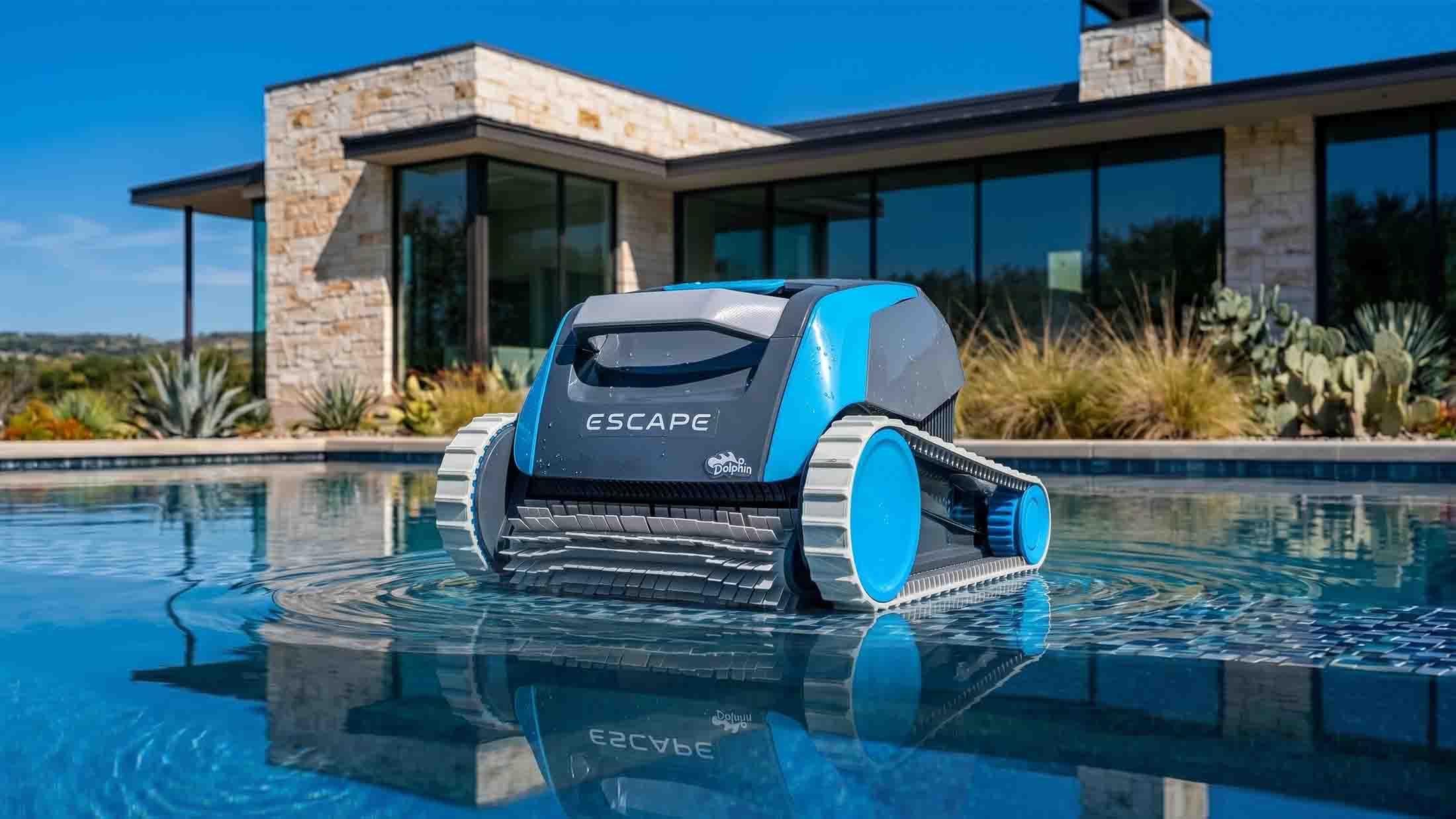
The Dolphin Premier leads on strong suction: 4,500 GPH from dual ProLine motors, with four filter media to keep that flow working. The Dolphin Sigma matches its 4,500 GPH at a higher price. The Dolphin Escape moves over 4,000 GPH for the lowest price here, enough for pools up to 33 ft. The Dolphin Quantum moves 4,000 GPH through the largest basket of the five.
A pool robot does not pull dirt toward itself from across the pool. It drives over the dirt, a brush knocks it loose, and a pump inside the robot draws water up through an intake and out through a filter. What people call suction is that water flow, published in gallons per hour, or GPH. More flow lifts heavier debris off the floor and keeps it moving into the filter.
So the best robotic pool cleaner with strong suction should be the one with the biggest GPH figure. Partly. Flow only counts while the filter is clean, and it only collects what the brush has freed and the intake can swallow. This guide gives the published numbers for five Dolphins, ranks four, and shows where an extra 500 GPH is worth paying for and where it is not.
Our picks, in order
Temporarily out of stock
Top published flow, with filters to match
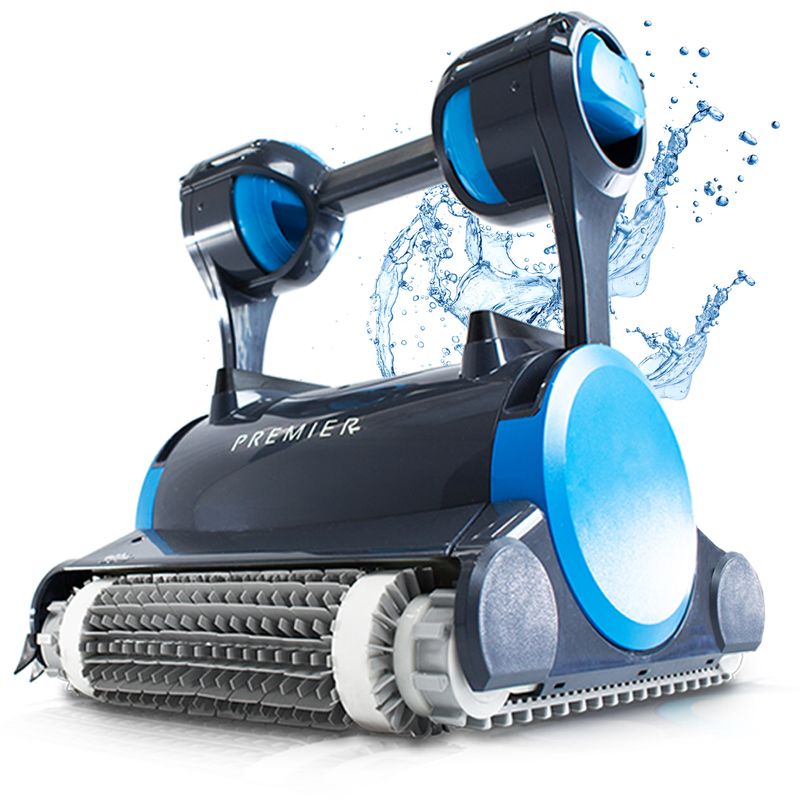
The Premier publishes 4,500 GPH from dual commercial-grade ProLine motors, tied for the highest figure in this guide. It leads because it does the most to keep that flow usable. Multi-Media filtration gives you four options: NanoFilters for silt and dust, an oversized leaf bag for a fall cleanup, standard fine filters for everyday use and optional disposable debris bags.
A full-filter indicator on the power supply shows when flow is being strangled. The filters load from the top with no tools, and it is priced below the Sigma.
Temporarily out of stock
The same 4,500 GPH from three motors
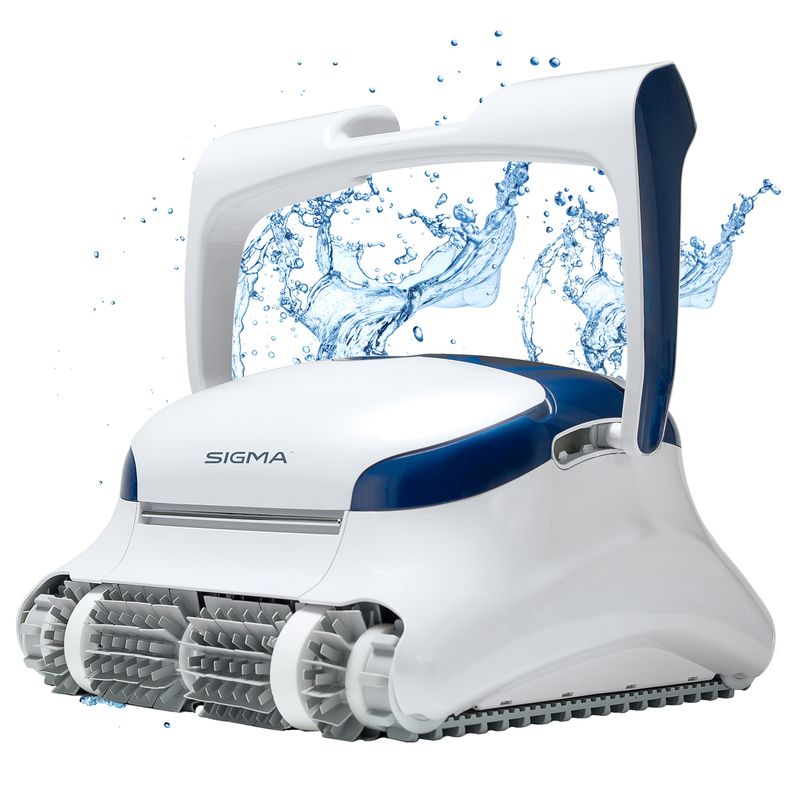
The Sigma also publishes 4,500 GPH, produced by three commercial-grade ProLine motors. On flow alone it ties the Premier. It sits second because it costs more, and what it adds is not suction: quad scrubbing brushes, SmartNav 3.0 with an onboard gyroscope and app control.
Two of those do help the suction do its job. Four brushes free more film for the flow to carry off, and the myDolphin Plus app sends a filter alert. NanoFilters, described as filtering down to 2 microns, and standard cartridges are both included.

Temporarily out of stock
Over 4,000 GPH at the lowest price here
The Escape publishes over 4,000 GPH from dual 24-volt DC motors. That puts the lowest-priced robot in this guide in the same flow class as the Quantum and within about an eighth of the two leaders. In a pool up to 33 ft, that is plenty.
It ranks third, ahead of a robot that costs more, because this page is about suction and the Escape gives up very little of it. A single HyperBrush loosens dirt for the intake, and the top-load MaxBin is 50% larger than standard Dolphin filters, which helps flow hold up through the 1.5-hour cycle.
Temporarily out of stock
4,000 GPH through the biggest basket
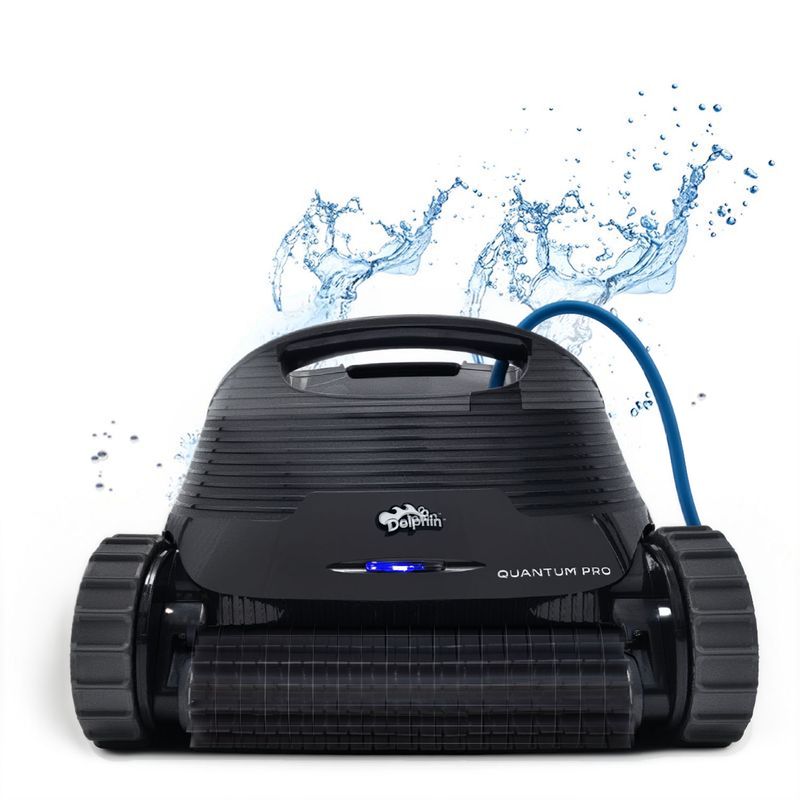
The Quantum publishes 4,000 GPH from dual commercial-grade motors, the lowest stated figure of the four picks, which is why it is last on a page about suction. The gap is smaller than it looks. Its XXL MaxBin has over 400 square inches of filter area, the largest basket of the five Dolphins compared here, and filter area is what keeps flow from sagging as debris piles up.
Standard panels and a full set of NanoFilter panels are included, the basket opens from the top with one click, and dual HyperBrushes feed the intake.
How to judge a robot for this
GPH is the volume of water the robot moves through its filter in an hour. The Premier and Sigma publish 4,500 GPH. The Quantum publishes 4,000. The Escape and Cayman publish over 4,000. Across the five, the top figure is about an eighth higher than the lowest.
A clogged filter can cut flow to a fraction of the rating. A 4,500 GPH robot with a packed filter moves less water than a 4,000 GPH robot with a clean one. How easily and how often you empty it counts as much as the number.
A bigger basket holds more before flow drops. Finer media catches smaller particles but loads up sooner. Robots that give you a coarse option for leaves and a fine one for dust keep their flow up across more kinds of mess.
Suction collects only what is loose and what fits. Brushes break film and packed dirt free. The intake opening decides whether an acorn or a wad of leaves goes in or gets pushed along. Neither shows up in a GPH figure.
Side by side
| Specification | Dolphin Premier | Dolphin Sigma | Dolphin Escape | Dolphin Quantum |
|---|---|---|---|---|
| Price today | $1949 | $2349 | $659 | $1599 |
| Cleans | Floor, walls and waterline | Floor, walls and waterline | Floor and walls | Floor, walls, waterline, sun shelves and stairs |
| Scheduling | Weekly timer: every day, every 2 days or every 3 days | Weekly scheduler by day and time | Optional Automation Timer: every 24, 48 or 72 hours | Weekly timer: every day, every 2 days or every 3 days |
| App | No app; controls on the power supply | myDolphin Plus (Wi-Fi and Bluetooth) | No app | myDolphin Plus (Wi-Fi) |
| Filtration | Multi-Media: NanoFilters, oversized leaf bag and standard fine filters | NanoFilters and standard filter cartridges | MaxBin basket; NanoFilter panels optional | XXL MaxBin basket with standard and NanoFilter panels |
| Brushes | Dual scrubbing brushes | Quad scrubbing brushes | HyperBrush | Dual HyperBrush |
| Navigation | SmartNav 2.0 | SmartNav 3.0 with gyroscope | SmartNav 2.0 | SmartNav 2.0 |
| Cable | 55 ft with 360° anti-tangle swivel | 55 ft with 360° anti-tangle swivel | 40 ft | 55 ft with anti-tangle swivel |
| Warranty | 3 years | 3 years | 2 years | 2 years |
A published GPH figure tells you what the robot's pump can move at its best. It does not tell you what the robot moves on day five of a windy week with a basket full of leaves. Treat it as a ceiling.
The five robots here range from 4,000 to 4,500 GPH, close enough that the filter decides more than the pump. And remember what the number leaves out: it says nothing about brush action, intake size or how much of the pool the robot covers.
When a robot that used to clean well starts leaving dirt behind, the pump is rarely the cause. Work through these first.
It will not reach debris the robot does not drive over. Coverage comes from navigation and cable reach, so a robot too small for the pool leaves dirt behind however hard it pulls.
It will not lift stains, scale or live algae. Those are bonded to the surface or growing on it, and they are a chemistry job. Take the robot out before you shock or add chemicals, whatever its rating, and send it back in afterward to collect what has settled.
Questions, answered
As water flow in gallons per hour: the volume the robot's pump moves through its filter. A robotic pool cleaner with strong suction has a high GPH figure, but the figure assumes a clean filter. The Premier and Sigma publish 4,500 GPH, the Quantum 4,000, and the Escape and Cayman over 4,000.
For a pool inside the robot's length rating, yes. Flow in that range lifts sand, leaves and ordinary debris off the floor and walls. What limits cleaning is usually a full filter, a missed area or debris too large for the intake, not a shortage of GPH.
Not by itself. Fine dust is a filter question. If the panels are too coarse, dust goes in the intake and straight back out, however strong the flow. NanoFilters are what hold it. They are included with the Premier, Sigma and Quantum, and they are an optional add-on for the Escape and Cayman.
No. The robot filters the water that passes through it while it cleans the floor and walls. The pool pump and main filter still circulate the whole body of water and spread sanitizer, and the skimmer still handles what floats. Keep the pump on its normal schedule.
Flow lifts them, but the intake and the basket decide. The Premier's oversized leaf bag and the Quantum's XXL MaxBin are the large-debris options here. The Escape's MaxBin is 50% larger than standard Dolphin filters. In a heavy fall, empty it more often.
The verdict
Pick the robot that fits the pool, then look at GPH. For an in-ground pool up to 50 ft with mixed debris, the Premier's 4,500 GPH and four filter media make the strongest case. Pay more for the Sigma only if you also want its brushes, gyroscope and app. If the pool is above-ground, or in-ground and within 33 ft, the Escape moves enough water and costs the least. Choose the Quantum when basket size matters more than the top number.
Keep reading
