

Try it in your pool for 30 days. Exchange it for another Dolphin for free, or return it with no restocking fee.
Your bag is empty.
By feature
Top pick: Dolphin Premier
$1949 today · Free shipping · 30 day trial
The short answer
Ultra-fine media holds the dust-sized debris that standard panels let through, at the cost of clogging sooner, so the right robot makes swapping easy.
The Dolphin Premier leads: NanoFilters, standard fine filters and an oversized leaf bag all come in the box and swap in seconds. The Dolphin Sigma includes NanoFilters described as filtering down to 2 microns. The Dolphin Quantum includes a full set of NanoFilter panels for its XXL MaxBin. The Dolphin Escape takes NanoFilter panels as an optional add-on.
The best robotic pool cleaner with ultra-fine filters is the one that makes fine filtration practical, not just possible. Fine media catches what makes water look tired: silt washed in by rain, pollen, dust, and the grey powder left after an algae treatment. It also clogs faster than anything else you can put in a robot.
So the question is not only which robot has the finest filter. It is which robot gives you fine media and coarse media, lets you change between them without tools, and has the flow to keep working as the fine media loads up. Three of our picks include ultra-fine filters in the box.
Our picks, in order
Temporarily out of stock
Fine, standard and leaf media in one box
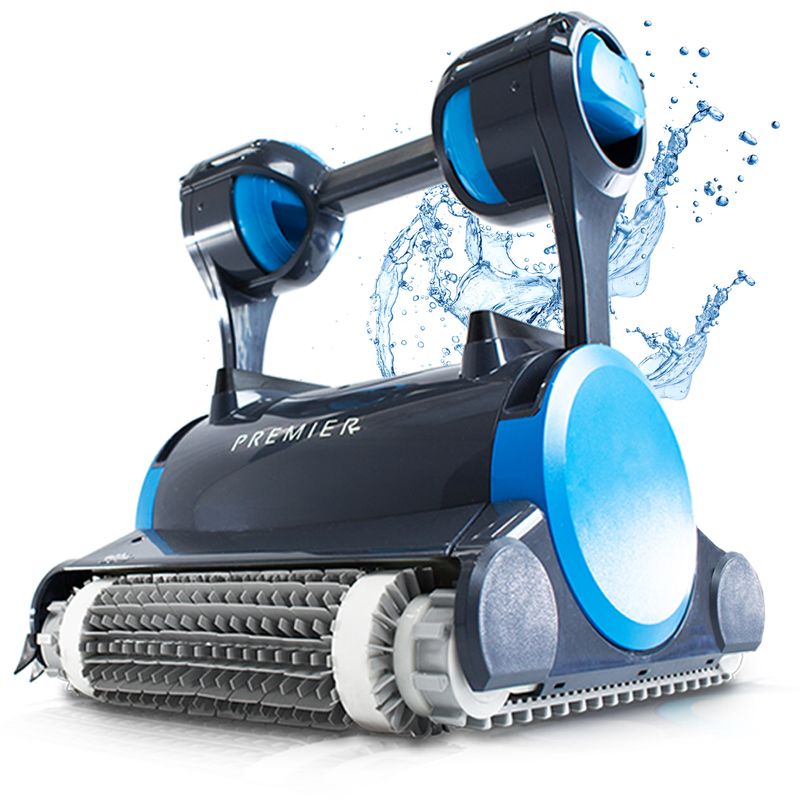
The Premier wins on choice. Its Multi-Media system includes NanoFilters for ultra-fine work, standard fine filters for everyday cycles and an oversized leaf bag for heavy debris. They swap in seconds through the top with no tools. That is the routine fine filtration needs: fine media when the water looks dull, coarse media when leaves fall.
It also has the stamina for it. Its two commercial-grade ProLine motors push 4,500 GPH through the media, and the 3-hour cycle gives dust stirred up by the dual brushes more time to pass through the filter. A full-filter indicator on the power supply takes the guesswork out of when to rinse.
Temporarily out of stock
Finest stated rating: down to 2 microns
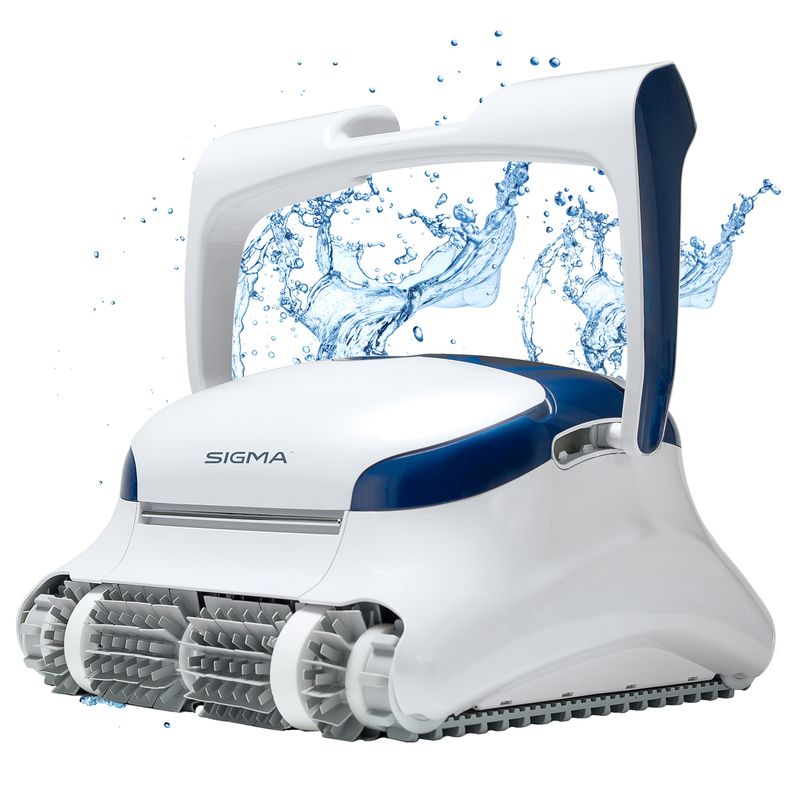
The Sigma is the only pick with a number attached to its fine media: its NanoFilters are described as filtering down to 2 microns. Standard filter cartridges are included as well, so you have a coarser option for heavier debris. Three ProLine motors move 4,500 GPH behind them.
The detail that suits ultra-fine use best is the filter alert in the myDolphin Plus app. Fine media clogs quickly and without looking full, and a robot that tells your phone when to rinse gets rinsed. It is second because its box holds no leaf bag, and because it carries the highest price in this guide.
Temporarily out of stock
Most filter area for fine panels
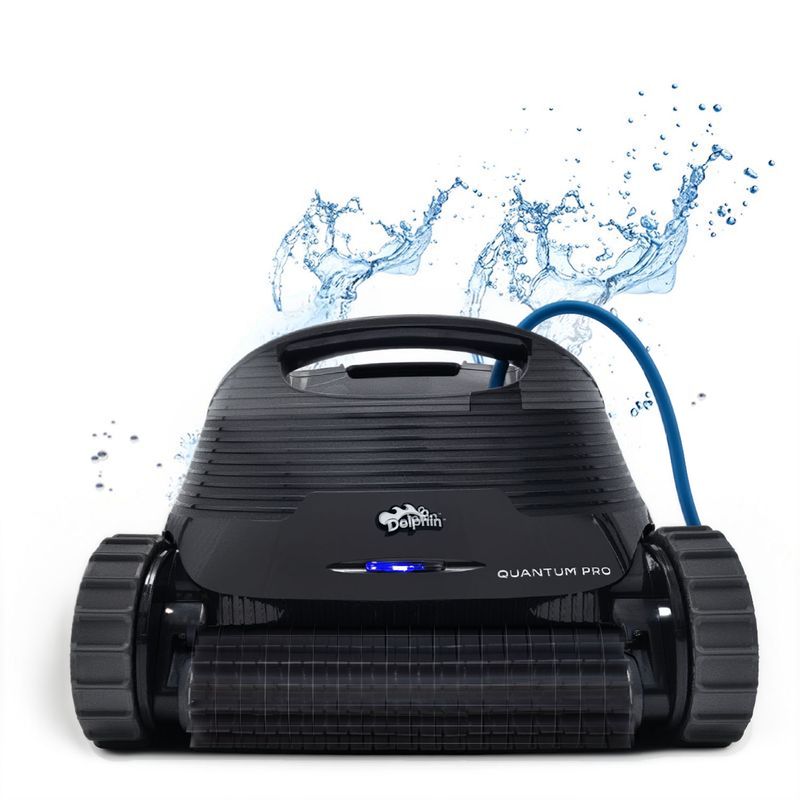
Fine media works best with room to spread, and the Quantum has the most of it: an XXL MaxBin with over 400 square inches of filter area, which no other basket in this guide matches. A full set of NanoFilter panels is included alongside the standard panels, and the basket opens from the top with one click.
Its dual HyperBrushes turn at twice the speed of standard brushes and lift settled dust off the surface. It is the lowest-priced pick here with ultra-fine filters in the box. It sits third because it runs the briefest cycle of the in-ground trio, 2 hours, and its motors move 4,000 GPH, not 4,500.

Temporarily out of stock
Ultra-fine as an add-on, lowest price
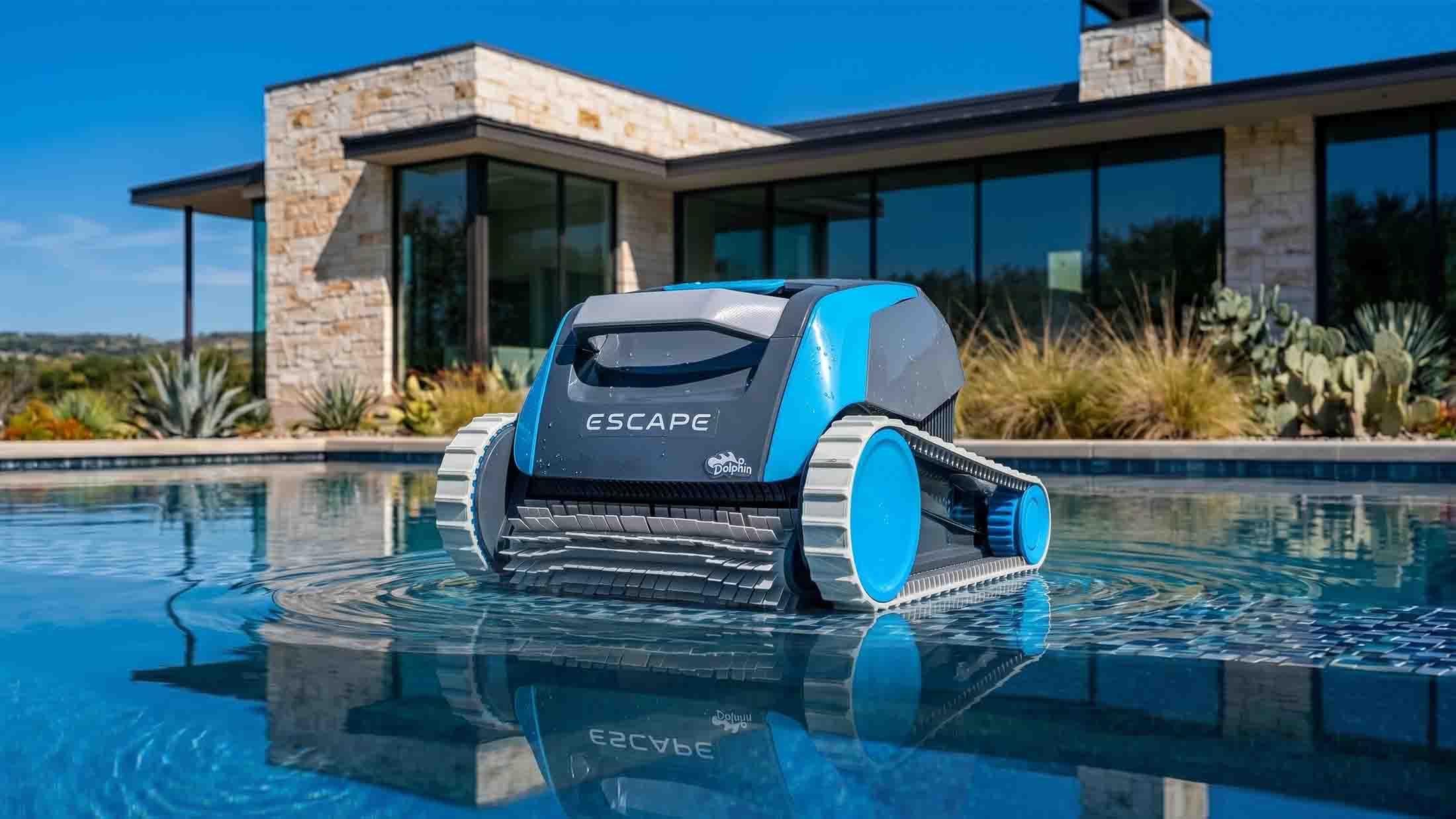
The Escape does not include ultra-fine filters. It ships with a MaxBin basket, 50% larger than standard Dolphin filters, and you add NanoFilter panels as an optional extra. They snap into the same top-load basket, so once you own them the swap is as quick as on any pick here.
That makes the Escape the least expensive way onto this page, and the only pick rated for an above-ground pool, where fine dust and pollen show against a light liner. Fourth is the honest place for it: the fine media costs extra, and the 1.5-hour cycle may need repeating on a very dusty pool.
How to judge a robot for this
Standard panels and cartridges stop sand, leaves and visible grit. Ultra-fine media goes after particles small enough to hang in the water and slip through a regular screen. Dolphin's version is the NanoFilter. Only the Sigma's are given a figure: described as filtering down to 2 microns.
Fine media and leaves do not mix. A handful of leaves blinds an ultra-fine surface quickly, and then the robot stops picking up anything. You need a coarser option in the box or on the shelf, and a quick way to swap.
The more surface the debris has to spread across, the longer a fine filter keeps flowing. A large basket or several cartridges buys time between rinses. That matters more with silt than with any other debris.
Pushing water through tight media takes pump power. The Premier and Sigma move 4,500 GPH, the Quantum 4,000 and the Escape over 4,000. Flow also keeps the robot pressed to the wall, so a blinded fine filter shows up first as a robot that stops climbing.
Side by side
| Specification | Dolphin Premier | Dolphin Sigma | Dolphin Quantum | Dolphin Escape |
|---|---|---|---|---|
| Price today | $1949 | $2349 | $1599 | $659 |
| Cleans | Floor, walls and waterline | Floor, walls and waterline | Floor, walls, waterline, sun shelves and stairs | Floor and walls |
| Scheduling | Weekly timer: every day, every 2 days or every 3 days | Weekly scheduler by day and time | Weekly timer: every day, every 2 days or every 3 days | Optional Automation Timer: every 24, 48 or 72 hours |
| App | No app; controls on the power supply | myDolphin Plus (Wi-Fi and Bluetooth) | myDolphin Plus (Wi-Fi) | No app |
| Filtration | Multi-Media: NanoFilters, oversized leaf bag and standard fine filters | NanoFilters and standard filter cartridges | XXL MaxBin basket with standard and NanoFilter panels | MaxBin basket; NanoFilter panels optional |
| Brushes | Dual scrubbing brushes | Quad scrubbing brushes | Dual HyperBrush | HyperBrush |
| Navigation | SmartNav 2.0 | SmartNav 3.0 with gyroscope | SmartNav 2.0 | SmartNav 2.0 |
| Cable | 55 ft with 360° anti-tangle swivel | 55 ft with 360° anti-tangle swivel | 55 ft with anti-tangle swivel | 40 ft |
| Warranty | 3 years | 3 years | 2 years | 2 years |
Ultra-fine media is for particles that settle slowly and puff up when you brush: silt after a storm, pollen in spring, wind-blown dust, and the pale residue on the floor after algae has been killed. Standard panels let much of that pass through and back into the pool. A fine filter holds it.
It does not fix water that is cloudy for other reasons. High pH, high calcium, a struggling pool filter or live algae all make water dull, and no robot filter touches those. A robot also filters only the water that passes through it, close to the floor and walls. Balance and sanitize first, then let the robot collect what drops out.
Treat ultra-fine filters as a tool you reach for, not a permanent fitting. A simple rule covers most pools.
Fine debris only reaches a robot once it is on the floor or the walls. If the pump is running hard, a share of it stays suspended and drifts past. For a fine-filter cycle, switch the pump off, give the water a few hours to go still, and then start the robot. Overnight is ideal.
Brush first if you can. Push dust off steps, benches and the shallow corners the robot does not reach, let it settle, and the next cycle picks it up from the floor.
Questions, answered
Only the part caused by fine debris that settles. If the cloudiness is silt, dust, pollen or dead algae, a robot with ultra-fine media collects it over one or more cycles. If it comes from water balance, a tired pool filter or live algae, the robot will not fix it. Sort the chemistry first.
Because it is doing its job. A filter that stops very small particles has very small openings, and they fill quickly, especially with dead algae or clay silt. That is normal. Rinse after every fine-media cycle, and use standard media when the debris is coarse.
Yes, with the Escape. It is rated for above-ground pools up to 33 ft and accepts optional NanoFilter panels in its MaxBin basket. The three robots that include ultra-fine filters in the box, the Premier, Sigma and Quantum, are in-ground robots and are not the right fit for an above-ground pool.
Yes, that is one of their best uses. Take the robot out while you shock. Once the algae is dead, the chlorine level is back to normal and the residue has settled, run the robot with fine media, rinse, and repeat. The robot removes the dead material. It does not kill algae or replace sanitizer.
It often helps most there. Sand is the coarsest of the three common pool filter types, so very fine silt can pass through and return to the pool. A robot with ultra-fine media takes that material out of circulation from the floor. It supplements the pool filter and does not replace running or backwashing it.
The verdict
Buy the robot that makes swapping easy, because ultra-fine media you never fit is worth nothing. The Premier gives the widest choice of media in the box. The Sigma gives the finest stated rating and a phone alert. The Quantum gives the most filter area for the least money among the in-ground picks. For an above-ground pool, or one that needs fine filtration only now and then, the Escape with optional NanoFilter panels is enough.
Keep reading
