

Try it in your pool for 30 days. Exchange it for another Dolphin for free, or return it with no restocking fee.
Your bag is empty.
By debris and dirt problem
Top pick: Dolphin Premier
$1949 today · Free shipping · 30 day trial
The short answer
The shock worked and the pool is blue again, but a grey-white dust covers the floor. Getting it out takes NanoFilter-class media and a patient routine.
For dead algae, the Dolphin Premier is our pick. Its included NanoFilters hold the grey dust that standard panels pass, and the power supply has a full-filter indicator that tells you when to rinse, which will be often. The Dolphin Sigma does the same job with phone alerts at a higher price. Whichever you use, wait until chlorine is back in the normal range before the robot goes in.
You shocked the pool, the green is gone, and the water has turned from swamp to cloudy blue. Then the dust appears: a grey-white or tan layer on the floor that billows up the moment a brush or a foot comes near it. That is dead algae. It looks like nothing much, and it is among the finest debris a pool ever holds. That fineness is the whole problem, and it is why the best robotic pool cleaner for dead algae is the one with the tightest filter media.
Standard panels pass much of the dust straight back into the water. Three robots here carry that media as standard: the Premier and Sigma with NanoFilters, and the Dolphin Quantum with NanoFilter panels. The Dolphin Cayman can do it once its optional NanoFilter panels are fitted. For a heavy layer, a robot is not the first tool at all.
Our picks, in order
Temporarily out of stock
Shows you when the dust has filled the filter
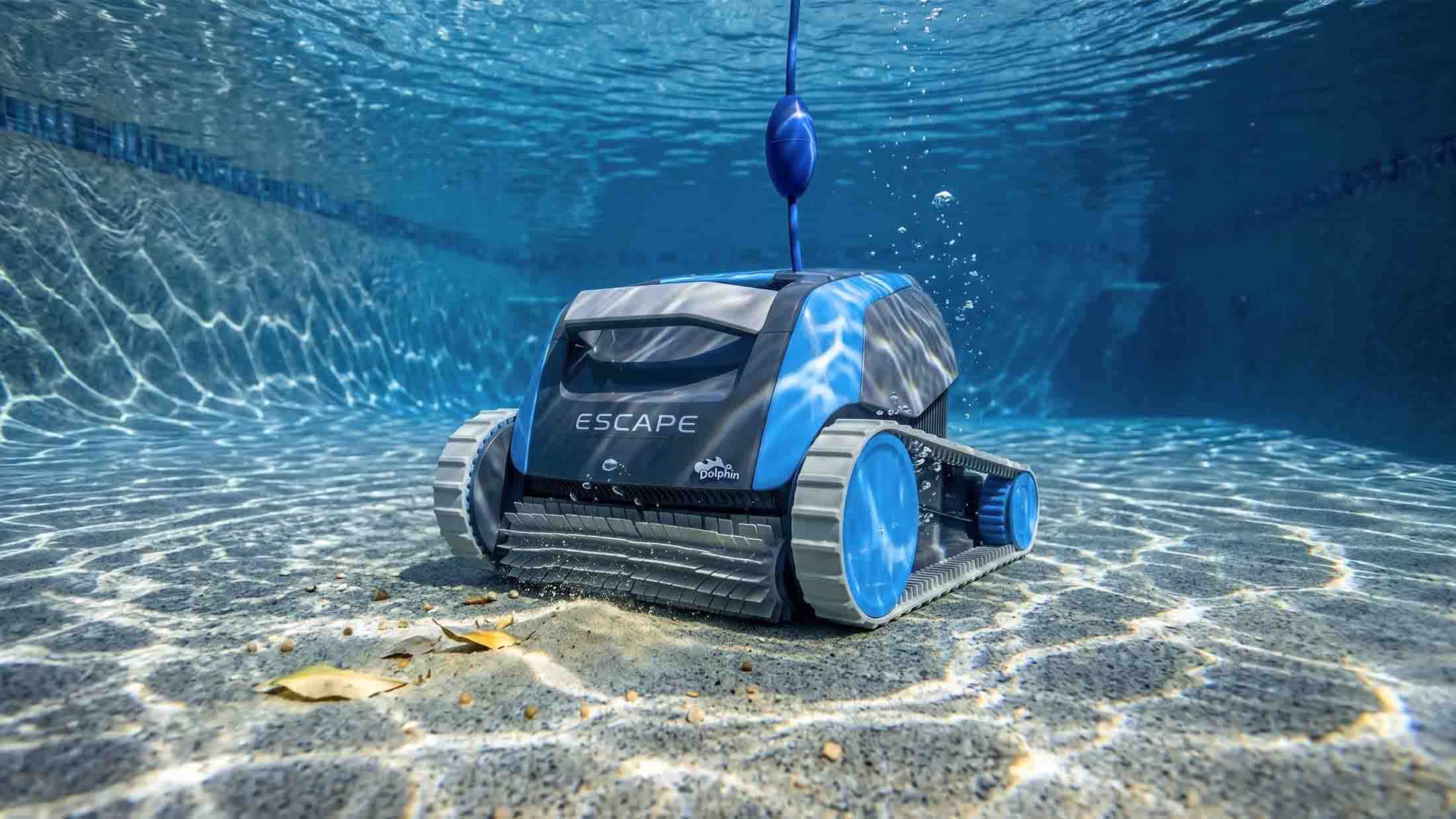
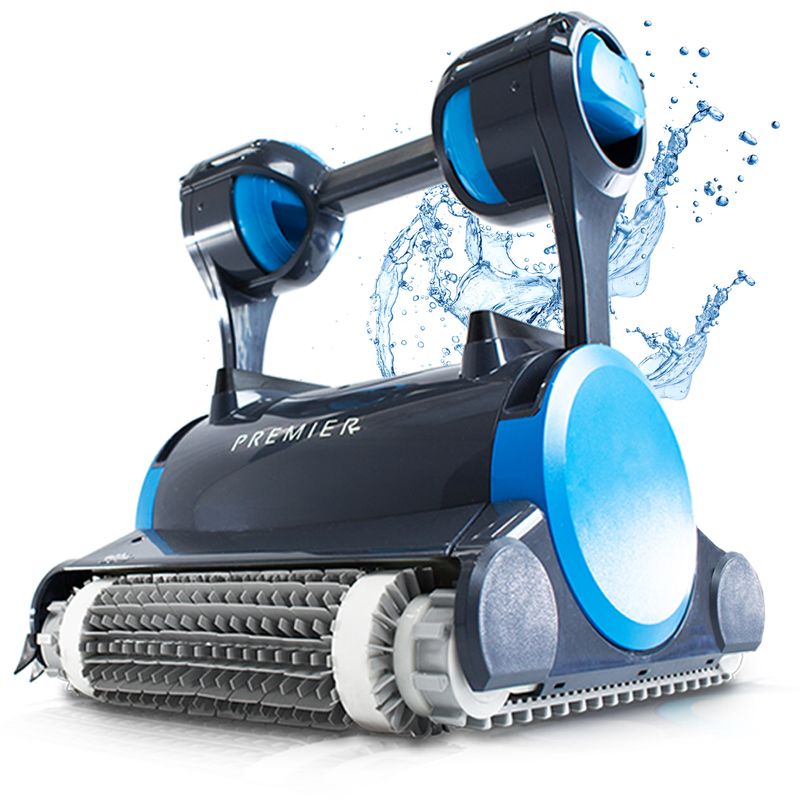
The Premier includes NanoFilters, the media this job needs, plus standard fine filters for a first pass if the layer is heavy. Everything loads from the top with no tools, so a mid-cycle rinse is quick. Dead algae packs a filter fast, and the power supply has a full-filter indicator: when it shows, pull the robot, rinse, and send it back.
Dual commercial-grade motors move 4,500 GPH, dual scrubbing brushes lift dust that has stuck to the walls, and the 3-hour cycle covers pools up to 50 ft. The weekly timer repeats the run on the days that follow.
Temporarily out of stock
Filter alerts on your phone during cleanup
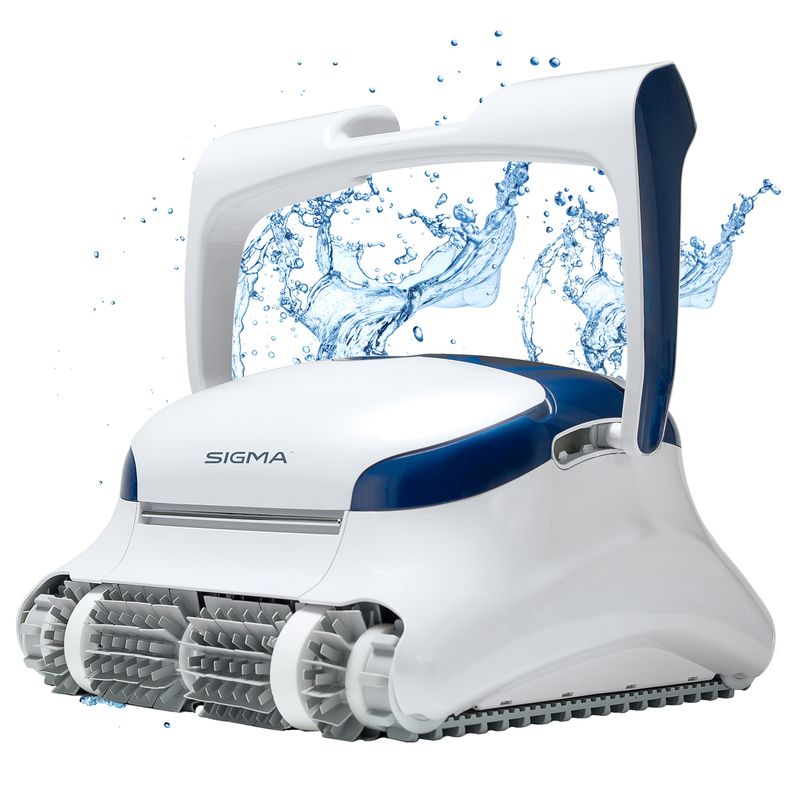
The Sigma also includes NanoFilters, and its myDolphin Plus app flags a loaded filter on your phone, so you are not guessing from the deck. Four scrubbing brushes help after a bloom: dead algae clings to walls and the waterline as well as the floor, and the Sigma scrubs all three.
Gyroscope-guided SmartNav 3.0 lays even lines across a uniformly dusty floor, and three commercial-grade motors move 4,500 GPH. It is second because it costs the most of the picks here for the same filtration result.
Temporarily out of stock
Fine panels included at the lowest in-ground price
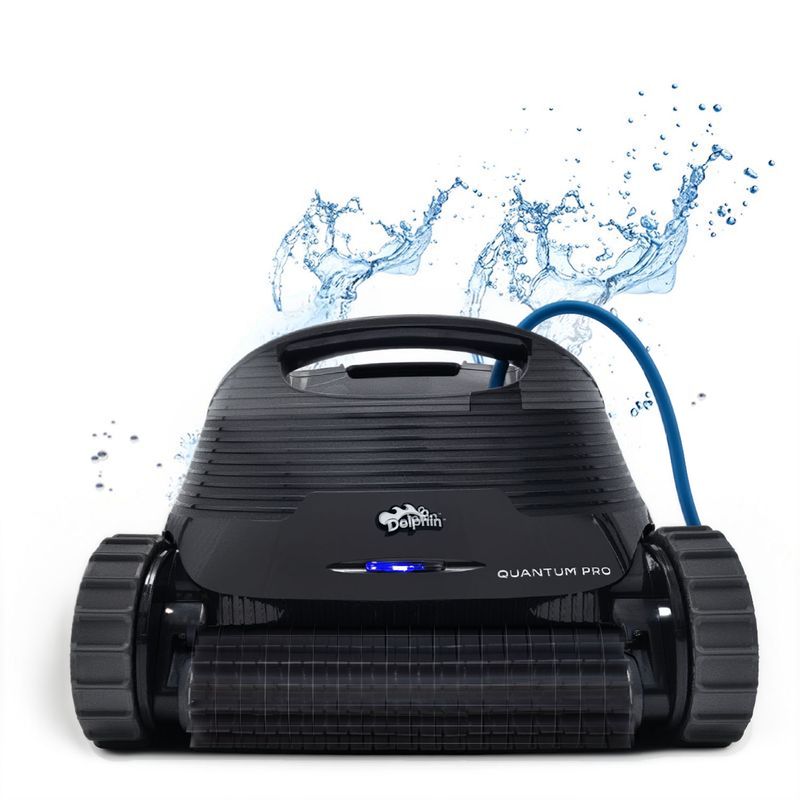
A full set of NanoFilter panels comes with the Quantum, so nothing extra is needed for dead algae. They sit in the XXL MaxBin basket. Its filter area, over 400 sq in, buys time before the dust blinds the media. The basket is top-load and opens in one click for rinsing.
The 2-hour cycle makes a run, a rinse and a second run practical in one day, and the app starts that second run from indoors. HyperBrushes clean stairs, sun shelves and Baja ledges too, where dead algae settles and most robots do not go.
Temporarily out of stock
Lower-cost option once NanoFilter panels are added
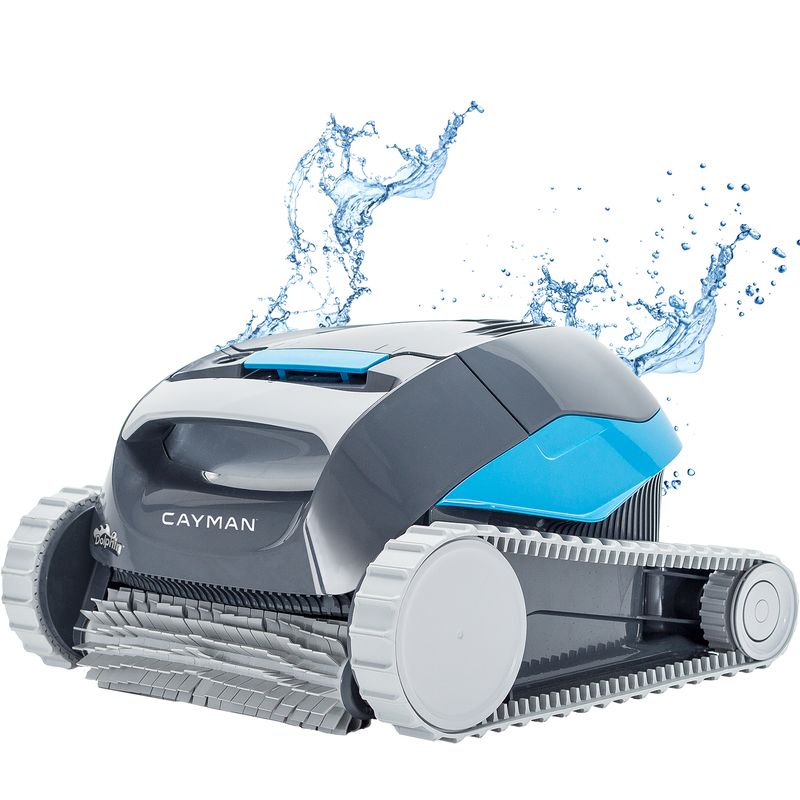
The Cayman is here with a condition. Its included fine panels pass much of this dust, so order the optional NanoFilter panels with it. Fitted with them, the MaxBin basket, 50% larger than standard Dolphin filters, holds dead algae, and the top hatch empties with one tab for the repeated rinses this job takes.
Its dual 24-volt DC motors pull over 4,000 GPH, a HyperBrush scrubs floor and walls, and the power-supply timer starts a cycle daily, which suits a cleanup spread across a week. It works in above-ground and in-ground pools up to 33 ft.
How to judge a robot for this
Dead algae is as fine as pool debris gets. Standard panels, and even fine ones, let much of it through. It takes NanoFilters or NanoFilter panels to hold it. Without them the robot recirculates the dust instead of removing it.
This dust blinds a fine filter fast, sometimes well inside one cycle. Once flow drops, the robot stops collecting and starts stirring. An indicator light or a phone alert tells you when to pull it. Otherwise, check by hand part-way through.
Expect to rinse the filter several times before the floor is clear. Media that comes out of the top without tools and opens up for a hose makes each round quicker, and makes it more likely you will do the next one.
A dusty floor shows every missed strip. Orderly navigation and a full-length cycle leave fewer stripes behind, which means fewer repeat runs and less of the dust kicked back into suspension.
Side by side
| Specification | Dolphin Premier | Dolphin Sigma | Dolphin Quantum | Dolphin Cayman |
|---|---|---|---|---|
| Price today | $1949 | $2349 | $1599 | $1049 |
| Filtration | Multi-Media: NanoFilters, oversized leaf bag and standard fine filters | NanoFilters and standard filter cartridges | XXL MaxBin basket with standard and NanoFilter panels | MaxBin basket with fine panels; NanoFilter panels optional |
| Filter access | Top-load, no tools | Cartridges | Top-load, one-click open | Top hatch, one-tab emptying |
| Brushes | Dual scrubbing brushes | Quad scrubbing brushes | Dual HyperBrush | HyperBrush |
| Flow rate | 4,500 GPH | 4,500 GPH | 4,000 GPH | Over 4,000 GPH |
| Cycle time | 3 hours | 2.5 hours | 2 hours | 2 hours |
| Cleans | Floor, walls and waterline | Floor, walls and waterline | Floor, walls, waterline, sun shelves and stairs | Floor and walls |
| Scheduling | Weekly timer: every day, every 2 days or every 3 days | Weekly scheduler by day and time | Weekly timer: every day, every 2 days or every 3 days | Timer: every day |
| Warranty | 3 years | 3 years | 2 years | 2 years |
Dead algae is grey, white or tan, never green, and it has no grip: it lifts in a cloud at the lightest touch. If the dust has a green or yellow tint, or it reappears in the same patches, the treatment is not finished, and collecting it will not stop it coming back. Check that chlorine holds overnight instead of dropping sharply. When it holds and the water is clearing, the algae is dead and what remains is a cleanup job. That is the point where a robot becomes useful.
The method is simple and slow.
If the layer is thick enough to hide the floor, start without the robot. Vacuuming to waste sends the dust out of the pool through the filter valve's waste setting, bypassing the filter entirely. It is faster for a heavy load, and it saves your robot's filter a long series of rinses. The costs are water, which you will need to replace and rebalance, and equipment: you need a multiport valve with a waste position, which most sand and DE filters have and many cartridge filters do not. Afterward, a robot with fine media collects the film that is left.
Questions, answered
When chlorine has returned to the normal range, not before. Shock-level chlorine can be hard on a robot, and the manual gives the limits. In practice that often means waiting a day or more after the last dose. Test the water instead of guessing.
Because the particles are so fine that any disturbance lifts them, and a filter that is too coarse sends them straight back out. Use the finest media you have, move slowly, and let the pool settle between passes. A cloud after the first pass is normal.
After a shock treatment, grey-white or tan dust that billows when touched is almost certainly dead algae. Without a recent treatment, the same look can be silt, dust or pollen. The cleanup is the same either way: ultra-fine filtration and still water.
Only the part that stays suspended. The pool filter cannot reach what has settled on the floor, and sand filters let the finest particles pass. Something has to lift the settled dust: a robot with fine media, a manual vacuum, or vacuuming to waste.
For dead algae, yes. The fine panels that come with the Cayman pass much of the dust back into the water. The optional NanoFilter panels go in the same MaxBin basket and are the simplest fix. Keep the standard panels for everyday leaves and dirt.
The verdict
Dead algae is a filter problem with a short life. If you own a robot with NanoFilters or NanoFilter panels, use it: let the dust settle, collect it, rinse the filter, and go again. If you are choosing one, the Premier is our pick for in-ground pools, the Sigma adds phone alerts, and the Quantum includes fine panels for less. For pools up to 33 ft, a Cayman with the optional panels will do it. If the floor is buried, vacuum to waste first and let the robot finish.
Keep reading
