

Try it in your pool for 30 days. Exchange it for another Dolphin for free, or return it with no restocking fee.
Your bag is empty.
By pool surface
Top pick: Dolphin Premier
$1949 today · Free shipping · 30 day trial
The short answer
Plaster starts smooth, sheds dust, grows a scale line and roughens with age. Each stage asks something different of a robot, and one stage asks you to wait.
Choose the Dolphin Premier: it includes NanoFilters for plaster dust alongside standard filters and a leaf bag, scrubs the waterline where scale forms, and carries a 3-year warranty. The Dolphin Sigma adds quad brushes and an app for more money. The Dolphin Quantum is the lower-priced 50 ft option with NanoFilter panels included. For plaster pools of 33 ft or less, the Dolphin Cayman is enough.
Plaster is the most common finish on in-ground concrete pools: white marcite, colored plaster or a quartz blend. Fresh from the trowel it is smooth. Over the years water chemistry etches it, scale roughens it, and a surface that once felt like an eggshell starts to feel like fine sandpaper. A robot has to cope with whichever plaster you have.
Two things set plaster apart. It makes dust, a pale powder that standard filters pass straight through, so the best robotic pool cleaner for plaster pools is one with ultra-fine filtration. And it must be left alone when new. Do not run any robot during the builder's start-up period. Follow your builder, who will typically say about four weeks.
Our picks, in order
Temporarily out of stock
Most complete filter kit for plaster dust
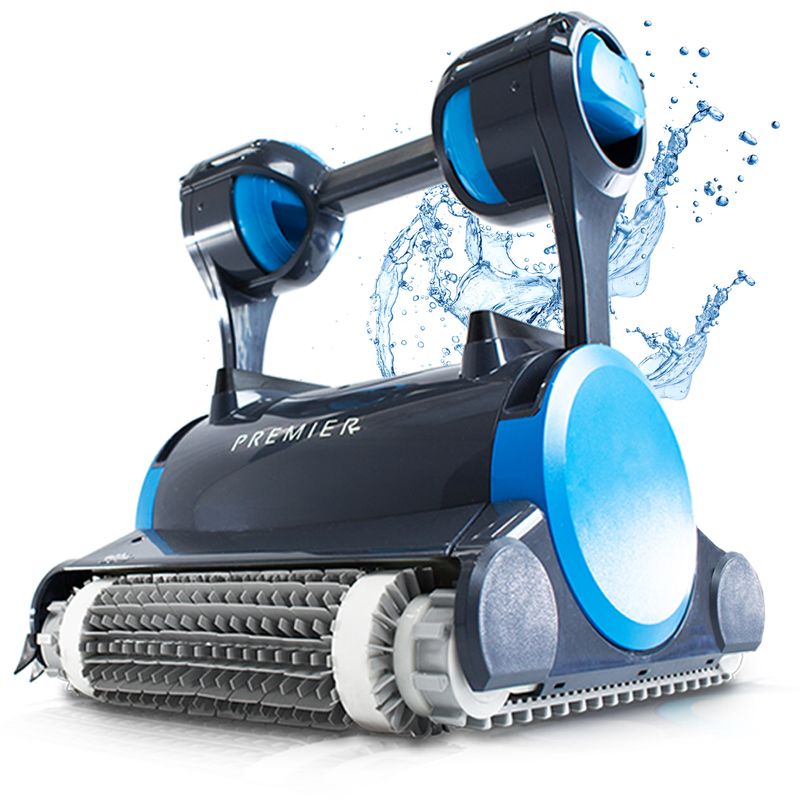
Plaster's problem is dust, and the Premier answers it out of the box. Its Multi-Media system includes NanoFilters for the fine powder, standard fine filters for ordinary dirt and an oversized leaf bag, and you swap between them in seconds from the top, without tools. Use the NanoFilters when the water is hazy, then return to the standard set.
It scrubs the waterline with dual brushes on every cycle, runs for 3 hours, and has a full-filter indicator on the power supply. The 3-year warranty is a comfort on a finish that will only get rougher.
Temporarily out of stock
Four brushes for scale and aged plaster
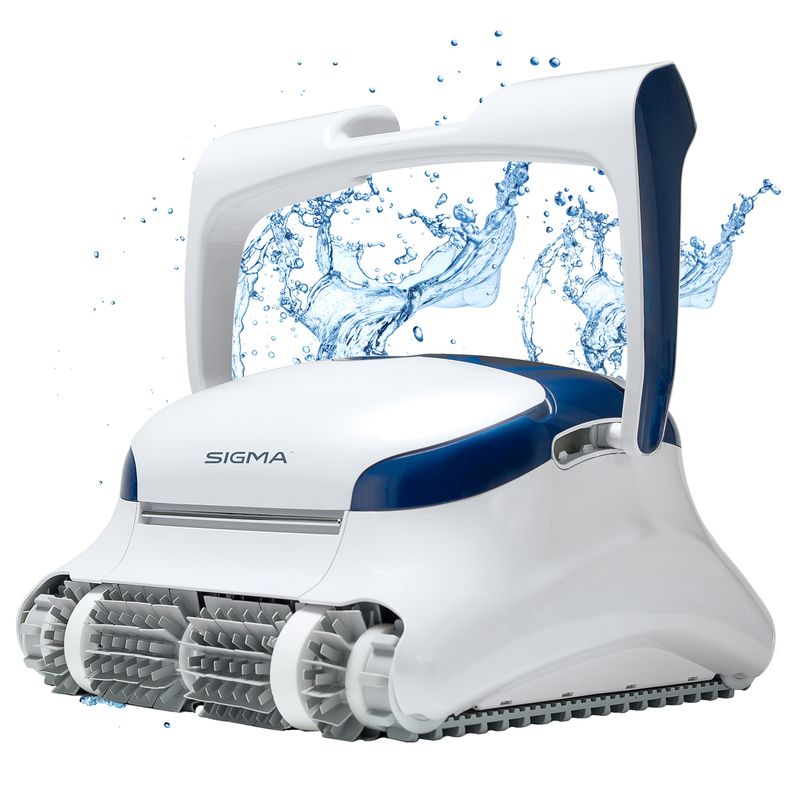
The Sigma also includes NanoFilters with its standard cartridges, so it handles plaster dust as well as the first pick. Where it pulls ahead is scrubbing. Quad brushes and three ProLine motors put more work into the waterline band and into rough, etched plaster where dirt lodges.
In myDolphin Plus you set cleaning days and times, and the app alerts you when the filter is full, which happens quickly with NanoFilters fitted. It is second because it is the highest-priced robot, and most plaster pools do not need all of it. Older, rougher plaster is the case for paying up.
Temporarily out of stock
Lowest-priced 50 ft robot with NanoFilters
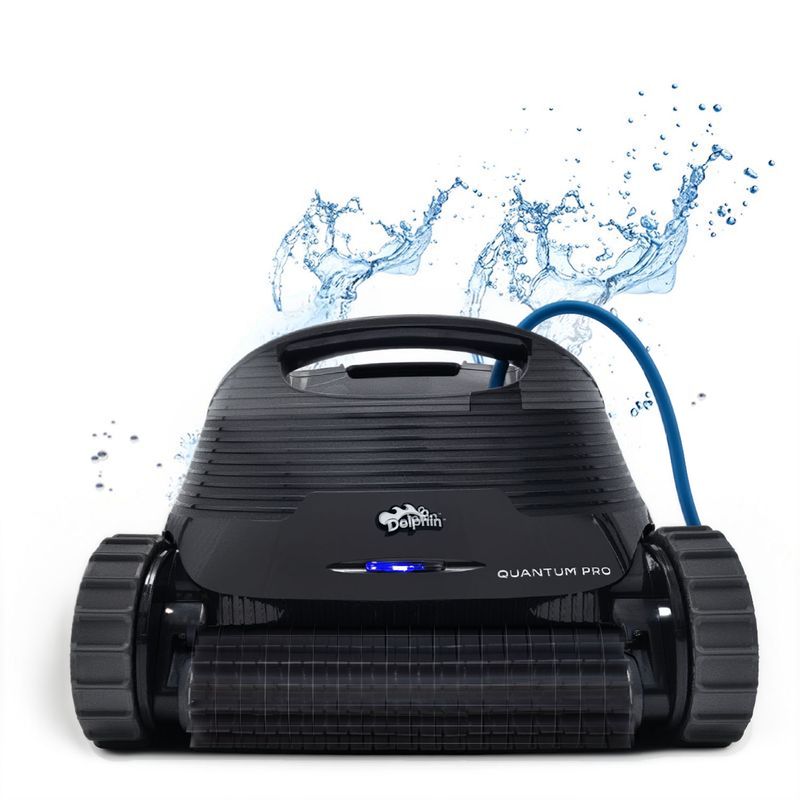
The Quantum brings ultra-fine filtration to a lower price. A full set of NanoFilter panels is included with the standard panels, and they sit in an XXL MaxBin basket of over 400 square inches, which gives fine dust plenty of filter area to land on. Plaster is on its published surface list.
The twin HyperBrushes, turning twice as fast as standard brushes, scrub the floor, walls and waterline, and stairs and sun shelves, both common in plaster pools, are on its coverage list. It ranks third on plaster for its shorter 2-hour cycle and 2-year warranty.
Temporarily out of stock
For compact plaster pools, with panels added
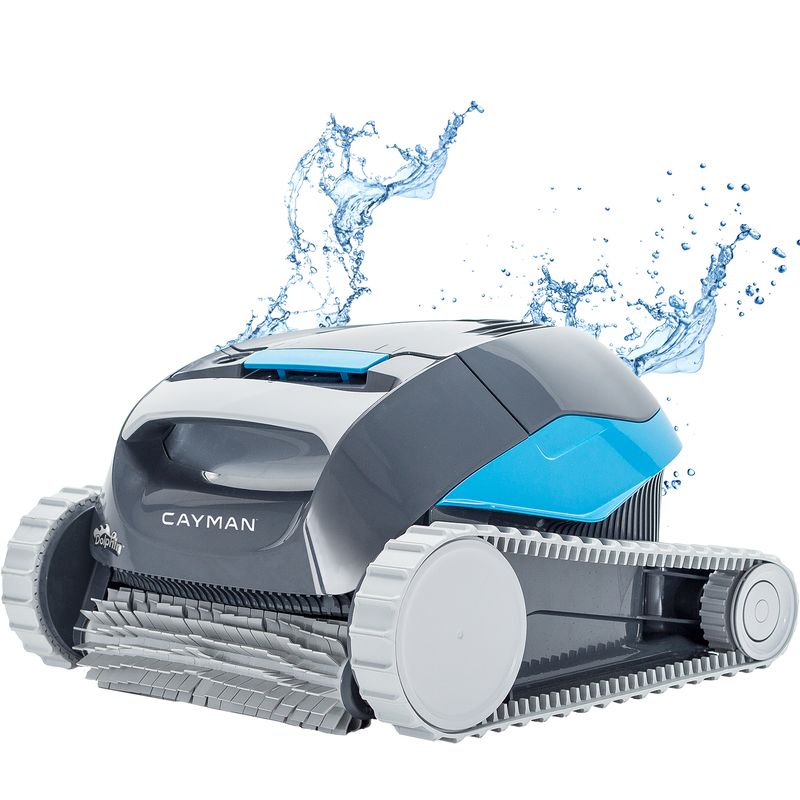
A compact plaster pool does not need a 50 ft robot. The Cayman lists plaster, covers pools up to 33 ft, and gets around the floor and walls in 2 hours on one HyperBrush and a pair of 24-volt DC motors. Its MaxBin basket is fitted with fine panels and empties through a top hatch with one tab.
Two limits put it fourth. NanoFilter panels are an optional add-on, and for plaster you should add them. And it does not clean the waterline, so the scale band is yours to scrub.
How to judge a robot for this
Plaster dust is finer than ordinary pool dirt. It clouds the water when stirred and settles again overnight. NanoFilters are made for it. They come with the Premier, the Sigma and the Quantum, and cost extra on the Cayman.
Calcium collects where water meets air, and on plaster it shows as a rough, pale band. Scrubbing it every cycle gives scale less time to harden. The Premier, Sigma and Quantum clean the waterline. The Cayman does not.
New plaster is easy on brushes. Old, etched plaster is abrasive and wears them faster. If your finish feels rough to the hand, budget for replacement brushes and favor a robot that carries more of them.
Plaster pools are in-ground and mostly mid-sized to large. Over 33 ft you need a 50 ft robot, and a deep end uses cable. The three larger picks carry 55 ft with a swivel. The Cayman is rated to 33 ft.
Side by side
| Specification | Dolphin Premier | Dolphin Sigma | Dolphin Quantum | Dolphin Cayman |
|---|---|---|---|---|
| Price today | $1949 | $2349 | $1599 | $1049 |
| Brushes | Dual scrubbing brushes | Quad scrubbing brushes | Dual HyperBrush | HyperBrush |
| Cleans | Floor, walls and waterline | Floor, walls and waterline | Floor, walls, waterline, sun shelves and stairs | Floor and walls |
| Traction | HyperGrip tracks | HyperGrip tracks | HyperGrip tracks | HyperGrip tracks |
| Pool length | Up to 50 ft | Up to 50 ft | Up to 50 ft | Up to 33 ft |
| Filtration | Multi-Media: NanoFilters, oversized leaf bag and standard fine filters | NanoFilters and standard filter cartridges | XXL MaxBin basket with standard and NanoFilter panels | MaxBin basket with fine panels; NanoFilter panels optional |
| Robot weight | 20.3 lb | 24.6 lb | 18.3 lb | 14.6 lb |
| Warranty | 3 years | 3 years | 2 years | 2 years |
Fresh plaster cures under water for weeks. During that time the builder's start-up routine applies: brushing the whole pool by hand, balancing the water carefully, and keeping wheeled or tracked equipment off the surface. Tracks and brushes can mark plaster that has not hardened, and the dust load would choke a robot's filters anyway.
So do not run a robot during the start-up period. Follow your builder's instructions. The usual figure is about four weeks, and some finishes ask for longer. When the builder clears it, start with NanoFilters fitted, because the pool will still be giving off dust.
Plaster dust looks like a pale film on the floor that puffs up when disturbed. It comes from new plaster curing, from an acid wash, and from old plaster slowly wearing. A robot with standard filters picks up some and passes the finest part back out through the mesh.
Ultra-fine media stops it, at a cost: the filter loads quickly. Run a cycle, rinse the NanoFilters thoroughly, and run again the next day instead of expecting one pass to clear a dusty pool. Once the film is gone, go back to standard filters. If dust keeps returning in an established pool, test the water. Aggressive, low-calcium water dissolves plaster, and no robot fixes that.
A scrubbing robot helps with the scale line by working it every cycle before it hardens. It does not remove scale that has already set, calcium nodules on the floor, or stains from metals and leaves. Those need chemistry, a pumice stone or a professional. Mottling and trowel marks are in the plaster itself and are not dirt at all.
The other honest limit is the top step and any shallow bench. Dust settles there too, and most robots do not reach them. A hand brush, swept toward the floor before a cycle, lets the robot finish the job.
Questions, answered
Not until the builder's start-up period is over. That is typically about four weeks, and some finishes need longer, so follow the instructions you were given. Until then the pool is brushed by hand. Afterward, start with NanoFilters fitted and rinse them after each cycle, because the plaster will still be shedding dust.
Because the dust is finer than its filter. Standard filters are made for sand, leaves and ordinary dirt, and the finest plaster powder passes through them and settles again. Fit NanoFilters. They are included with the Premier, Sigma and Quantum, and are an optional add-on for the Cayman. Expect to rinse them often.
It can slow a scale line from forming if it scrubs the waterline every cycle, which the Premier, Sigma and Quantum do. It will not remove scale that has hardened, and it will not take off calcium nodules on the floor. Those are jobs for water balance and manual treatment.
No. Quartz blends and colored plaster clean the same way as white marcite. Dark colors show dust and scale more clearly, which makes ultra-fine filters and a waterline scrub more worthwhile, not less. Any pick on this page is suitable. Choose by pool length and by how much the waterline matters to you.
The verdict
If the plaster is new, wait for the builder, then start with NanoFilters. For most plaster pools the Premier is the right robot: every filter you need is in the box and the waterline gets scrubbed. Spend more on the Sigma for old, rough plaster or heavy scale. Spend less on the Quantum if the pool is over 33 ft and the budget is firm. For 33 ft or less, take the Cayman and add NanoFilter panels.
Keep reading
