

Try it in your pool for 30 days. Exchange it for another Dolphin for free, or return it with no restocking fee.
Your bag is empty.
By pool surface
Top pick: Dolphin Sigma
$2349 today · Free shipping · 30 day trial
The short answer
Gelcoat is smooth, slippery and molded into steps and ledges. That changes what a robot has to be good at, and it changes our ranking.
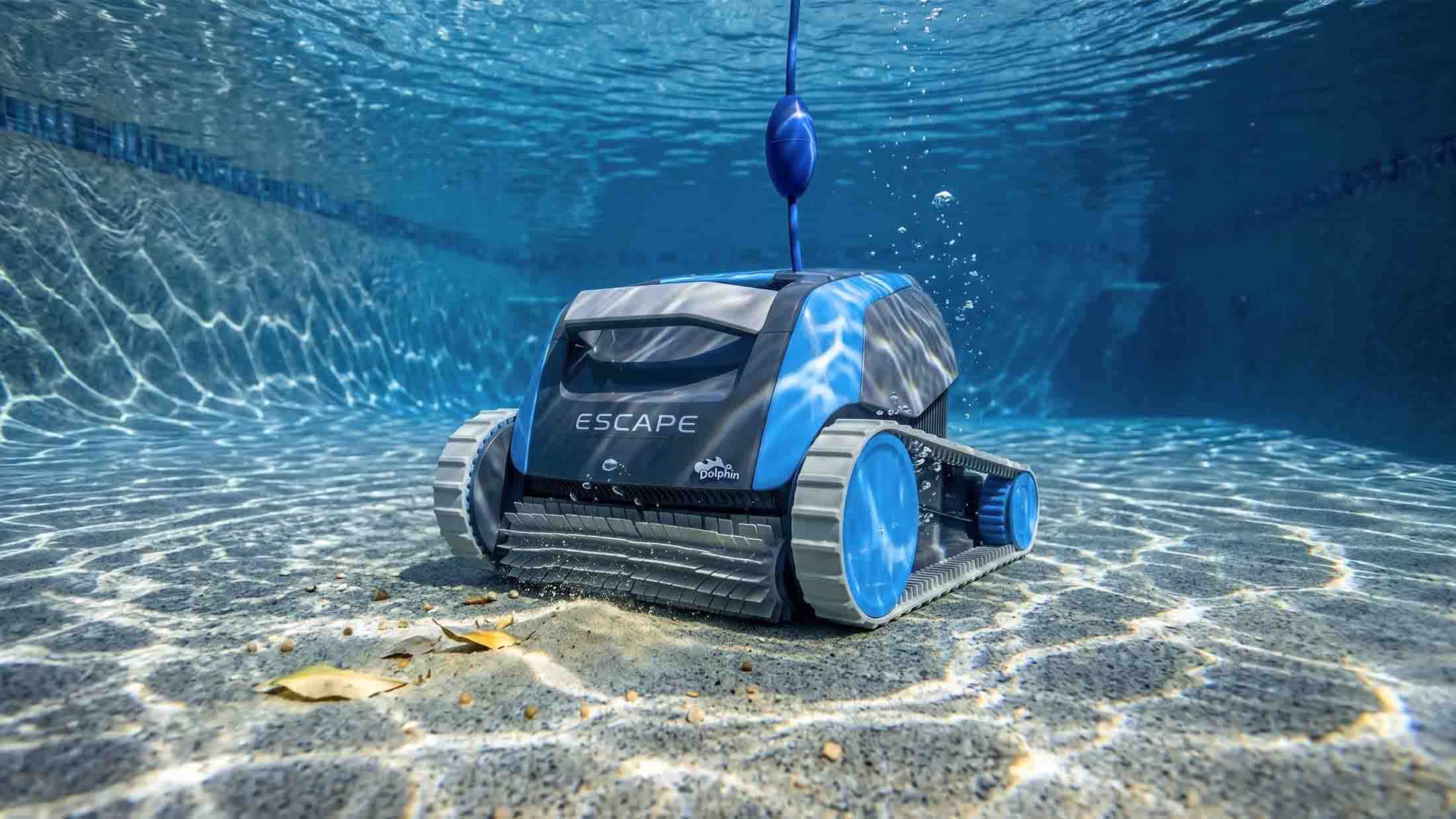
Choose the Dolphin Sigma: quad brushes, a gyroscope and HyperGrip tracks give it the surest hold on slick gelcoat, and it scrubs the waterline where fiberglass shows a scum line. The Dolphin Premier does nearly as much for less, without an app. Pick the Dolphin Quantum if the shell has a tanning ledge or wide steps. The Dolphin Escape suits small shells, but it does not scrub the waterline.
A fiberglass pool is a single molded shell with a gelcoat finish. The surface is smooth and non-porous, so dirt and algae have little to hold on to and the floor cleans up quickly. That sounds like an easy job, and for the floor it is. The best robotic pool cleaner for fiberglass pools earns its place on the walls, the waterline and the molded-in steps.
Slick gelcoat is harder to climb than plaster. A scum line shows sharply against a glossy wall. And nearly every shell has steps, a bench or a tanning ledge formed into it. All five Dolphins in these guides list fiberglass as a supported surface, so we rank on traction, waterline scrubbing and how much of the molded shape each one covers.
Our picks, in order
Temporarily out of stock
Surest grip and scrub on slick gelcoat
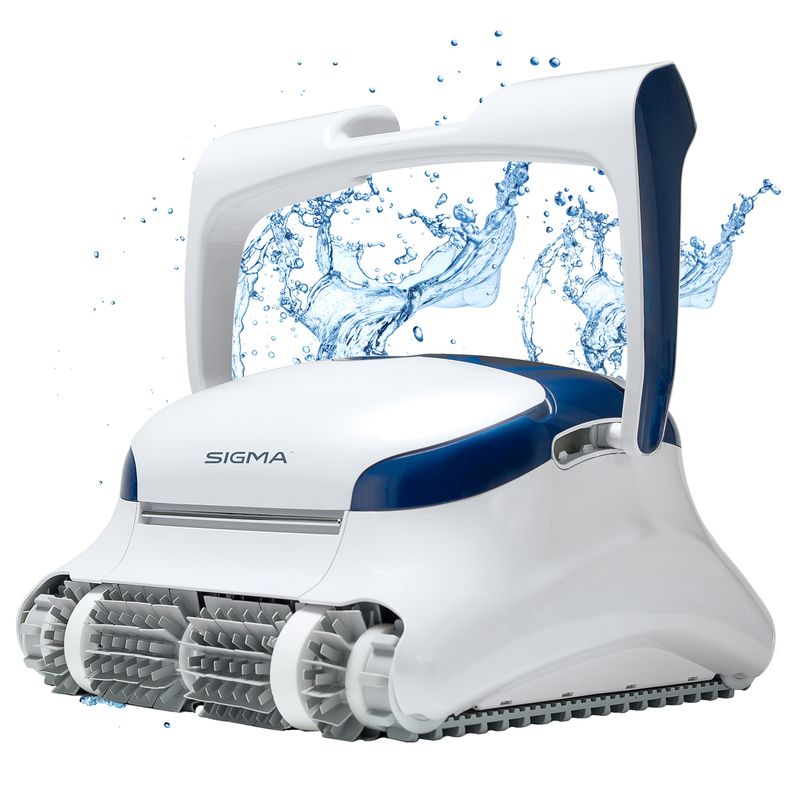
On a slippery wall, more contact wins. The Sigma has four scrubbing brushes where the others have one or two, three ProLine motors behind them, and HyperGrip tracks underneath. SmartNav 3.0 uses an onboard gyroscope, which helps it hold a heading where a slick surface invites drift.
It scrubs the waterline each cycle, and the included NanoFilters catch the fine dust that shows on a smooth, pale floor. Cleaning days and times are set in its app. It is rated to 50 ft, longer than almost any shell, and the warranty is 3 years.
Temporarily out of stock
Waterline and walls without the app
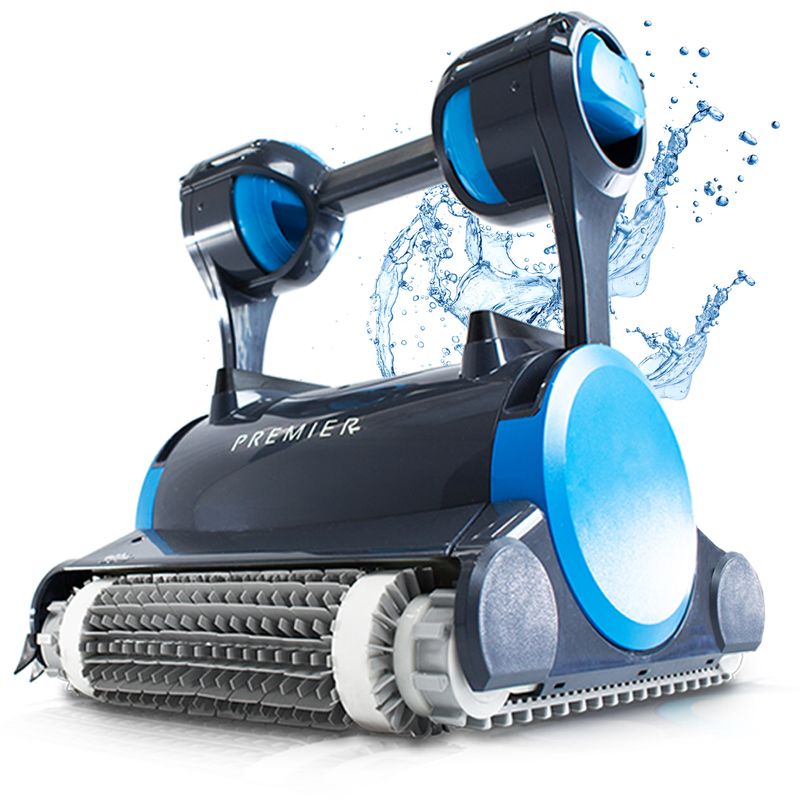
The Premier is second because it delivers the two things fiberglass needs most, a firm climb and a waterline scrub, at a lower price than the leader. Dual scrubbing brushes, dual ProLine motors moving 4,500 GPH and HyperGrip tracks carry it up the wall, and its 3-hour cycle is the longest of the four.
The Multi-Media kit suits a shell through the seasons: NanoFilters for fine dust, an oversized leaf bag for fall, swapped in seconds. The cable is 55 ft with a swivel, and the warranty is 3 years.
Temporarily out of stock
Best for shells with steps and a tanning ledge
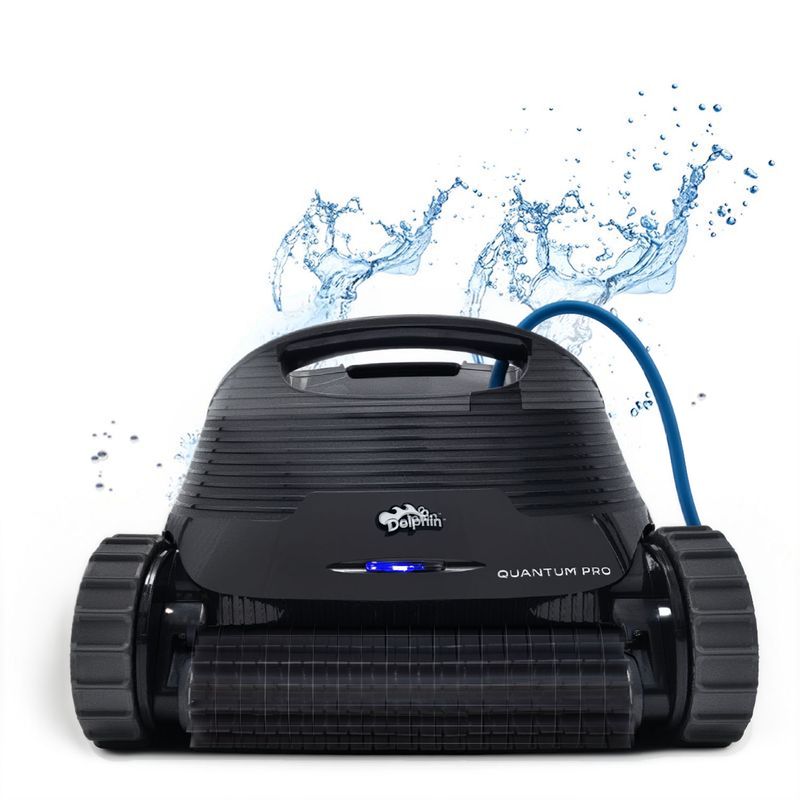
Most fiberglass shells have something molded in: entry steps, a bench, a shallow tanning ledge. The Quantum is the only one of the five Dolphins in these guides whose published coverage names stairs, sun shelves and Baja ledges alongside the floor, walls and waterline. On a shell with a big ledge, that counts for more than extra brushes.
Its two HyperBrushes turn at double the usual brush speed, and SmartNav 2.0 senses ladders and drains. The XXL MaxBin is a one-click top-loader, and the app runs over Wi-Fi. A 2-hour cycle and a 2-year warranty keep it out of the top two.

Temporarily out of stock
Least robot for a small fiberglass shell
Many fiberglass pools are compact, and a shell of 33 ft or less is inside the Escape's rating. Fiberglass is on its published surface list. Its HyperBrush and HyperGrip tracks cover the floor and walls in 1.5 hours, the MaxBin basket loads from the top, and at 14.2 lb it is the easiest robot here to lift.
It is fourth because it stops below the waterline, and on glossy gelcoat that line is what you look at. If you are happy to wipe it by hand, this robot does the rest for the lowest price.
How to judge a robot for this
Gelcoat offers less bite than a rough finish, and less again once sunscreen or a film builds on it. Look for tracks, not suction alone. Every robot here runs on HyperGrip tracks, and the Quantum's are continuous rubber.
On a glossy shell the line of oils and scale at the surface is the first thing you see. The Sigma, Premier and Quantum scrub the waterline every cycle. The two smaller robots stop at the walls, so that band stays a job for a sponge.
These are part of the shell, and they collect dirt in shallow water where most robots do not go. Only the Quantum's published coverage names stairs, sun shelves and Baja ledges. Look at your shell's layout before you choose.
Fiberglass shells travel by road in one piece, so few are much longer than 40 ft and many are under 33 ft. The three 50 ft robots cover any of them. Shells of 33 ft or less are also inside the rating of the Escape and Cayman.
Side by side
| Specification | Dolphin Sigma | Dolphin Premier | Dolphin Quantum | Dolphin Escape |
|---|---|---|---|---|
| Price today | $2349 | $1949 | $1599 | $659 |
| Brushes | Quad scrubbing brushes | Dual scrubbing brushes | Dual HyperBrush | HyperBrush |
| Cleans | Floor, walls and waterline | Floor, walls and waterline | Floor, walls, waterline, sun shelves and stairs | Floor and walls |
| Traction | HyperGrip tracks | HyperGrip tracks | HyperGrip tracks | HyperGrip tracks |
| Pool length | Up to 50 ft | Up to 50 ft | Up to 50 ft | Up to 33 ft |
| Filtration | NanoFilters and standard filter cartridges | Multi-Media: NanoFilters, oversized leaf bag and standard fine filters | XXL MaxBin basket with standard and NanoFilter panels | MaxBin basket; NanoFilter panels optional |
| Robot weight | 24.6 lb | 20.3 lb | 18.3 lb | 14.2 lb |
| Warranty | 3 years | 3 years | 2 years | 2 years |
Walk around your shell and count the molded features: entry steps in a corner, a bench along one side, a ledge a few inches under water. Each is a flat surface that gathers dirt, and each sits in shallower water than the main floor.
Robots are built to work submerged. On the lower steps and a deeper bench, a robot that lists stairs can do useful work, and the Quantum is the one here that does. On a ledge covered by only a few inches of water, expect to use a brush whatever you buy. The manual gives the minimum depth, so check it against your ledge. The top step needs a hand brush in every pool.
A robot that climbed last month and slides this month has usually not broken. Three things change its grip on gelcoat. Work through them in order, and talk to a Dolphin Expert if it still slips afterward.
A robot keeps a fiberglass pool clean. It does not restore the finish. Chalky, faded gelcoat is oxidation. Brown or gray marks that do not brush off are usually metal staining or scale, which are water-chemistry problems. A robot will pass over them every day and leave them where they are.
The same goes for sanitizer and circulation. A smooth shell gives algae less to grip, which helps, but it does not replace chlorine, a working filter or a skimmer for what floats. The robot removes what has settled and scrubs what it can reach.
Questions, answered
Yes, the right one can. All five Dolphins compared here list fiberglass and clean walls, using tracks for grip and water flow to hold on. Gelcoat is slicker than plaster, so a clean filter and a film-free wall matter more here. With four brushes and a gyroscope, the Sigma is the surest climber of the group.
Fiberglass is a published surface for every robot on this page, and the brushes are made to scrub pool finishes, not abrade them. What can mark gelcoat is grit: sand caught in a brush or under a track. Rinse the brushes and tracks when you empty the filter, and pick stones and other hard debris out of the pool.
Sometimes. The Quantum is the only robot here whose published coverage names sun shelves and Baja ledges. Whether it reaches yours depends on the depth of water over the ledge, since a robot has to stay submerged. Check the manual's minimum depth against your ledge. The other robots clean the main pool and leave ledges to you.
More than on most surfaces. Glossy gelcoat shows the scum line clearly, and it builds from the first warm week. The Sigma, Premier and Quantum scrub it every cycle. With the two smaller robots you wipe it by hand. If that is a ten-minute job you do not mind, save the money. If you do mind, step up.
The verdict
Decide on the waterline first. If you want it scrubbed for you, the Sigma is the most capable, the Premier the better value, and the Quantum the one to pick when steps or a tanning ledge take up real space. If you will wipe the line yourself and the shell is 33 ft or less, the Escape handles the floor and walls at the lowest price. Every one of them lists fiberglass.
Keep reading
