

Try it in your pool for 30 days. Exchange it for another Dolphin for free, or return it with no restocking fee.
Your bag is empty.
By pool surface
Top pick: Dolphin Premier
$1949 today · Free shipping · 30 day trial
The short answer
Glass tile is the slickest surface a robot can climb and the costliest to mark: what the brushes do, where the tracks may slip, and how to find out in one cycle.
The best robotic pool cleaner for glass tile pools is the Dolphin Premier: HyperGrip tracks, 4,500 gallons per hour holding it to the wall, waterline scrubbing, and a 3-hour cycle that gives it the most attempts at each climb. The Dolphin Sigma adds two more brushes at a higher price. The Dolphin Quantum costs less and covers tiled ledges and steps. For pools 33 ft and under, the Dolphin Cayman cleans floor and walls.
None of these robots lists glass tile by name. Each lists tile. Their soft PVC brushes do not scratch glass in normal use, but glass is the slickest pool surface and a robot may slip on the upper wall. Nobody can promise full wall climbing on it. Run a test cycle, watch the walls, and call us about brush options for slick surfaces.
Glass tile is chosen for how it looks, and it is the most expensive finish to repair. That shapes the two questions its owners ask. Will a robot scratch it? Will a robot stay on it? The first has a reassuring answer: the brushes on these robots are soft PVC, not abrasive. What marks glass is grit, and grit can be managed.
The second answer is less tidy. Glass gives rubber tracks less to hold than any other pool surface, and the upper wall is where a robot is most likely to let go. So this page ranks the robots with the most traction and brush contact, shows you how to test one in your own pool, and makes no promise about the top of the wall.
Our picks, in order
Temporarily out of stock
First robot to test on glass tile
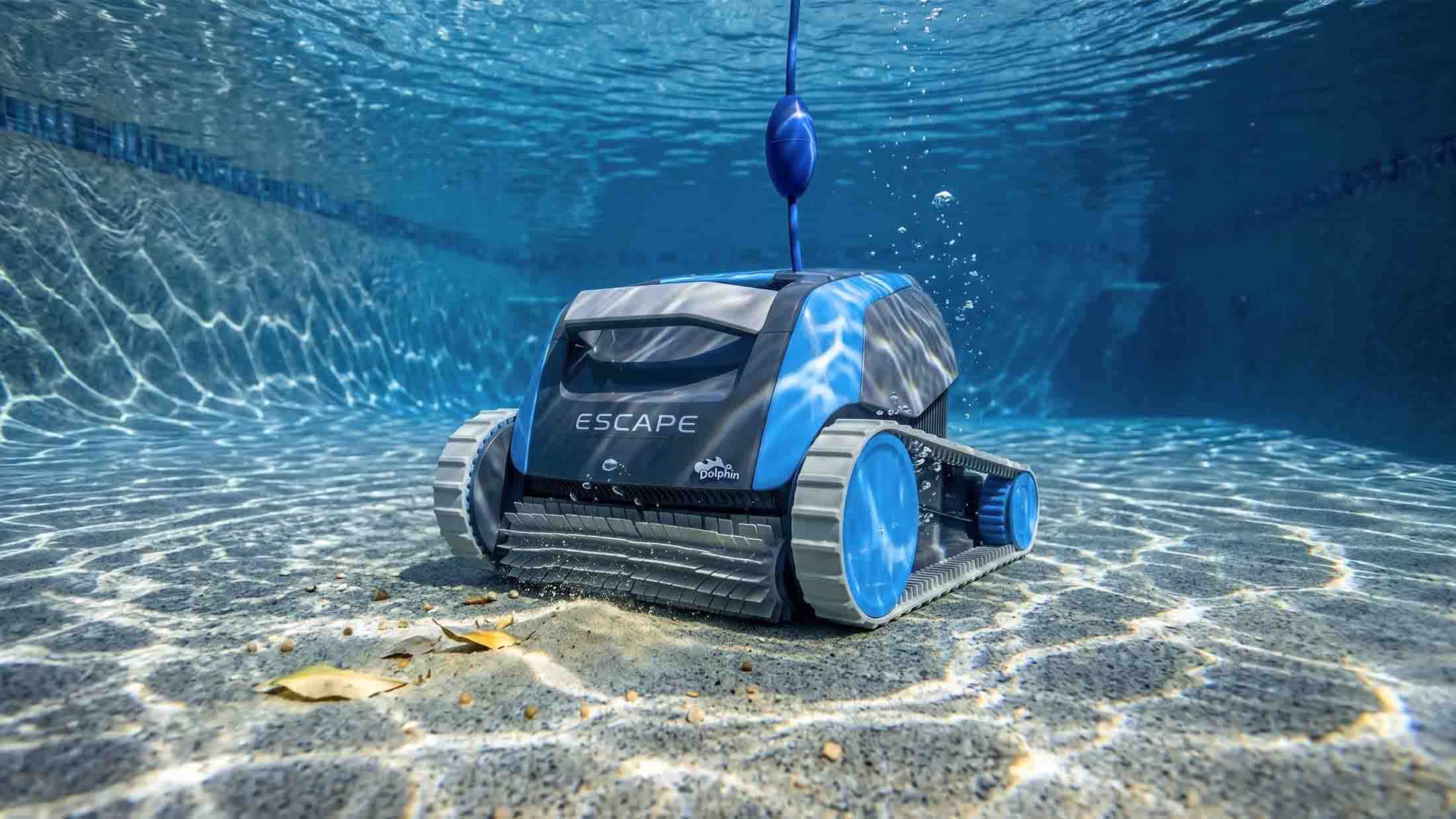
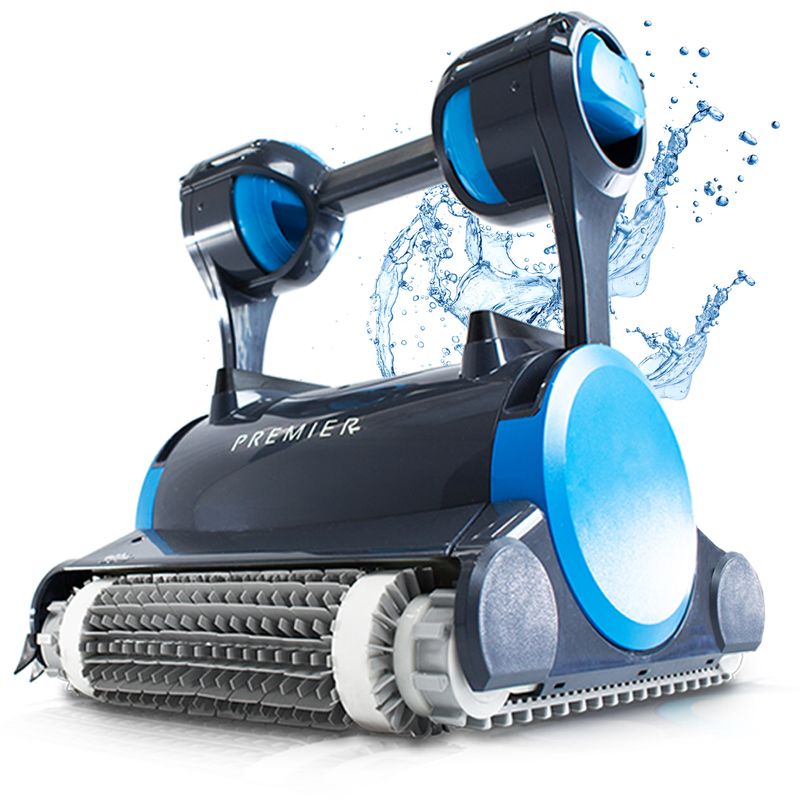
The Premier leads because it pairs the two things glass asks for, hold and time, at less than the top price. HyperGrip tracks and two commercial-grade ProLine motors moving 4,500 gallons per hour keep it on the wall, and a 3-hour cycle gives it more attempts at each climb than any other pick. When it reaches the surface, two scrubbing brushes work the waterline. The filter loads from the top without tools, so the rinse after each cycle is quick, and the warranty runs 3 years.
Temporarily out of stock
Most brush contact on a slick surface
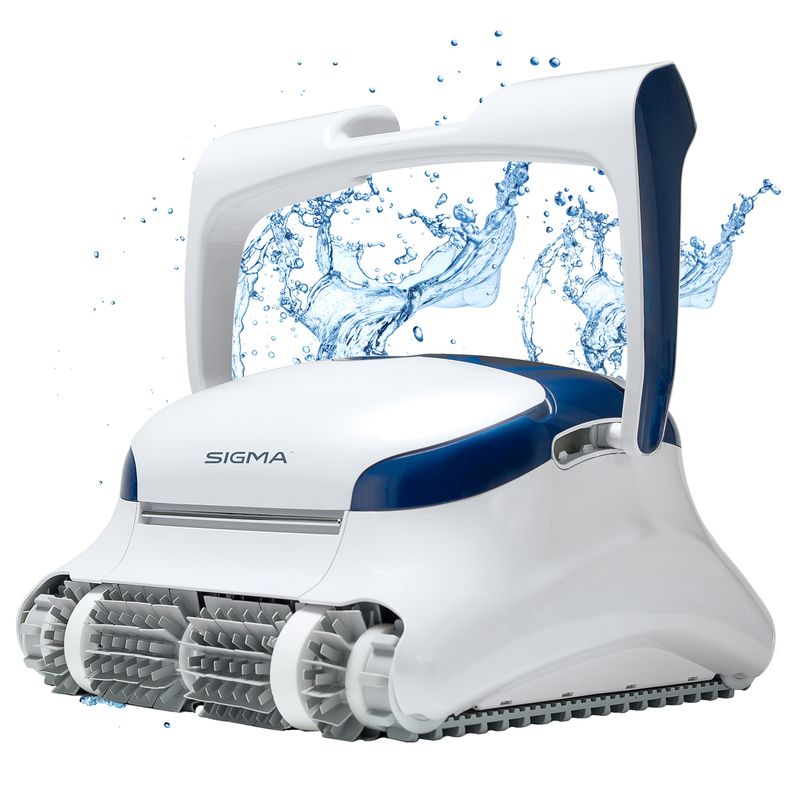
The Sigma puts four scrubbing brushes on the tile where the Premier puts two, and drives them with three ProLine motors at the same 4,500 gallons per hour. More brush on the surface lifts more film on each pass, and film is what dulls glass. SmartNav 3.0 with an onboard gyroscope keeps coverage orderly. It sits second only because it costs the most, and on glass the top of the wall is not certain for any robot.
Temporarily out of stock
For glass-tiled ledges, steps and shelves
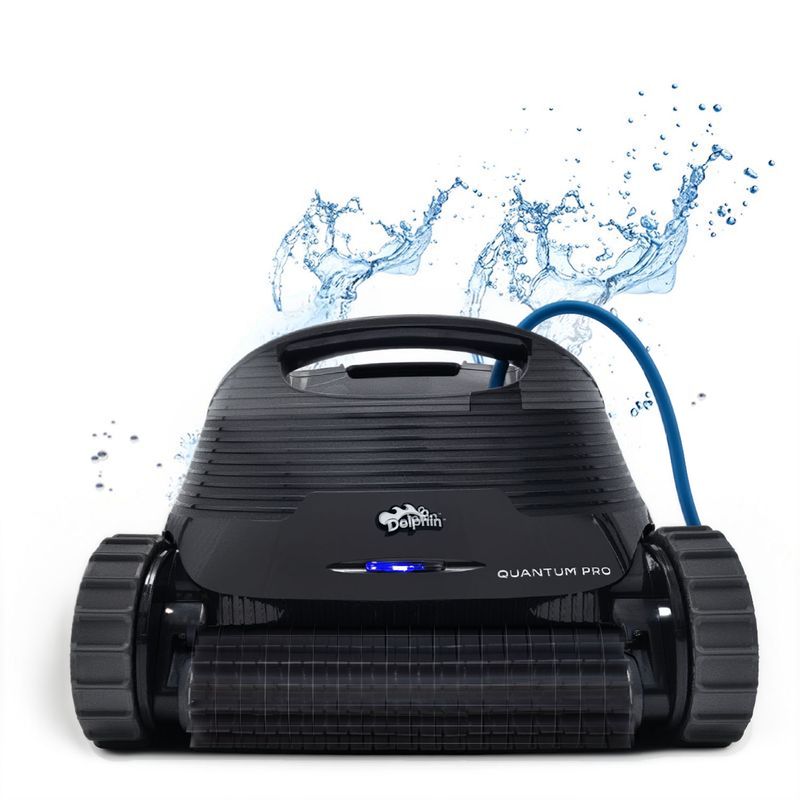
Glass tile is often laid on the shallow features: a sun shelf, a Baja ledge, the stairs. Most robots leave those alone. The Quantum is the only one here designed to cover them as well as the floor, walls and waterline. Its two HyperBrushes spin at twice the speed of standard brushes, and the XXL MaxBin opens from the top with one click for rinsing. It is also the lowest-priced of the three waterline robots here, which counts when part of the purchase is an experiment.
Temporarily out of stock
Lower-cost choice for pools 33 ft and under
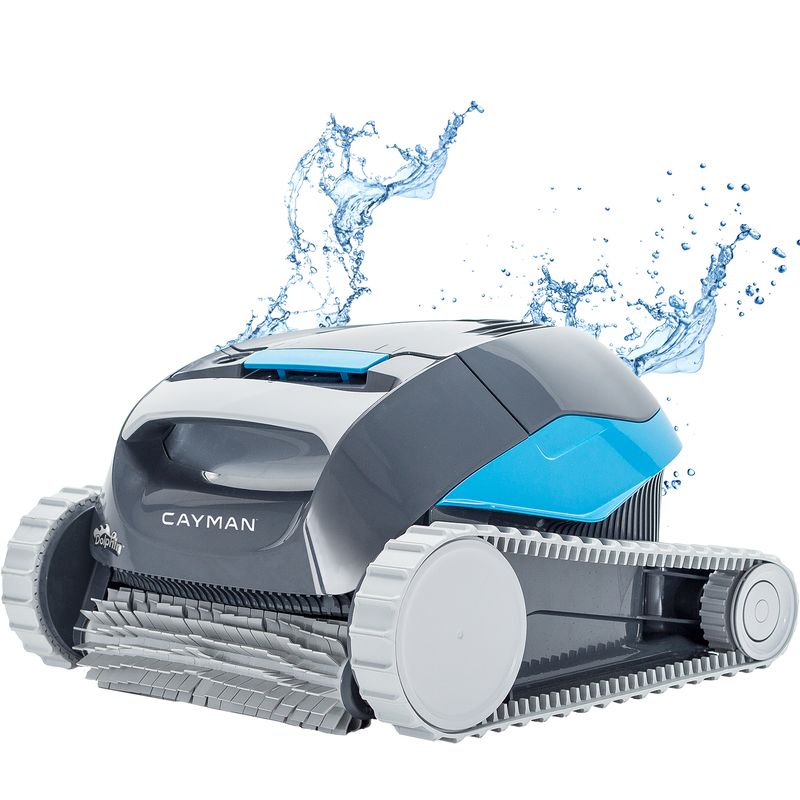
A small glass-tiled pool does not need a 50 ft robot. The Cayman is rated to 33 ft, lists tile among its surfaces, and cleans the floor and walls with one HyperBrush on HyperGrip tracks, driven by dual 24-volt DC motors moving over 4,000 gallons per hour. Its 2-hour cycle and 50 ft cable suit an in-ground pool, and the timer on its power supply runs it every day. At 14.6 lb it is the easiest pick to lift out for the rinse glass tile calls for.
How to judge a robot for this
A robot climbs by driving rubber tracks up the wall while the flow through its pump holds it against the surface. Glass offers less friction, so flow and track contact count for more. The Premier and Sigma move 4,500 gallons per hour and the Quantum 4,000. All four picks run on HyperGrip tracks.
Soft PVC does not scratch glass in normal use. A grain of sand caught in a brush or under a track is a different matter. A robot is only as kind to the tile as its brushes are clean, so quick access for rinsing matters more here than brush count.
Glass shows water spots and film more than a matte finish does. The Premier, Sigma and Quantum scrub the waterline when they reach it. The Cayman cleans floor and walls and stops below it. On glass, reaching the top is the uncertain part, so expect to wipe the band by hand now and then.
Side by side
| Specification | Dolphin Premier | Dolphin Sigma | Dolphin Quantum | Dolphin Cayman |
|---|---|---|---|---|
| Price today | $1949 | $2349 | $1599 | $1049 |
| Brushes | Dual scrubbing brushes | Quad scrubbing brushes | Dual HyperBrush | HyperBrush |
| Cleans | Floor, walls and waterline | Floor, walls and waterline | Floor, walls, waterline, sun shelves and stairs | Floor and walls |
| Traction | HyperGrip tracks | HyperGrip tracks | HyperGrip tracks | HyperGrip tracks |
| Pool length | Up to 50 ft | Up to 50 ft | Up to 50 ft | Up to 33 ft |
| Filtration | Multi-Media: NanoFilters, oversized leaf bag and standard fine filters | NanoFilters and standard filter cartridges | XXL MaxBin basket with standard and NanoFilter panels | MaxBin basket with fine panels; NanoFilter panels optional |
| Robot weight | 20.3 lb | 24.6 lb | 18.3 lb | 14.6 lb |
| Warranty | 3 years | 3 years | 2 years | 2 years |
The only way to know how a robot behaves on your glass is to watch it there. Choose a day when the water is clear and balanced, because algae film or oily residue makes slick tile slicker and spoils the test. Our 30 day in-pool trial, with free exchanges and no restocking fee, exists for questions like this one.
The PVC brushes on these robots are not abrasive. The risk is whatever rides along with them. Sand tracked in on feet, grit from a windy day or a chip of stone can lodge in a brush or under a track and be dragged across the tile.
Hose off the brushes and tracks whenever you rinse the filter. Net out visible stones before a cycle. Bring the robot to the surface and lift it by the handle instead of dragging it up the glass, and set it down on a mat, not on a gritty deck.
It will not remove hardened calcium scale, from glass or from anything else. It will not clean a raised spa, a spillway or the top step. And it does not replace sanitizer: the grout between glass tiles grows algae like any other grout.
Ask your tile installer before using a pumice stone or any abrasive pad on scale, because tools that are routine on ceramic tile can mark glass. A robot that reaches the waterline a few times a week keeps soft film from building. Balanced water is what keeps scale from following it.
Questions, answered
Not in normal use. The brushes are soft, non-abrasive PVC and the tracks are rubber. Scratches come from grit carried under a brush or track, so rinse both regularly and net out stones before a cycle.
Rule out the water first: algae film and oily residue make slick tile slicker, so brush, balance and retest. Check that the cable is not pulling tight. If it still slips, talk to a Dolphin Expert about brush options for slick surfaces.
Rarely. If the walls and floor are plaster or pebble, the robot gets its grip there and meets glass only at the very top. Treat it as a plaster pool and choose a robot that scrubs the waterline. The slick-wall caution on this page is for pools tiled in glass from floor to coping.
No. Each publishes tile without separating ceramic, porcelain and glass. That is why we call these picks the closest matches, not certified ones, and why the test cycle matters more than the spec sheet.
The verdict
On glass tile the robot matters less than the trial. Start with the Premier for hold, cycle length and waterline scrubbing. Pay up for the Sigma if you want the most brush on the surface. Choose the Quantum if ledges and steps are tiled or the budget is tighter, and the Cayman if the pool is 33 ft or under. Whichever you pick, watch the first cycle and keep the brushes free of grit.
Keep reading
