

Try it in your pool for 30 days. Exchange it for another Dolphin for free, or return it with no restocking fee.
Your bag is empty.
By pool surface
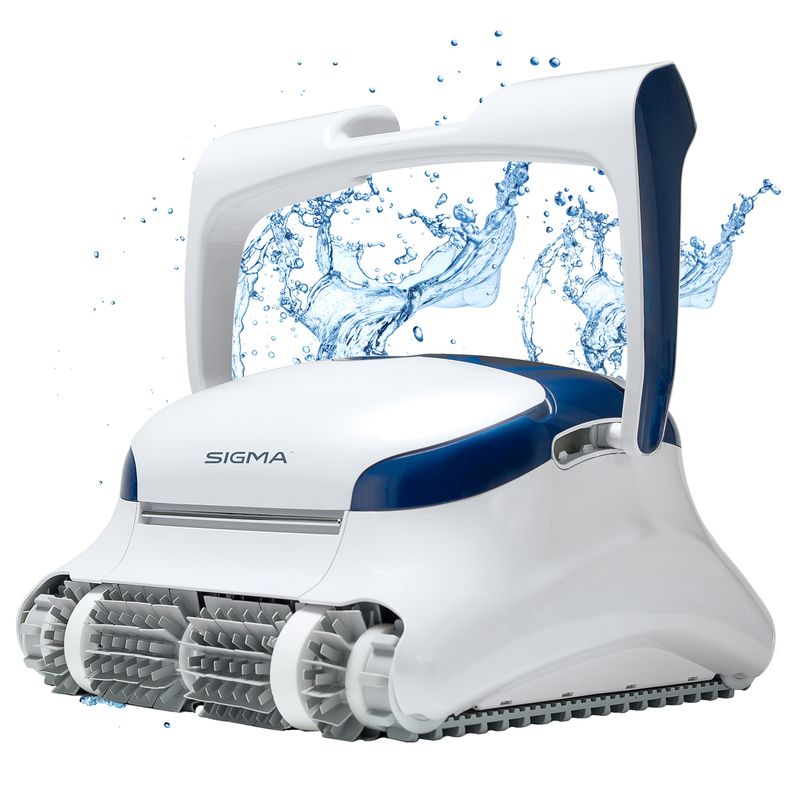
Top pick: Dolphin Sigma
$2349 today · Free shipping · 30 day trial
The short answer
Pebble finishes are tough, handsome and bumpy. Dirt hides between the stones, so brush action counts for more than suction. Four Dolphins list pebble, and this is the order.
Choose the Dolphin Sigma: its quad brushes reach into the texture where dirt and algae sit, and pebble is on its published surface list. The Dolphin Premier is the runner-up for its 3-hour cycle and included NanoFilters, at a lower price. The Dolphin Quantum brings double-speed HyperBrushes for less again. For a pebble pool of 33 ft or less, the Dolphin Cayman also lists the surface.
Pebble Tec is a brand name that became the everyday word for a whole family of finishes: small river pebbles set in cement and exposed at the surface. The original is distinctly bumpy. Polished versions such as PebbleSheen are finer and smoother, and generic exposed aggregate sits somewhere between. For a robot they behave alike, and this page covers all of them.
The texture is the challenge. Fine dirt drops into the gaps between stones where water flow alone does not lift it, algae gets a sheltered start there, and brushes wear faster than on plaster. So the best robotic pool cleaner for Pebble Tec pools is the one with the most brush on the surface, firm tracks under it, and enough cycle time to go over the floor properly.
Our picks, in order
Temporarily out of stock
Most brush on a bumpy surface
The Sigma names pebble among its published surfaces, and its layout suits the job better than any other robot in these guides. Four scrubbing brushes mean each stretch of floor is worked more than once per pass, which is what it takes to move silt out from between stones. Three ProLine motors pull 4,500 GPH through the filters to carry it away.
A bumpy floor nudges a robot off course, and SmartNav 3.0's onboard gyroscope helps it hold its pattern. Both NanoFilters and standard cartridges ship with it, a cycle lasts 2.5 hours, and the warranty is 3 years.
Temporarily out of stock
Longest cycle for textured floors
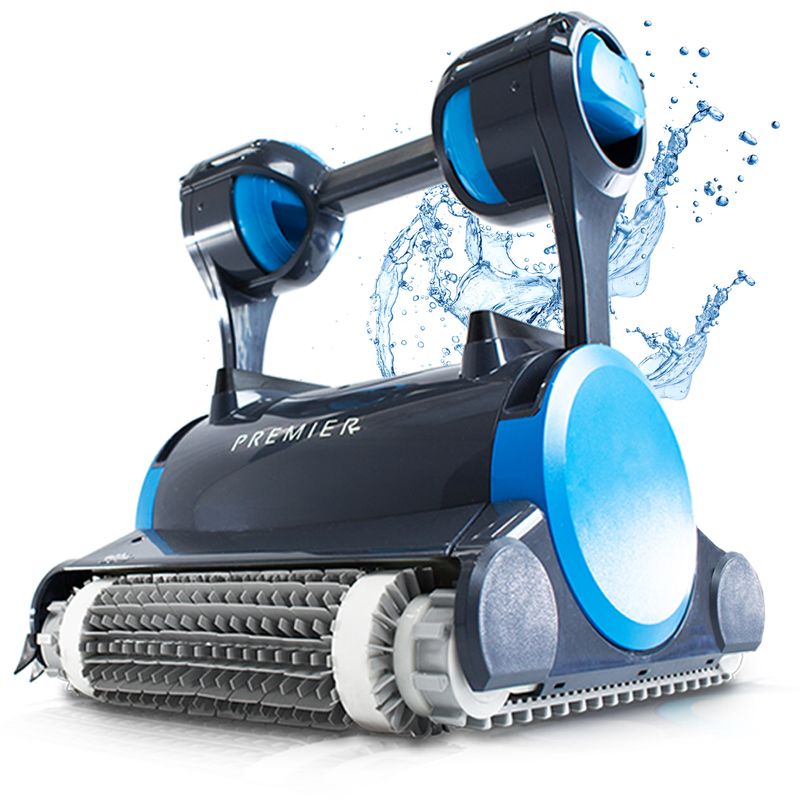
The Premier lists pebble and gives a textured pool the most time: a 3-hour cycle, the longest here. On a surface that needs repeat passes, that extra half hour is real cleaning. Its two scrubbing brushes, backed by a pair of ProLine motors moving 4,500 GPH, do the work, and HyperGrip tracks keep it planted on the walls and at the waterline.
Its filter kit is the other reason it ranks high. NanoFilters for the fine material pebble releases, standard filters for daily use and an oversized leaf bag are all included. The warranty is 3 years, and it costs less than the leader.
Temporarily out of stock
Double-speed brushes at a lower price
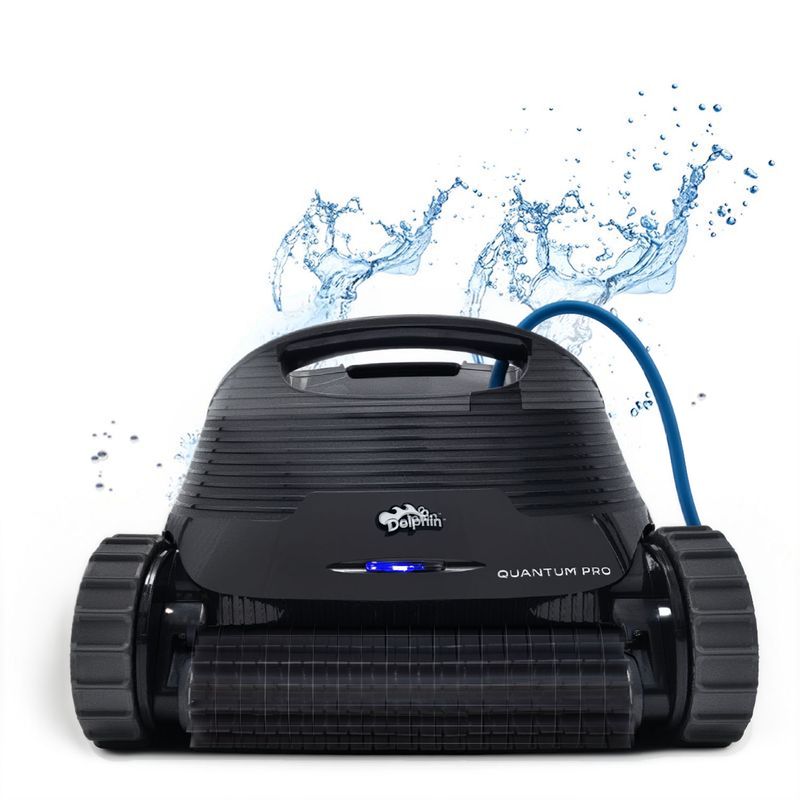
The Quantum's dual HyperBrushes spin at twice the speed of standard brushes, and on pebble that speed is the point: a faster brush strikes each stone more often as the robot passes. Pebble is on its published surface list, its HyperGrip tracks are continuous rubber, and NanoFilter panels are supplied alongside the standard set.
It also cleans the waterline and lists stairs, sun shelves and Baja ledges, which pebble pools often have. Third place comes down to time: 2 hours a cycle, the shortest of the 50 ft robots, and 2 years of warranty.
Temporarily out of stock
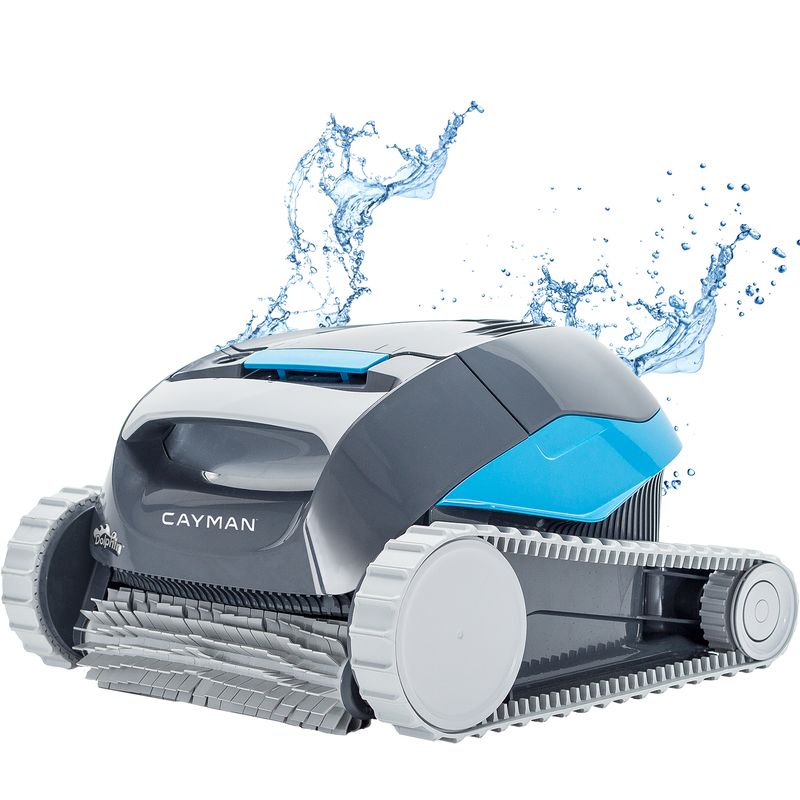
Pebble-listed robot for pools up to 33 ft
Below the Cayman in price, nothing we sell names pebble on its surface list. It suits pools of 33 ft and under, working the floor and walls for 2 hours on one HyperBrush and HyperGrip tracks. The MaxBin basket is 50 percent larger than standard Dolphin filters and empties through a top hatch.
Its daily timer suits pebble, because frequent cleans give silt less time to pack into the texture. It ranks fourth because it has one brush, does not clean the waterline, and treats NanoFilter panels as an optional add-on.
How to judge a robot for this
On pebble, a brush has to flick dirt out of the valleys before the robot can filter it. More brush contact and faster rotation both help. The Sigma has four brushes. The Quantum's two HyperBrushes spin at twice the speed of standard ones.
A bumpy floor makes a robot vibrate and can break its grip on the walls. Tracks keep a long contact patch across the tops of the stones. HyperGrip tracks are standard on all four picks, with continuous rubber ones on the Quantum.
What comes out of a pebble finish is mostly fine: silt, dust and dead algae from between the stones. Ultra-fine filters hold it. NanoFilters are included with the Sigma, Premier and Quantum, and optional on the Cayman.
Textured surfaces take more passes than smooth ones. A longer cycle gives the brushes a second go at stubborn areas: 3 hours on the Premier, 2.5 on the Sigma, 2 on the Quantum and Cayman.
Side by side
| Specification | Dolphin Sigma | Dolphin Premier | Dolphin Quantum | Dolphin Cayman |
|---|---|---|---|---|
| Price today | $2349 | $1949 | $1599 | $1049 |
| Brushes | Quad scrubbing brushes | Dual scrubbing brushes | Dual HyperBrush | HyperBrush |
| Cleans | Floor, walls and waterline | Floor, walls and waterline | Floor, walls, waterline, sun shelves and stairs | Floor and walls |
| Traction | HyperGrip tracks | HyperGrip tracks | HyperGrip tracks | HyperGrip tracks |
| Pool length | Up to 50 ft | Up to 50 ft | Up to 50 ft | Up to 33 ft |
| Filtration | NanoFilters and standard filter cartridges | Multi-Media: NanoFilters, oversized leaf bag and standard fine filters | XXL MaxBin basket with standard and NanoFilter panels | MaxBin basket with fine panels; NanoFilter panels optional |
| Robot weight | 24.6 lb | 20.3 lb | 18.3 lb | 14.6 lb |
| Warranty | 3 years | 3 years | 2 years | 2 years |
Not every pebble pool is equally rough, and knowing which you have tells you how hard the robot's job is. A simple test: drag a fingertip across the top step. If it catches on every stone, treat the pool as coarse.
A pebble floor can look clean after a cycle and dusty again the next afternoon. Usually nothing is wrong with the robot. Fine material sits down in the texture, below where water flow reaches. One pass loosens part of it, swimmers and the return jets stir up more, and it resettles.
The answer is frequency, not force. Run the robot daily for a week with ultra-fine filters fitted, and the reserve of silt in the texture runs down. After that a normal schedule holds it. Every pick can be set to run daily: on a timer with the Premier, Quantum and Cayman, and by schedule on the Sigma.
Pebble finishes are prone to two things no robot removes. Calcium nodules are hard white bumps that grow from the cement between the stones. Stains, from metals, leaves or fertilizer, sit in the surface. A robot brushes over both every day without changing them. They need a pool professional and, usually, a look at the water balance.
Brush wear is the other reality. Pebble is more abrasive than plaster, so check the brushes a couple of times a season and replace them when the scrubbing surface has gone smooth. A robot with worn brushes still drives around, but it stops lifting dirt out of the texture, which is the whole job on this surface.
Questions, answered
Harder than plaster, mainly on the brushes. The stones are abrasive, so brushes wear faster, and the bumpy surface makes the robot work for its grip. Neither is a reason to avoid a robot. Choose one that names pebble on its surface list, check the brushes during the season, and treat replacements as routine.
No, it needs less of one. Polished pebble has shallower texture, so dirt lifts more easily and brushes last longer. All four picks list pebble and handle it. On a polished finish the Quantum's shorter cycle is less of a drawback, and the choice comes down to pool length, waterline cleaning and price.
No. Nodules are mineral growths bonded to the finish, and brushes pass over them. The same is true of stains. A robot keeps loose dirt and algae from building up around them, but removal is a job for a pool professional, and the cause is usually in the water balance or the finish itself.
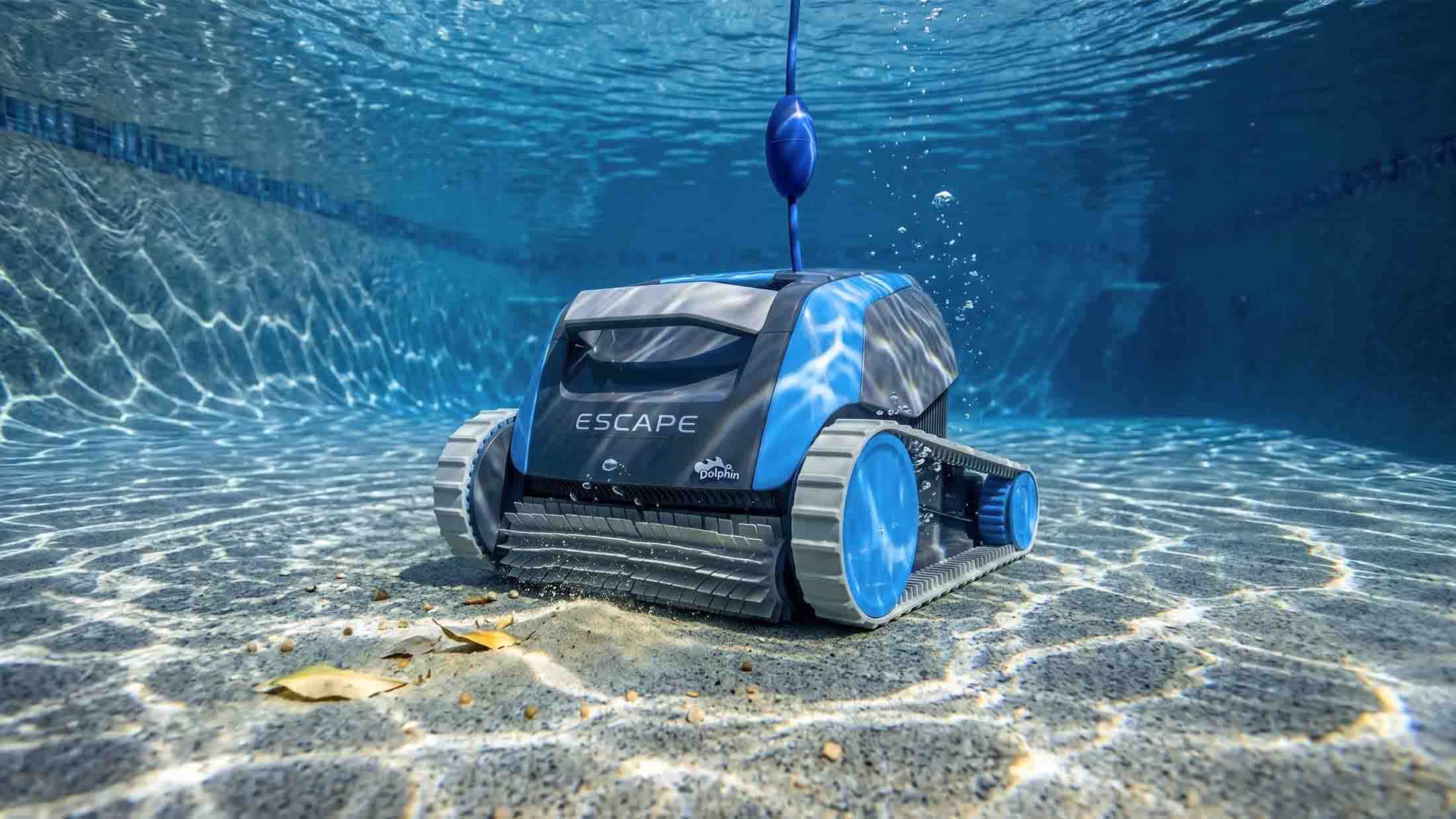
We do not recommend it. Pebble is not on the Escape's published surface list, which names vinyl liner, gunite, fiberglass and tile. For a small pebble pool, the Cayman lists the surface, has the same 33 ft rating and adds a daily timer. For a larger one, the Quantum is the lowest-priced pick that lists pebble.
The verdict
Feel the floor. If it is coarse, buy brush and time: the Sigma for four brushes, or the Premier for the 3-hour cycle and the lower price. If it is a polished pebble finish, the Quantum's double-speed brushes do the job for less. If the pool is 33 ft or under, the Cayman lists pebble and runs daily. Whichever you choose, expect to replace brushes sooner than a plaster-pool owner would, and do not expect any robot to remove nodules or stains.
Keep reading
