

Try it in your pool for 30 days. Exchange it for another Dolphin for free, or return it with no restocking fee.
Your bag is empty.
By pool surface
Top pick: Dolphin Sigma
$2349 today · Free shipping · 30 day trial
The short answer
Aggregate runs from barefoot-rough exposed stone to finishes polished as smooth as plaster, so match the brushes, the cycle and the filter to the texture you have.
The best robotic pool cleaner for aggregate pools is the Dolphin Sigma: four scrubbing brushes reach into rough texture and NanoFilters hold the dust it traps. The Dolphin Premier is the runner-up, with two brushes, a longer 3-hour cycle and a lower price. On polished aggregate the Dolphin Quantum is plenty. For pools 33 ft and under, the Dolphin Cayman lists pebble among its surfaces and costs less again.
Aggregate is a family of finishes, not one surface. Exposed aggregate leaves small stones standing proud of the cement, and it is the roughest floor a pool robot will meet. Polished aggregate is ground flat and feels close to plaster. Quartz and glass-bead blends sit between the two. A robot that is right for one end of that range is more than the other end needs.
Texture decides two things. Rough finishes hide dirt in the low spots between stones, so they need more brush and a finer filter to get it out. And rough finishes wear brushes faster, which is a running cost to expect, not a fault. The four picks here publish pebble as a supported surface, and aggregate behaves the same way under a robot.
Our picks, in order
Temporarily out of stock
Most brush for exposed aggregate
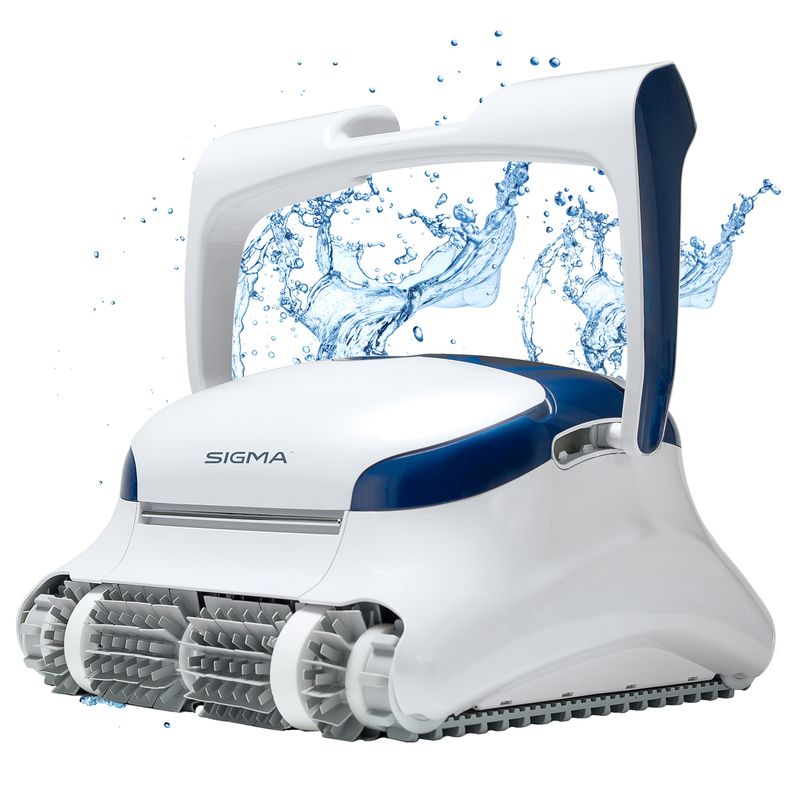
On rough exposed aggregate the Sigma's four scrubbing brushes are the reason to buy it. Each pass puts twice the brush of a two-brush robot into the gaps between stones, and three commercial-grade ProLine motors pull 4,500 gallons per hour through NanoFilters to keep what comes loose. HyperGrip tracks hold textured walls, it scrubs the waterline, and SmartNav 3.0 with an onboard gyroscope covers the floor in order. The app tells you when the filter is full, which happens sooner on a finish that hides this much dust.
Temporarily out of stock
Longest cycle and four filter options
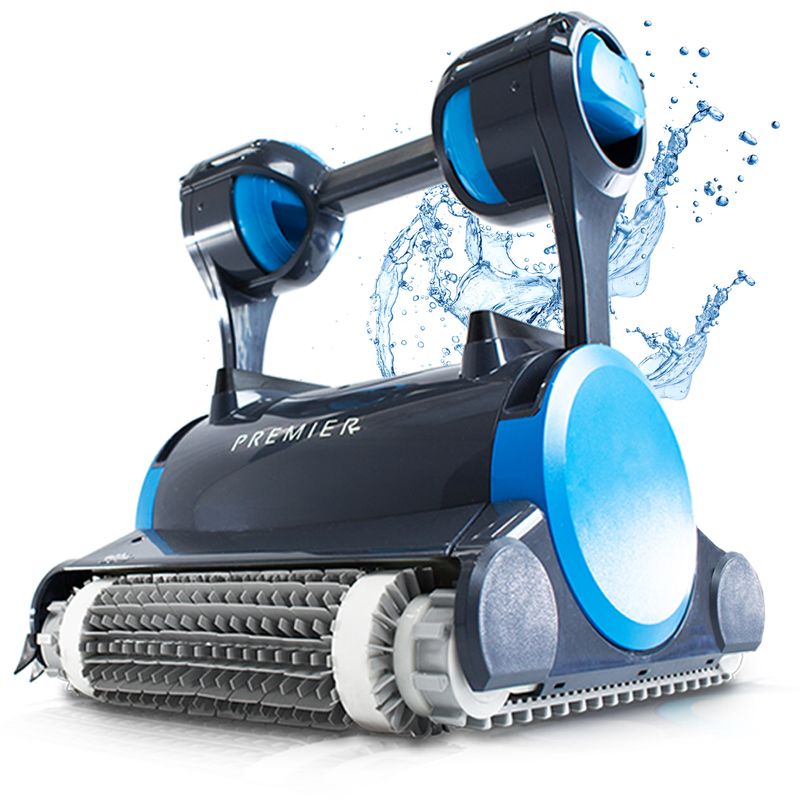
The Premier takes second place by giving rough aggregate the other thing it needs: time. Its 3-hour cycle is the longest here, so two scrubbing brushes get more passes over the same stones. The Multi-Media set lets you fit NanoFilters for dust in the texture, standard fine filters for everyday cycles and the oversized leaf bag in the fall, each swapped in seconds from the top. It cleans floor, walls and waterline, matches the Sigma's flow at 4,500 gallons per hour, and carries a 3-year warranty.
Temporarily out of stock
Right-sized for polished and quartz finishes
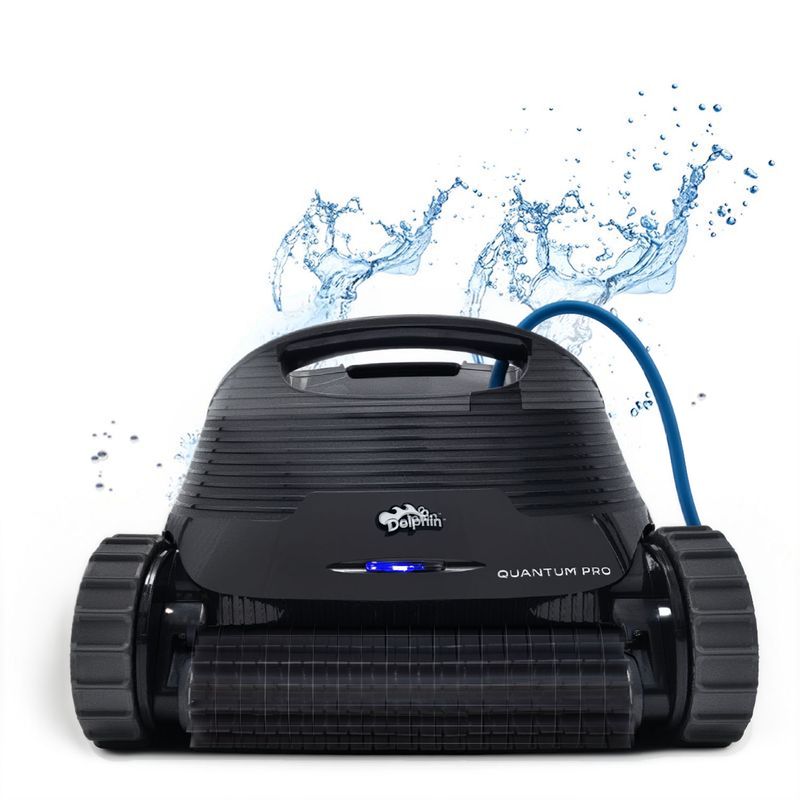
Polished aggregate, quartz and glass-bead blends are smooth enough that brush count stops being the issue. For those the Quantum is the sensible buy: two HyperBrushes at twice standard speed, a 2-hour cycle, and the lowest price of the three 50 ft robots on this page. Pebble is on its published surface list. A full set of NanoFilter panels fits the XXL MaxBin, whose filter area of over 400 square inches takes in a lot of dust before it needs a rinse. It also cleans sun shelves, Baja ledges and stairs.
Temporarily out of stock
Aggregate pools 33 ft and under
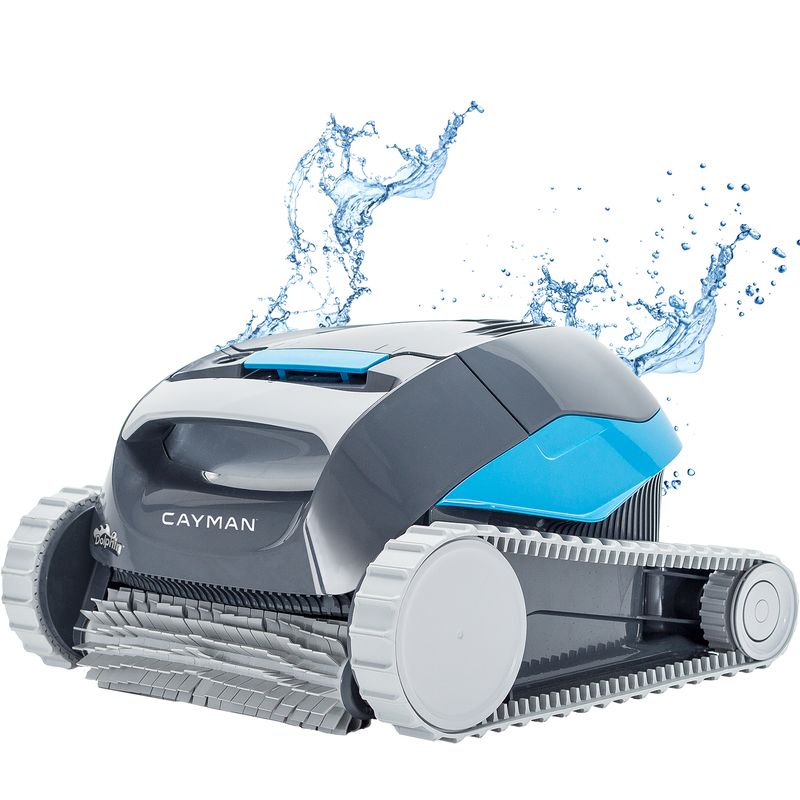
Smaller aggregate pools, including plunge pools and spools finished in pebble or quartz, do not need a 50 ft robot. The Cayman is rated to 33 ft and publishes pebble, concrete and gunite among its surfaces. One HyperBrush at twice standard speed scrubs floor and walls in a 2-hour cycle, the MaxBin empties through a top hatch with one tab, and the timer on the power supply runs it every day. For dust held in the texture, add the optional NanoFilter panels when you order.
How to judge a robot for this
Dirt on exposed aggregate sits below the tops of the stones, where a single light pass skims over it. More brushes and faster brushes put more edges into the low spots. The Sigma carries four scrubbing brushes, the Premier two, and the Quantum two HyperBrushes spinning at twice the speed of standard brushes.
Fine dirt comes out of rough texture slowly, so cycle length helps. The Premier runs 3 hours, the Sigma 2.5, the Quantum and Cayman 2. On polished aggregate a 2-hour cycle is ample. On heavily exposed stone the longer cycles earn their keep.
What the brushes dislodge from aggregate is mostly dust and silt, and standard filters let the finest of it back out. NanoFilters come with the Sigma and Premier, a full set of NanoFilter panels comes with the Quantum, and they are an optional add-on for the Cayman.
Exposed aggregate is abrasive. Any robot's brushes wear sooner on it than on plaster or vinyl, and worn brushes clean less and climb less. Budget for replacements and check them a few times a season. On polished aggregate, wear is ordinary.
Side by side
| Specification | Dolphin Sigma | Dolphin Premier | Dolphin Quantum | Dolphin Cayman |
|---|---|---|---|---|
| Price today | $2349 | $1949 | $1599 | $1049 |
| Brushes | Quad scrubbing brushes | Dual scrubbing brushes | Dual HyperBrush | HyperBrush |
| Cleans | Floor, walls and waterline | Floor, walls and waterline | Floor, walls, waterline, sun shelves and stairs | Floor and walls |
| Traction | HyperGrip tracks | HyperGrip tracks | HyperGrip tracks | HyperGrip tracks |
| Pool length | Up to 50 ft | Up to 50 ft | Up to 50 ft | Up to 33 ft |
| Filtration | NanoFilters and standard filter cartridges | Multi-Media: NanoFilters, oversized leaf bag and standard fine filters | XXL MaxBin basket with standard and NanoFilter panels | MaxBin basket with fine panels; NanoFilter panels optional |
| Robot weight | 24.6 lb | 20.3 lb | 18.3 lb | 14.6 lb |
| Warranty | 3 years | 3 years | 2 years | 2 years |
Run your palm across a step or a shallow wall. The feel tells you more than the name on the brochure, because builders and brands use these terms loosely. Exposed aggregate feels like a gravel path set in cement. Pebble blends are bumpy but rounded. Quartz and glass-bead finishes feel like fine sandpaper. Polished aggregate has been ground flat and feels close to plaster.
Texture also varies within one pool: steps and benches are often left rougher for footing, and floors wear smoother over the years. Judge by the roughest large area, then read across.
| Finish | How it feels | What it asks of a robot | Start with |
|---|---|---|---|
| Exposed aggregate | Rough, stones stand proud | Most brush, longest cycle, fine filter | Sigma or Premier |
| Pebble blends | Bumpy but rounded | Good brush contact, fine filter | Premier or Quantum |
| Quartz or glass bead | Lightly textured | Standard brushing, fine filter weekly | Quantum |
| Polished aggregate | Smooth, like plaster | Nothing special | Quantum, or Cayman up to 33 ft |
Aggregate is good at hiding dirt. Silt settles between the stones and the pool still looks clean from the deck, until a swimmer's feet stir up a cloud. A robot gets that dirt out in two steps: the brush knocks it free and the flow carries it into the filter. If the filter is too coarse, the finest of it goes straight back into the water and settles again.
So use fine filtration on purpose. Fit the NanoFilters for one cycle a week, ideally in the morning after the pump has been off and the dust has settled. Rinse them straight afterward, because fine media loads quickly. Use the standard filters the rest of the week and whenever leaves are in the pool.
Exposed aggregate wears PVC brushes the way a rough road wears tires. That is normal, and it is the price of a finish that hides dirt and grips bare feet. What matters is catching the wear before cleaning suffers.
Questions, answered
The robot does not, but its brushes do on exposed aggregate. The stone is abrasive, so PVC brushes lose their edges sooner than they would on plaster or vinyl. Check them every month or two in season and replace them when the ridges are worn down. Polished aggregate wears brushes at an ordinary rate.
The picks here publish pebble, and aggregate behaves the same way under a robot: a cement base with stone, quartz or glass set into it. You will not find the word aggregate on a Dolphin surface list. If your finish is unusual, talk to a Dolphin Expert and describe how it feels underfoot.
Not in normal use. The brushes are soft PVC and the tracks are rubber, both far softer than quartz, glass or stone. What can scuff a polished finish is grit dragged under a brush, so rinse the brushes and tracks when you rinse the filter.
When your builder says so, and not before. New cement-based finishes cure under water for a period the builder sets, with hand brushing during start-up. A robot's tracks and brushes should stay out until that period is over. Ask for the date and plan the purchase around it.
The verdict
Feel the finish, then buy for it. Rough exposed aggregate rewards the Sigma and its four brushes, or the Premier and its 3-hour cycle. Polished, quartz and glass-bead finishes are well served by the Quantum at a lower price. A pool 33 ft or under takes the Cayman, with NanoFilter panels added for dust. On any aggregate, run a fine filter weekly and treat brushes as a part you will replace.
Keep reading
