

Try it in your pool for 30 days. Exchange it for another Dolphin for free, or return it with no restocking fee.
Your bag is empty.
By pool surface
Top pick: Dolphin Premier
$1949 today · Free shipping · 30 day trial
The short answer
Aging pool paint chalks into a powder finer than most filters can hold: which robots catch it out of the box, which need an add-on, and what no robot can repair.
The best robotic pool cleaner for painted pools is the Dolphin Premier. Paint chalk is too fine for standard filters, and the Premier includes NanoFilters alongside its everyday set, with a full-filter indicator on the power supply. The Dolphin Sigma also includes NanoFilters and scrubs harder, at the top price. The Dolphin Quantum includes NanoFilter panels for less. The Dolphin Escape suits painted pools up to 33 ft once you add its optional NanoFilter panels.
Rub your hand along the wall of a painted pool that is a few seasons old and it comes away white. That is chalking: the top layer of epoxy, acrylic or rubber-base paint breaking down into powder. Swimmers stir it up, it clouds the water, and overnight it settles on the floor as a pale dust.
A robot can collect that dust, but only if its filter is fine enough. Chalk passes through a standard filter and comes straight back out, so the pool can look worse during the cycle than before it. The deciding feature is ultra-fine filtration, and the ranking follows from which robots include it. Brushes, motors and apps come second.
Our picks, in order
Temporarily out of stock
Both filter sets and a full-filter indicator
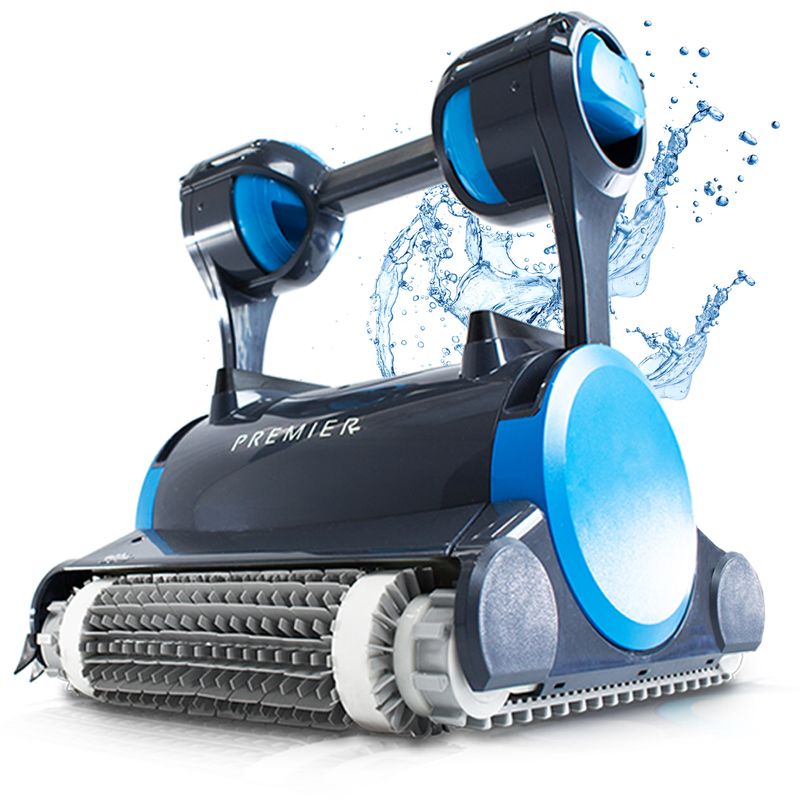
A chalking pool is managed by swapping media, and the Premier's Multi-Media system is built for that. NanoFilters and standard fine filters are both in the box, along with an oversized leaf bag, and they change in seconds from the top with no tools. An indicator on the power supply shows when the filter is full, which on a chalking pool can be partway through a cycle. The 3-hour cycle gives settled powder time to be collected. Concrete and plaster, the shells under most pool paint, are on its published surface list.
Temporarily out of stock
Hardest scrubbing, NanoFilters included
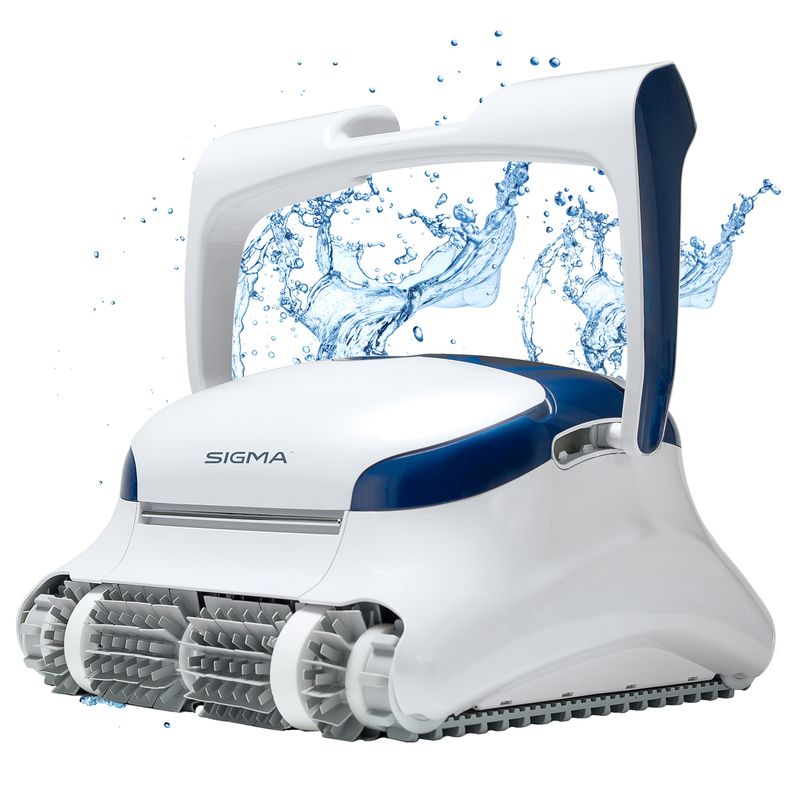
The Sigma comes with NanoFilters and standard cartridges, so it holds chalk from the first cycle. Its four scrubbing brushes knock more loose powder off the walls and floor per pass than any other pick, and three ProLine motors at 4,500 gallons per hour carry it into the filter. That clears a chalky surface faster and fills the filter faster too; the app sends an alert when it does. It ranks second because paint is usually the economical way to finish a pool, and this is the highest-priced robot on the page.
Temporarily out of stock
Ultra-fine panels at the lowest 50 ft price
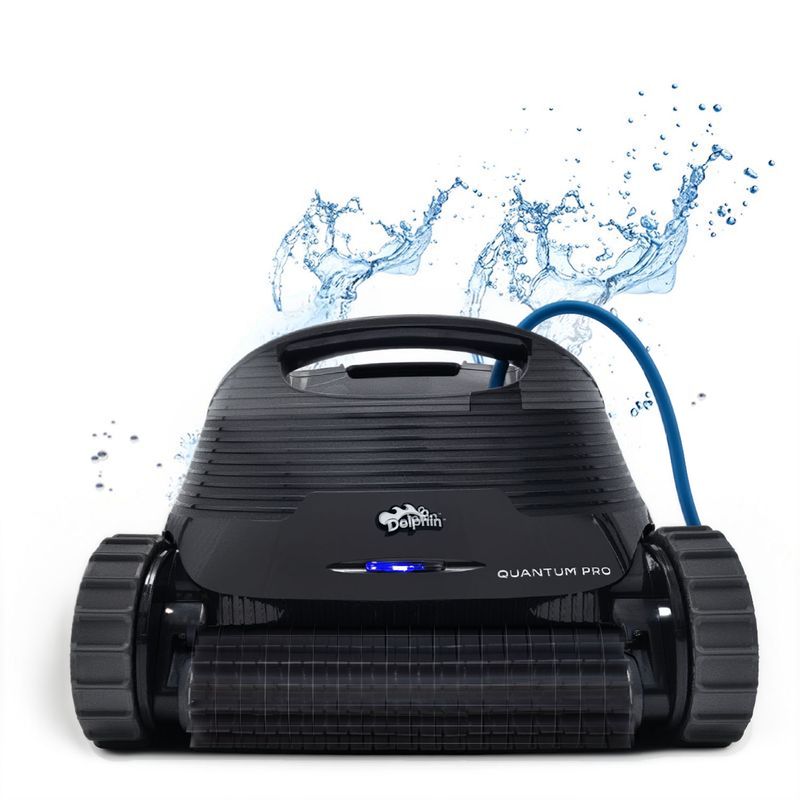
The Quantum includes a full set of NanoFilter panels for its XXL MaxBin, and the size of that basket is the point. With over 400 square inches of filter area there is more surface for chalk to load before flow drops, which helps a cycle finish before the filter clogs. The basket lifts out of the top with one click and rinses under a hose. Two HyperBrushes at twice standard speed sweep the powder up, and at 18.3 lb it is the lightest of the three 50 ft robots, as well as the least expensive.

Temporarily out of stock
Least robot for a small painted pool
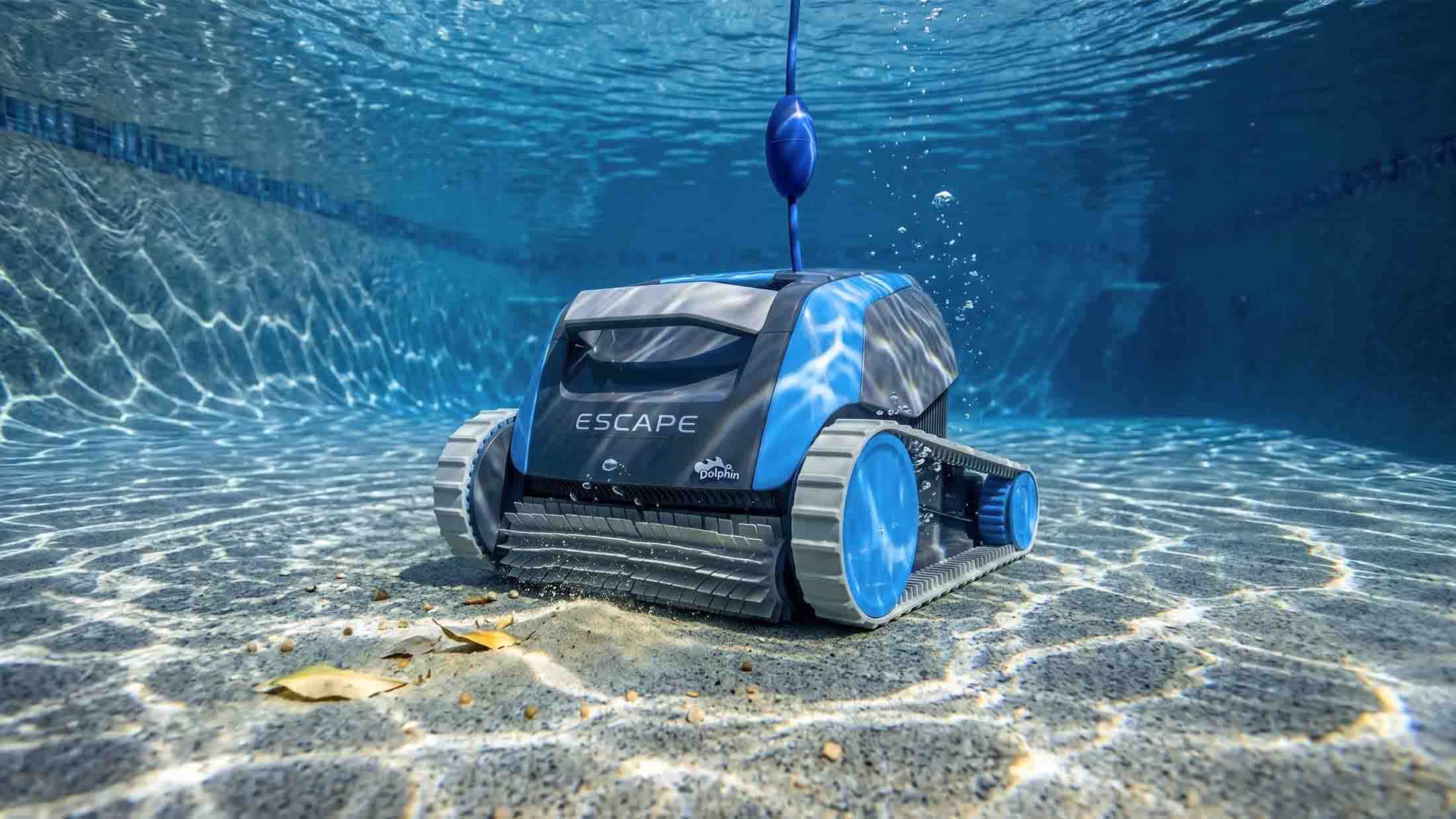
For a painted pool 33 ft or under, an Escape with NanoFilter panels added is the least robot that does this job properly. The panels are an optional add-on for its MaxBin, so the fine filtration that leads this page is available; it is just not in the box. The basket loads from the top, the robot weighs 14.2 lb and the cycle takes 1.5 hours, all of which matter when the filter is rinsed after every run. Its HyperBrush cleans floor and walls. Gunite, the sprayed concrete under many painted pools, is on its surface list.
How to judge a robot for this
Chalk is closer to flour than to sand. NanoFilters are the media made for particles that small. They are included with the Premier and Sigma, and as a full set of panels with the Quantum. For the Escape and Cayman, NanoFilter panels are an optional add-on, so order them with the robot.
Fine media loads fast. On a painted pool that also collects leaves, you want a standard set to switch to, or the ultra-fine filter blinds over and the robot stops picking anything up. The first three picks include both kinds in the box.
On a chalking pool the fine filters are rinsed after every cycle, not once a week. That makes access a daily matter. The Premier, Quantum and Escape load from the top. The Sigma uses cartridges. Robot weight counts too, because the robot comes out of the water each time.
Pool paint is a thin coating, far softer than plaster. The PVC brushes on these robots are not abrasive, and on sound paint they clear loose chalk without cutting into the film. They will lift paint that is already blistered or flaking, which is the paint failing, not the robot.
Side by side
| Specification | Dolphin Premier | Dolphin Sigma | Dolphin Quantum | Dolphin Escape |
|---|---|---|---|---|
| Price today | $1949 | $2349 | $1599 | $659 |
| Brushes | Dual scrubbing brushes | Quad scrubbing brushes | Dual HyperBrush | HyperBrush |
| Cleans | Floor, walls and waterline | Floor, walls and waterline | Floor, walls, waterline, sun shelves and stairs | Floor and walls |
| Traction | HyperGrip tracks | HyperGrip tracks | HyperGrip tracks | HyperGrip tracks |
| Pool length | Up to 50 ft | Up to 50 ft | Up to 50 ft | Up to 33 ft |
| Filtration | Multi-Media: NanoFilters, oversized leaf bag and standard fine filters | NanoFilters and standard filter cartridges | XXL MaxBin basket with standard and NanoFilter panels | MaxBin basket; NanoFilter panels optional |
| Robot weight | 20.3 lb | 24.6 lb | 18.3 lb | 14.2 lb |
| Warranty | 3 years | 3 years | 2 years | 2 years |
Wipe a dry hand along the wall just under the surface. A white film on your palm is chalking, which is normal aging for pool paint and speeds up with strong sun and unbalanced water. A robot with fine filters manages it. Then make a second check.
Look for blisters, bubbles or bare patches, especially on steps and in the deep end. That is the paint letting go of the shell. A robot will collect the flakes, and its brushes will take loose ones off sooner than they would fall on their own, but it cannot fix the cause. The fix is to drain, prepare and repaint. If that is a season away, a robot helps keep the floor clear in the meantime.
Expect the first few cycles to look discouraging. The brushes loosen powder that has been sitting on the walls, the water clouds, and the fine filter loads quickly. That is the backlog coming off. Rinse and run again, and the gap between rinses grows.
Questions, answered
Not sound paint. The brushes are soft PVC and are not abrasive. Paint that is already blistered or lifting will come away under a robot, as it would under a hand brush or a swimmer's foot. If flakes are turning up in the filter, the coating is failing and the answer is repainting, not a gentler robot.
Because the robot's filter is too coarse for paint chalk. The brushes loosen the powder and a standard filter lets it pass back into the water. Fit NanoFilters, keep the pool's own filter running, and the cloud gets collected instead of circulated. Allow a few cycles for the backlog.
No. The MaxBin's standard filtration is made for leaves, sand and everyday dirt, and chalk goes through it. NanoFilter panels are an optional add-on for the Escape and are what this job needs. Add them when you order, and keep the standard panels for leaf season.
Yes. Wait out the cure time the paint maker gives for that product. Epoxy, acrylic and rubber-base paints cure on different schedules, and the label or your painter will have the figure. Paint that has not cured can mark under tracks and brushes.
No Dolphin in this guide lists paint by name. They list what is under it: concrete, plaster or gunite, depending on the robot. A painted pool is one of those shells with a thin, smooth coating on top. If your coating is unusual, such as a textured or rubberized paint, talk to a Dolphin Expert first.
The verdict
On a painted pool, ask one question of any robot: does it hold chalk? The Premier answers best, with both filter sets and a full-filter indicator. The Sigma scrubs hardest, and the Quantum gives you included ultra-fine panels for the least money at 50 ft. If the pool is 33 ft or under, an Escape with NanoFilter panels added does the job for less than any of them. And if the filter is catching flakes, not powder, start pricing a repaint.
Keep reading
