

Try it in your pool for 30 days. Exchange it for another Dolphin for free, or return it with no restocking fee.
Your bag is empty.
By feature
Top pick: Dolphin Sigma
$2349 today · Free shipping · 30 day trial
The short answer
Only one of the five Dolphins in this guide carries a gyroscope. Here is what it does in the water, which pools reward it, and which owners can keep the money.
The Dolphin Sigma is the only pick: SmartNav 3.0 with an onboard gyroscope, in a robot for in-ground pools up to 50 ft. It is worth its price in freeform, sloped and obstacle-heavy pools. The other four Dolphins here navigate by SmartNav 2.0 scanning, without a gyroscope. If your pool is a flat rectangle, round or oval, that is enough, and you can spend far less.
A gyroscope is a small sensor that tells a machine which way it is pointing and how it is tilted. In a pool robot, that means three useful things. The robot can hold a straight line across the floor. It can tell when it has left the floor for a wall or a slope. And when a ladder or a step spins it around, it knows by how much, and can turn back to the heading it had.
Shoppers looking for the best robotic pool cleaner with gyroscope navigation will find a short list on this page: one robot. Of the five Dolphins in this guide, only the Sigma has one. We are not going to pad the ranking with robots that lack the feature. The rest of the page takes on the more useful question, which is whether your pool needs a gyroscope at all.
Our picks, in order
Temporarily out of stock
The only gyroscope of the five Dolphins
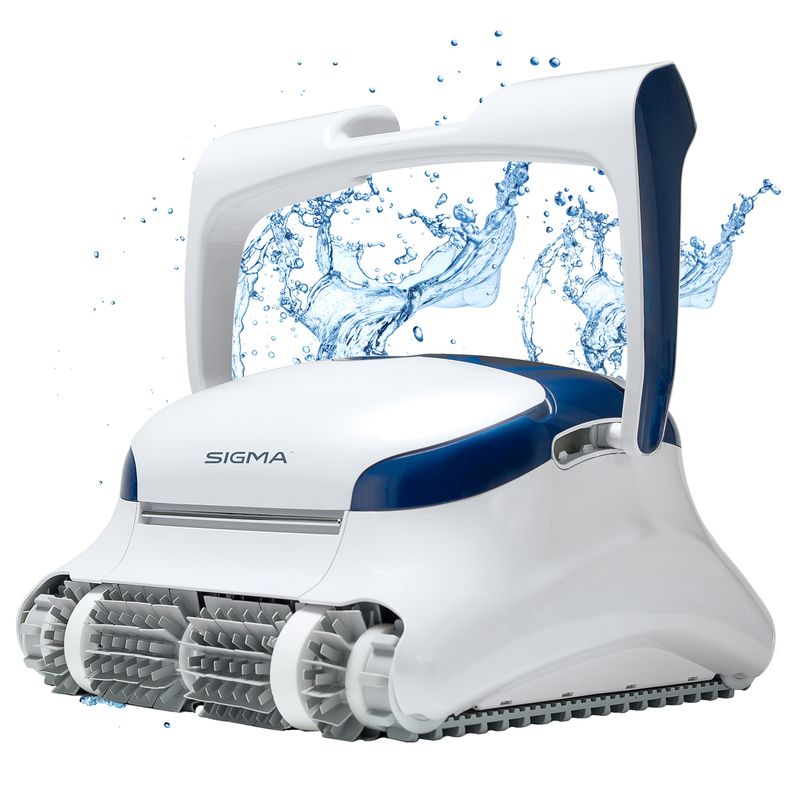
The Sigma is the one robot in this guide with a gyroscope. Its SmartNav 3.0 system uses the onboard sensor to track heading and tilt, so the robot can hold a straight pass, know when it is on a wall or a slope, and return to its line after an obstacle turns it. In an in-ground pool up to 50 ft with curves, a hard break into the deep end or a floor full of fittings, that is what keeps coverage even.
The rest of the machine is built to the same level. Its three ProLine motors deliver 4,500 GPH. Quad scrubbing brushes work floor, walls and waterline in a 2.5-hour cycle. The myDolphin Plus app schedules cycles by day and time, the 55 ft cable has a 360-degree anti-tangle swivel, and the warranty runs 3 years.
How to judge a robot for this
A robot in a rectangle meets a straight wall at every turn. A freeform pool gives it nothing straight to work from, so each turn starts at a slightly different angle. A heading sensor keeps the passes parallel when the walls are not.
Driving across a slope pulls a robot downhill, a little on every pass. A robot that senses tilt can tell floor from slope from wall and correct for the drift. The steeper the break into the deep end, the more this matters.
Ladders, steps, pop-up heads and raised drain covers knock a robot off its line. Without a sense of heading, it carries on in whatever direction it was left facing. With one, it can recover the pass it was on.
Small errors add up over distance. In a 20 ft pool a slightly crooked pass still overlaps the last one. In a 45 ft pool it can leave a wedge of floor untouched. Longer pools give a gyroscope more to correct.
Nobody buys a gyroscope alone. On the Sigma it comes with quad brushes, three motors, app control and the highest price in this guide. Decide whether you want that whole machine, not just the sensor.
Three kinds of pool reward one. Freeform pools come first. Kidney, lagoon and other curved outlines give a robot no straight wall to line up on. Over a cycle its turning angles spread out and the passes stop being parallel. A robot that tracks its heading keeps them in order.
Sloped pools are second. A deep end with a steep break tilts the robot, and gravity drags it sideways as it crosses. Sensing tilt lets it tell a slope from a wall and steer against the drift.
The third is the busy pool: fixed steps, a ladder, benches, pop-up cleaning heads, a raised main drain. Each bump rotates the robot a little. If your pool has several of these and is also large, the Sigma's gyroscope is doing real work in every cycle.
A flat-floored rectangle is the easiest shape there is, and SmartNav 2.0 scanning covers it. The same goes for rounds and ovals, which is why above-ground owners rarely need to think about gyroscopes. In those pools, put the money toward things you will notice: a robot that fits the pool, a filter you will empty willingly and a cable that reaches.
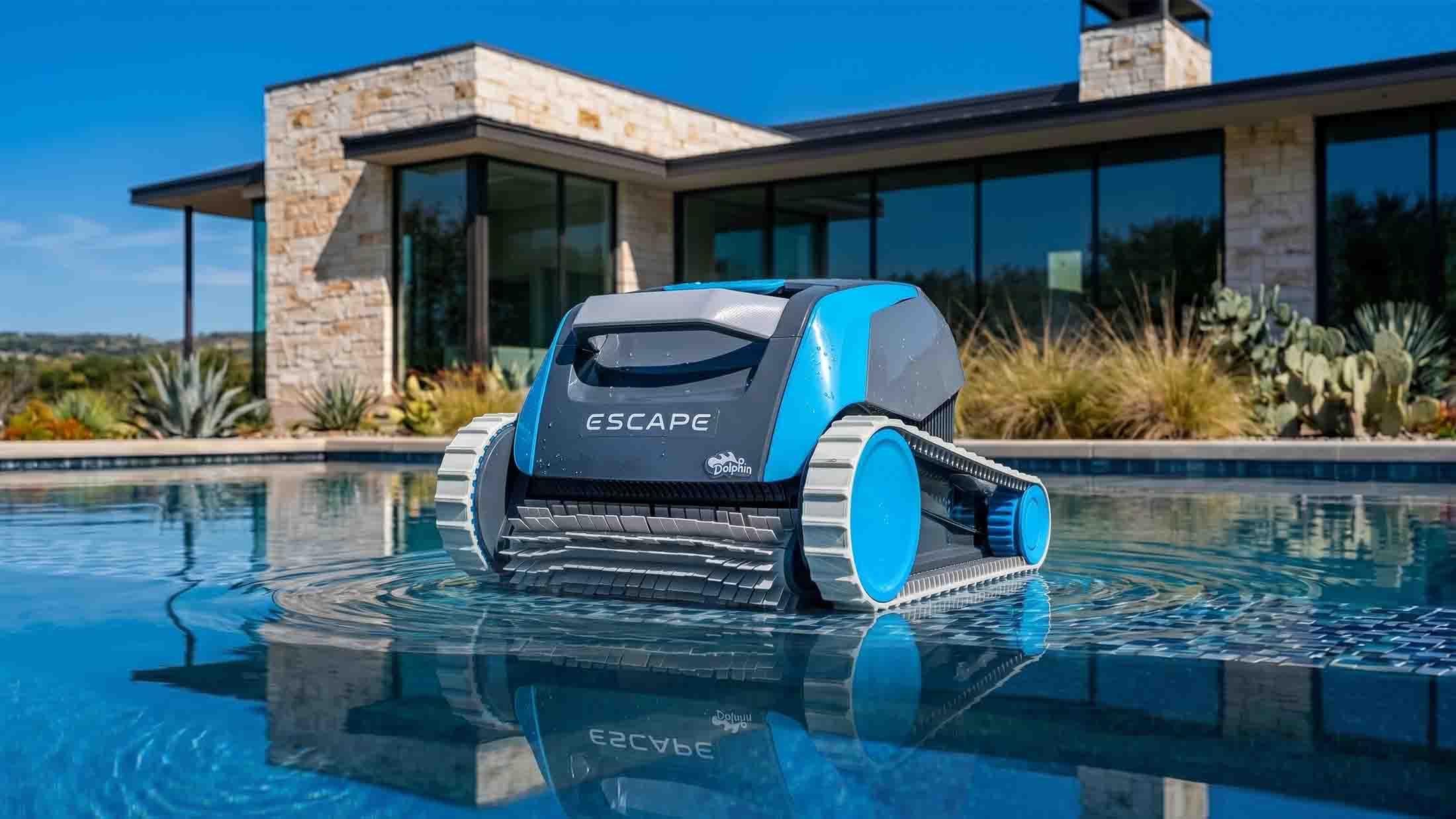
For in-ground pools up to 50 ft without hard slopes, two robots navigate by SmartNav 2.0 and cost less than the Sigma. The Quantum senses ladders and drains and covers shelves and stairs. The Premier lists L-shaped pools among its published shapes. For pools up to 33 ft, above-ground or in-ground, the Escape does the job for less again.
It does not map the pool. There are no cameras, sonar or lasers on any robot here, and the Sigma does not store a plan of your pool or drive to where the dirt is. A gyroscope reports direction and tilt. The navigation system uses that to keep its pattern tidy.
It does not clean anything by itself. Brushes, flow and filters do that, and a well-aimed robot with a clogged filter collects nothing. It does not untangle a cable or lengthen one. And it does not put a robot onto surfaces it was not built for: top steps and very shallow ledges are still jobs for a hand brush.
Questions, answered
It senses the robot's heading and tilt. With that information a robotic pool cleaner with gyroscope navigation can hold a straight line, recognize when it has moved from floor to slope or wall, and return to its original direction after an obstacle turns it. The payoff is more even coverage in pools that are hard to navigate.
Of the five Dolphins in this guide, only the Sigma. Its SmartNav 3.0 system includes an onboard gyroscope. The other four use SmartNav 2.0 scanning, which has none. If a gyroscope is a must-have, the choice here is made for you.
No. A gyroscope measures direction and tilt. It does not see the pool, and it does not build or store a map. None of the robots here uses cameras or sonar. What the gyroscope does is keep the cleaning pattern straight and consistent, which is a different thing from knowing in advance where the walls are.
Usually not. Straight walls and a regular outline give scanning navigation an easy job. A gyroscope helps a rectangle only if the floor has a steep slope, or the pool is long and full of fixtures. For a plain rectangle, a robot without one is the sensible buy.
Not among these five. The Sigma is built for in-ground pools. The two robots here made for above-ground pools, the Escape and the Cayman, use SmartNav 2.0 scanning, and a round or oval pool with a flat floor is well within what that handles.
Only if your pool gives it work to do. You are also paying for four brushes, three motors, app scheduling and a longer warranty. If the pool is freeform, sloped or crowded, the package makes sense. If you are unsure, our 30 day in-pool trial with free exchanges and no restocking fee lets you find out in your own water.
The verdict
The question is not which gyroscope robot to buy. Here there is one, the Sigma. The question is whether your pool will use it. Freeform walls, a steep deep end, a long floor crowded with steps, ladders and pop-up heads: yes, and the Sigma is the pick. A flat rectangle, round or oval: no. Buy the least robot that fits the pool, which up to 33 ft is the Escape, and spend the difference on something you will notice.
Keep reading
