

Try it in your pool for 30 days. Exchange it for another Dolphin for free, or return it with no restocking fee.
Your bag is empty.
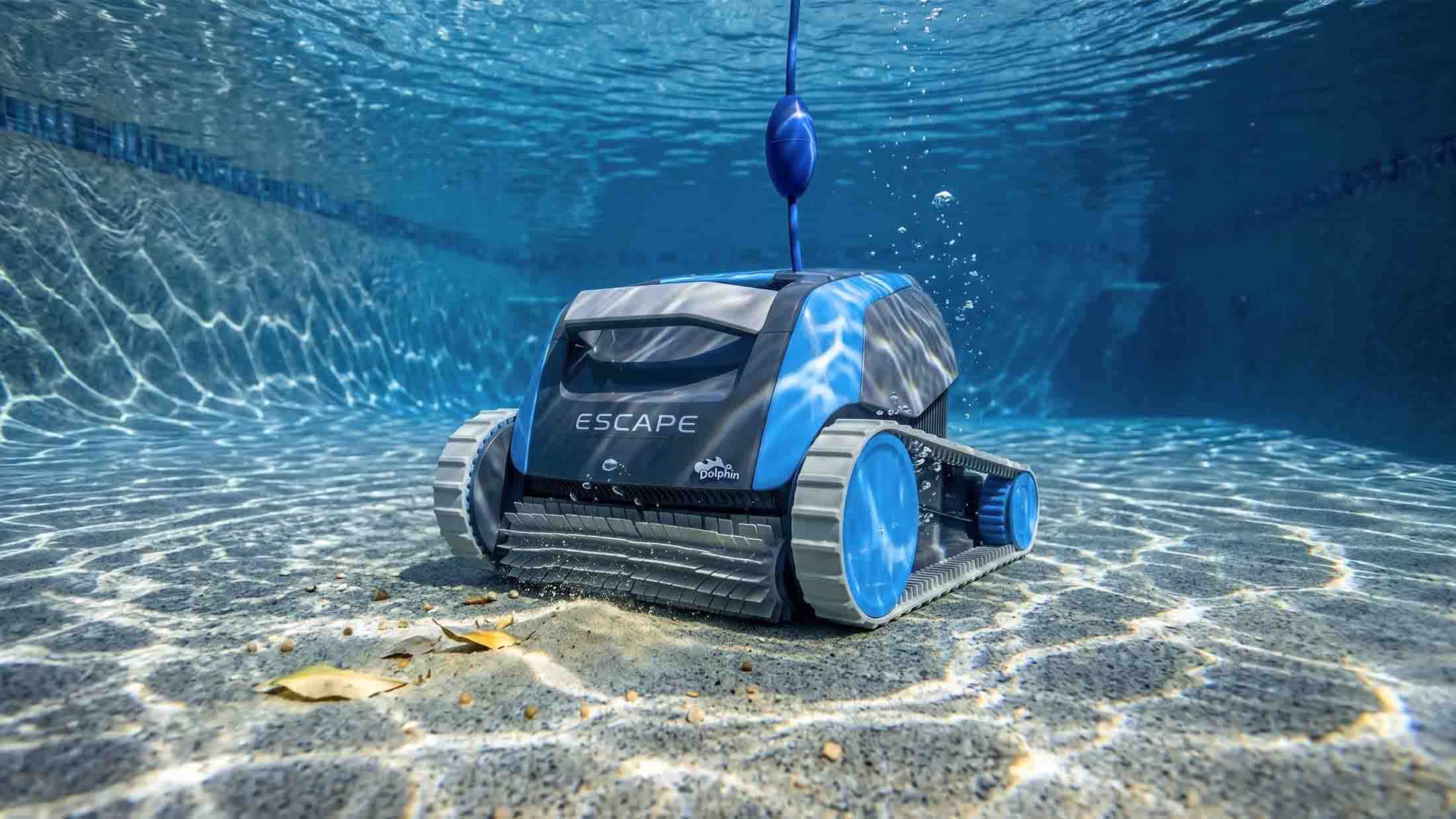
By steps, ledges and tricky features
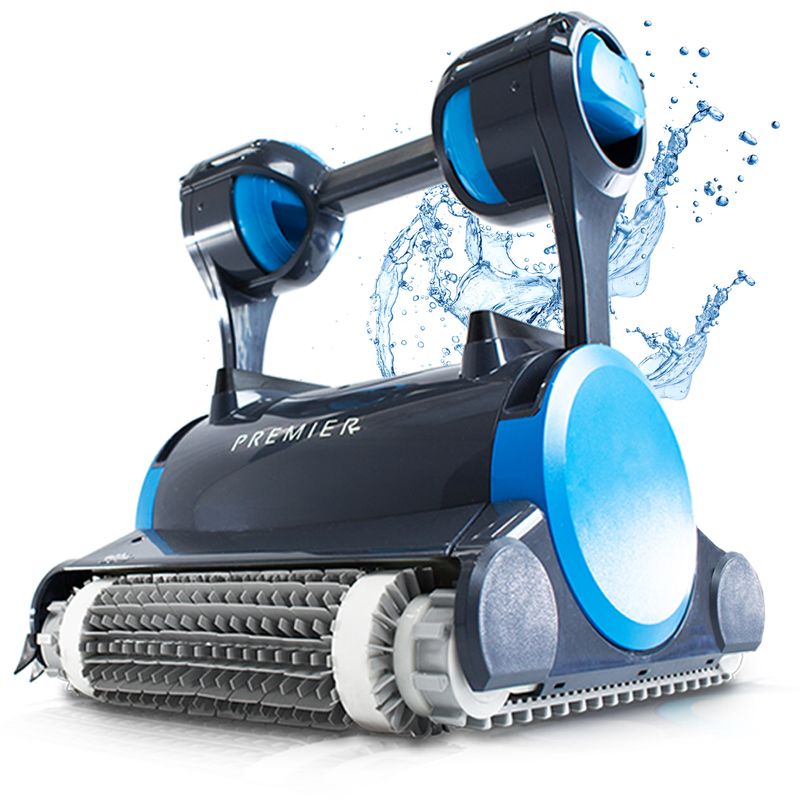
Top pick: Dolphin Premier
$1949 today · Free shipping · 30 day trial
The short answer
Depth uses up cable, adds wall and sends debris to the lowest point, so a deep pool is where cycle time and cable length earn their price.
For a diving-depth pool, the Dolphin Premier leads: a 3-hour cycle for tall walls and a 55 ft cable with a 360-degree swivel to reach the deep-end floor. The Dolphin Sigma matches the cable and adds a gyroscope and app. The Dolphin Quantum is the lowest-priced way to get the 55 ft cable. The Dolphin Cayman is the budget choice, but only if the pool is 33 ft or under.
Choosing the best robotic pool cleaner for deep pools starts with what depth does to a robot. A pool that is 8 ft or deeper at the diving end is not just more water: depth changes three things. The cable has to travel down as well as across, so the deep end eats reach. The walls are taller, so there is more to climb and scrub. And everything loose in the pool slides to the lowest point and waits there.
That is why the ranking here puts cable length and cycle time before anything else. It is also one of the few guides where we steer most readers past the smallest robot. The Dolphins are built for residential in-ground pools, standard diving depths included; we will not invent a maximum depth figure for them.
Our picks, in order
Temporarily out of stock
Longest cycle for tall deep-end walls
Depth is a time problem as much as anything, and the Premier has the most time: a 3-hour cycle, the longest in this guide, driven by dual commercial-grade ProLine motors moving 4,500 GPH. That leaves room to climb every tall wall to the waterline and still make repeated passes over the deep-end floor.
The 360-degree anti-tangle swivel on its 55 ft cable means the long drop to the bottom does not turn into a twisted cable that shortens its reach. The weekly timer on the power supply needs no phone, and the warranty is 3 years.
Temporarily out of stock
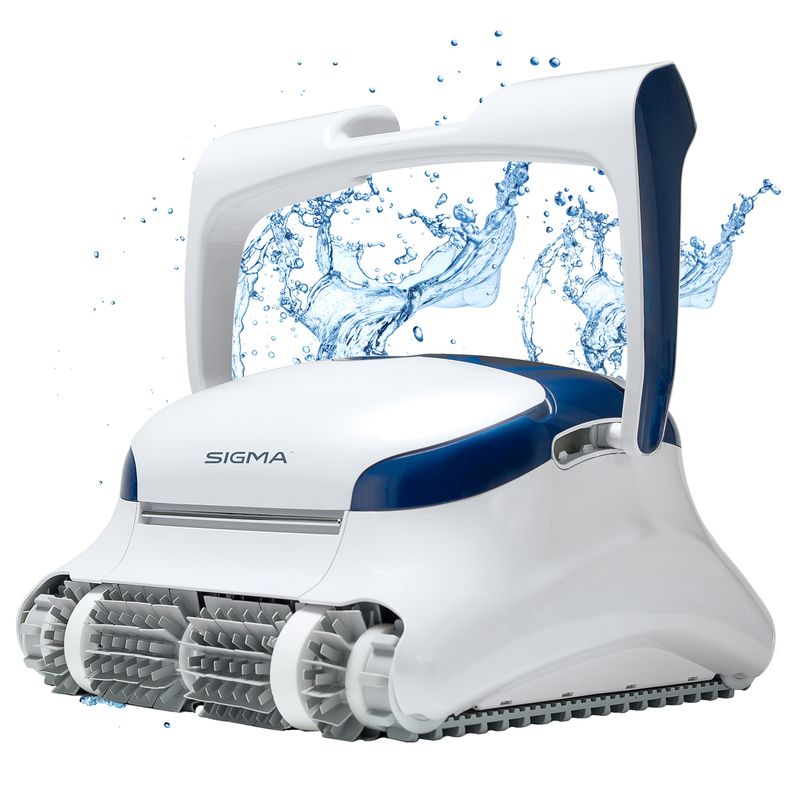
Three motors and a gyroscope for steep hoppers
The Sigma has the same 55 ft swivel cable and 4,500 GPH as the Premier, from three ProLine motors. It adds SmartNav 3.0 with an onboard gyroscope. In a deep pool that matters on the hopper: the steep slopes into the deep end are where a robot can lose its heading, and the gyroscope tells the Sigma which way is up.
Four scrubbing brushes work the tall walls, the 2.5-hour cycle is the second longest here, and the myDolphin Plus app sends a filter alert. It is second because it costs the most and weighs the most.
Temporarily out of stock
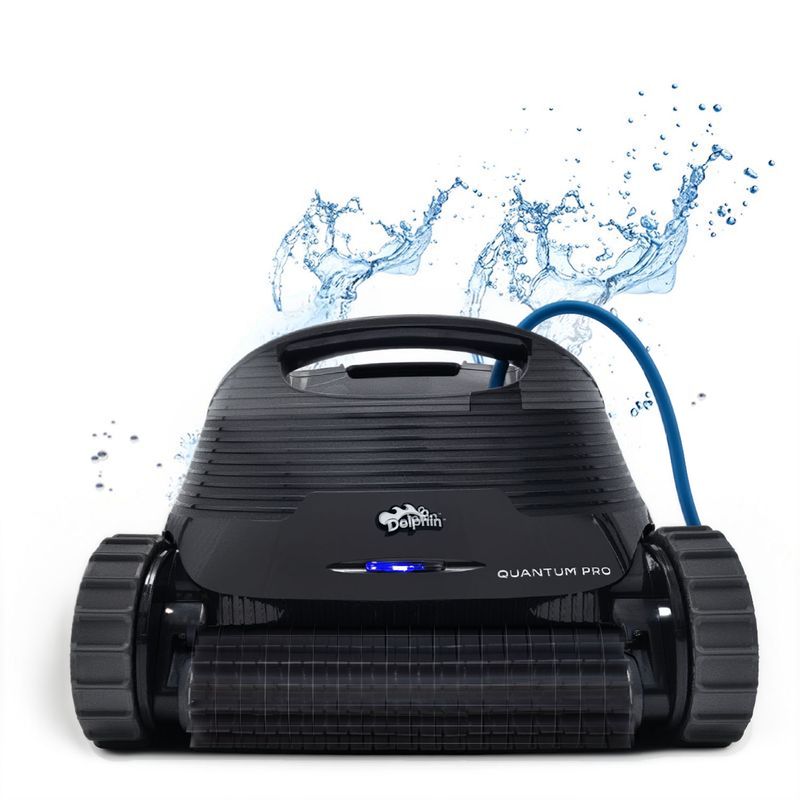
Lowest-priced way to a 55 ft swivel cable
If the deep end is the reason you need a long cable, the Quantum is the lowest-priced robot here that has one: 55 ft with an anti-tangle swivel, the same length as the two picks above it.
Its 2-hour cycle is the shortest of the three 50 ft robots, so on a large, deep pool it has less time per run for tall walls; its weekly timer can make that up by running every day. In return it is the lightest of the three at 18.3 lb, which counts when you are drawing it up from 9 ft.
Temporarily out of stock
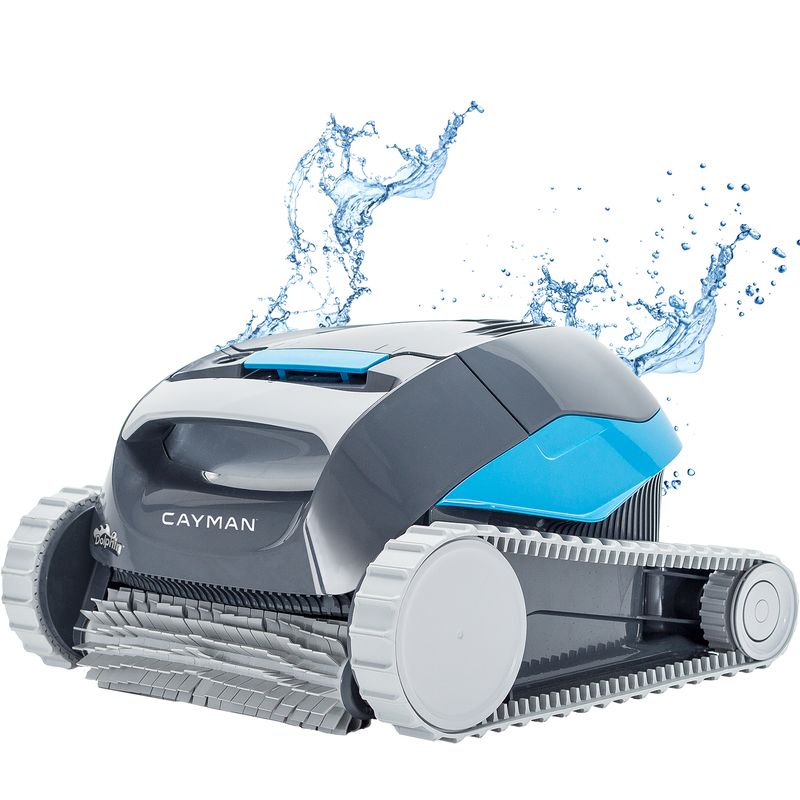
Deep pools of 33 ft or less, on a budget
The Cayman earns its place on one condition: the pool is 33 ft or shorter. Many diving pools are, and for those it is the smallest robot we would trust with the job. Its 50 ft cable is 10 ft longer than the Escape's, and that difference is roughly the depth of a diving end.
It cleans floor and walls in a 2-hour cycle on HyperGrip tracks, its timer runs every day from the power supply, and at 14.6 lb it is the easiest pick to bring up from the bottom. The cable has no swivel, so lay it out straight now and then.
How to judge a robot for this
Every foot of depth is a foot of cable not available for distance. A robot on the floor of a 9 ft deep end has spent 9 ft of cable getting there. Add the power supply's setback and the run along the pool, and a short cable runs out sooner than the length rating suggests.
Deep-end walls can be twice the height of shallow-end walls, and a robot climbs each one from the floor up. More wall means more of the cycle spent climbing. The Premier, Sigma and Quantum scrub to the waterline; the Cayman cleans the wall and stops below it.
A fixed cycle has to cover a bigger surface in a deep pool. The Premier's cycle is 3 hours and the Sigma's 2.5, while the Quantum and Cayman each run 2. On a pool with a long, deep hopper, the extra time goes into fuller wall coverage and more passes over the low point.
A robot that stops in the deep end has to be drawn up by its cable and then lifted by the handle, full of water. Weights run from 14.6 lb for the Cayman to 24.6 lb for the Sigma.
Side by side
| Specification | Dolphin Premier | Dolphin Sigma | Dolphin Quantum | Dolphin Cayman |
|---|---|---|---|---|
| Price today | $1949 | $2349 | $1599 | $1049 |
| Cleans | Floor, walls and waterline | Floor, walls and waterline | Floor, walls, waterline, sun shelves and stairs | Floor and walls |
| Traction | HyperGrip tracks | HyperGrip tracks | HyperGrip tracks | HyperGrip tracks |
| Navigation | SmartNav 2.0 | SmartNav 3.0 with gyroscope | SmartNav 2.0 | SmartNav 2.0 |
| Cable | 55 ft with 360° anti-tangle swivel | 55 ft with 360° anti-tangle swivel | 55 ft with anti-tangle swivel | 50 ft |
| Robot weight | 20.3 lb | 24.6 lb | 18.3 lb | 14.6 lb |
| Warranty | 3 years | 3 years | 2 years | 2 years |
Add three numbers. One: the distance from where the power supply will sit to the water's edge. The manual sets the minimum; purely as an illustration, say roughly 12 ft, then swap in the figure from your own manual. Two: the distance from that point on the edge to the farthest corner of the pool. Three: the water depth at the deepest point.
Say the far corner is 24 ft away and the deep end is 9 ft. That is 12 plus 24 plus 9, or 45 ft. A 55 ft cable covers it with room to move. The Cayman's 50 ft cable covers it with little slack. A 40 ft cable does not. If your total is tight, move the power supply toward the deep end before you move up a robot.
Standard residential diving pools are what these robots are made for. We do not publish a maximum depth for any Dolphin here: it is not on the fact sheets we sell from, and we would rather say so than guess. If your pool is deeper than a normal diving end, such as a dive well or a pool built for training, check the depth limit in the robot's manual before you buy, or ask a Dolphin Expert to check it with you. Cable is the other limit in very deep water: the arithmetic above still applies, with a bigger third number.
Questions, answered
The Dolphins in this guide are built for residential in-ground pools, standard diving depths included. We do not state a maximum depth in feet because none is on the spec sheets, and inventing one would not help you. For anything deeper than a normal diving end, check the manual's limit first.
In most residential pools, yes. Add the power supply's setback, the distance to the farthest corner and the 9 ft of depth. If the total comes in under 55 ft with a few feet to spare, the cable is long enough. If it is close, shift the power supply toward the deep end, which shortens the longest run.
Yes. A robot treats the steep sides of a hopper the way it treats walls and climbs them on its tracks. The flat bottom of the hopper is where debris gathers, so it gets repeated passes. If navigation on the slopes is your worry, the Sigma's gyroscope is the feature built for it.
Not bad, just tight. It is rated for in-ground pools up to 33 ft, and it cleans floor and walls. The limit is its 40 ft cable once setback and depth are taken off, plus the shortest cycle in this guide. Run the cable arithmetic for your pool. If it clears with room to spare, the Escape works; if not, the Cayman's extra 10 ft is the fix.
The verdict
Measure before you choose: setback plus farthest corner plus depth. If the pool is over 33 ft, the choice is among the three 55 ft robots. The Premier has the longest cycle. The Sigma adds the gyroscope and app. The Quantum costs least. If the pool is 33 ft or under and the numbers clear 50 ft, the Cayman does a deep pool for less. For deep water, buy cable and cycle time before features.
Keep reading
