

Try it in your pool for 30 days. Exchange it for another Dolphin for free, or return it with no restocking fee.
Your bag is empty.
By steps, ledges and tricky features
Top pick: Dolphin Premier
$1949 today · Free shipping · 30 day trial
The short answer
The deep end is the pool's dustpan, so the right robot is the one with the capacity and the cycle time to empty it.
The Dolphin Premier is the pick for deep ends: a 3-hour cycle, 4,500 GPH and a choice of oversized leaf bag or NanoFilters for whatever has slid down the slope. The Dolphin Sigma follows with a filter alert in its app, then the Dolphin Quantum with its XXL MaxBin basket at a lower price. In pools up to 33 ft, the Dolphin Cayman does the job for less. Whichever you choose, set the power supply nearer the deep end.
Watch a leaf sink in a pool with a slope and you know where it is going. Circulation and gravity carry leaves, acorns and silt downhill until they settle around the main drain. By the weekend the shallow end looks fine and the deep end holds everything the pool has collected. That makes the best robotic pool cleaner for deep ends a question of capacity and stamina, at the far end of the cable.
Three checks decide it. Can the robot hold what is down there without choking? Does its cycle last long enough to keep going back? Can its cable reach the bottom with slack to spare? This guide ranks four robots on those points. A separate guide covers pools that are unusually deep.
Our picks, in order
Temporarily out of stock
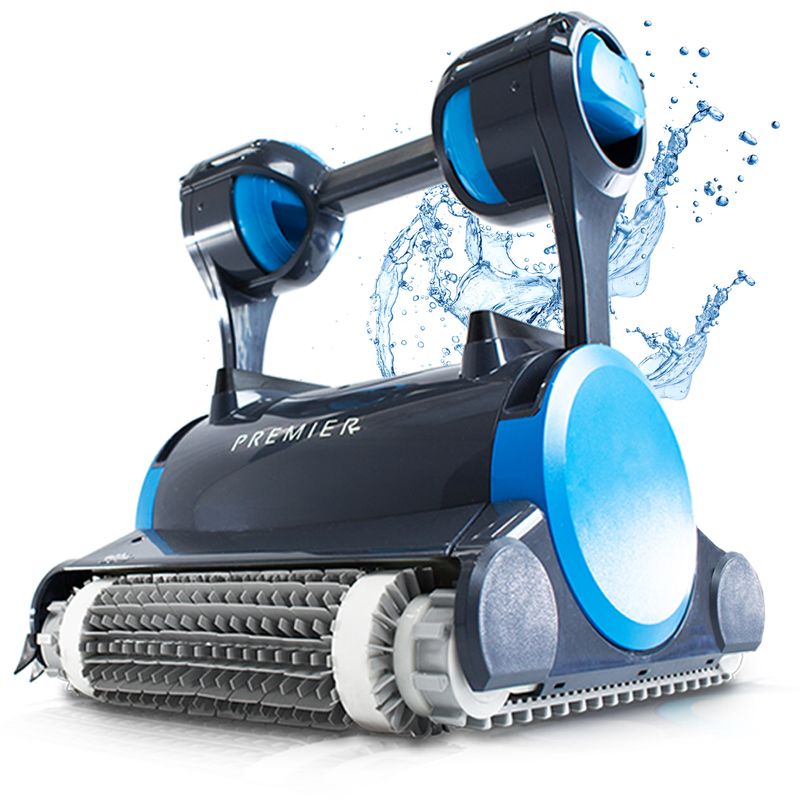
Leaf bag and three hours for the pile at the drain
The Premier is built around the problem a deep end creates. Its Multi-Media system lets you fit the oversized leaf bag when the pile is leaves and acorns, then swap to NanoFilters in seconds when what is left is silt. Both are included, with standard fine filters, and the filter loads from the top without tools.
Dual ProLine motors move 4,500 GPH for 3 hours, the longest cycle in this guide, so it has more time to keep returning to the drain area than any other pick. When the filter is full, an indicator on the power supply says so.
Temporarily out of stock
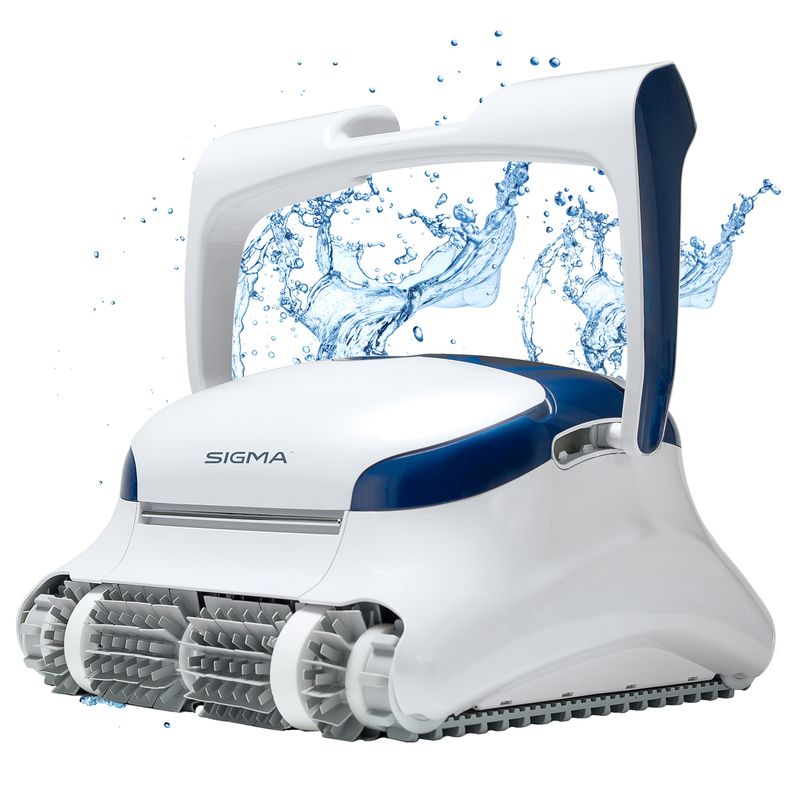
Fine-silt pickup with a full-filter alert
Where the deep end collects silt and dust more than leaves, the Sigma is the stronger tool. It ships with NanoFilters as well as standard cartridges, three ProLine motors move 4,500 GPH through them, and four scrubbing brushes loosen what has settled on the floor around the drain.
A filter alert arrives through the myDolphin Plus app, so you know the cartridges are full without pulling the robot up to look. At 2.5 hours, only the Premier's cycle is longer. It ranks below the Premier because it has no leaf bag for heavy loads.
Temporarily out of stock
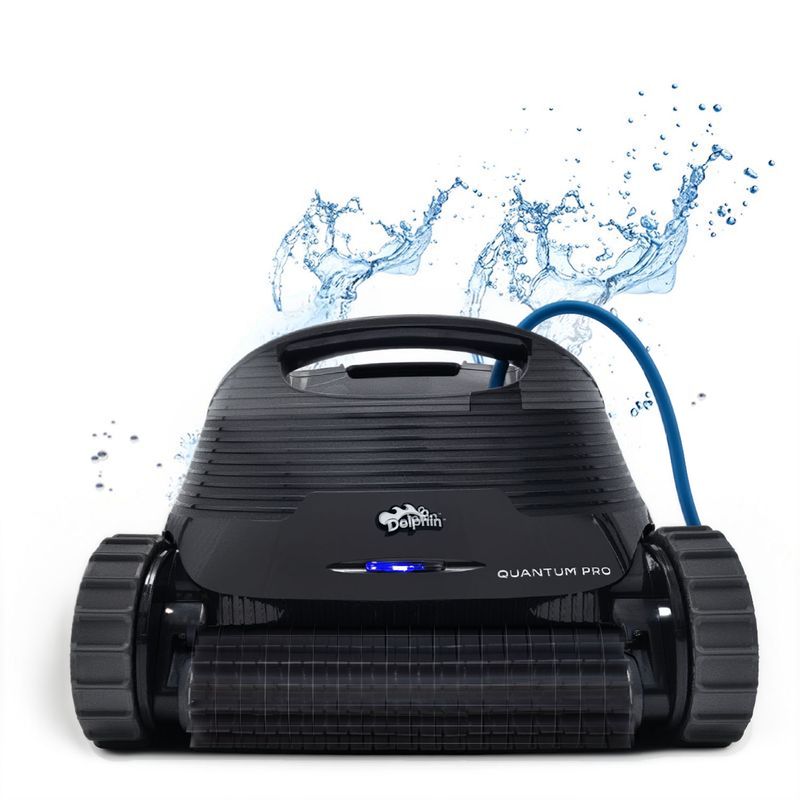
XXL basket at the lowest 50 ft price
The Quantum's XXL MaxBin basket, with over 400 square inches of filter area, has room for leaves and acorns and opens from the top with one click, which matters when a deep end means emptying often. A full set of NanoFilter panels is included for the silt.
It moves 4,000 GPH on a 2-hour cycle, so it gets less time at the drain per run than the Premier; set its timer to every day in leaf season to make up the difference. Its 55 ft cable with an anti-tangle swivel matches the reach of the two picks above.
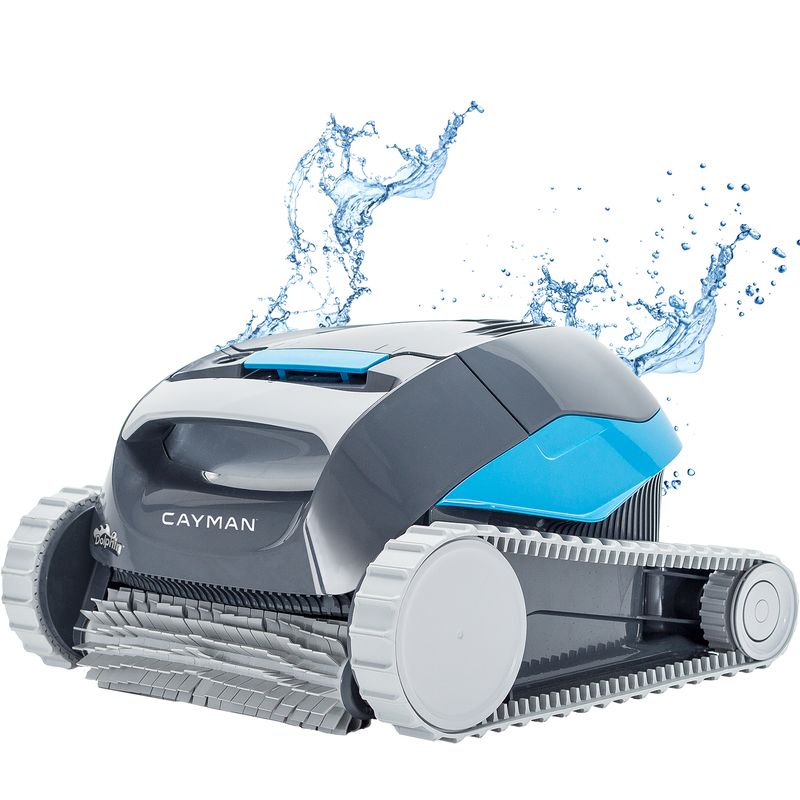
Temporarily out of stock
Deep ends in pools up to 33 ft, for less
For a pool of 33 ft or less with a proper deep end, the Cayman is the least robot that is up to it. Its MaxBin basket is 50% larger than standard Dolphin filters and empties through a top hatch with one tab, so clearing a deep-end load is quick. Fine panels are fitted, and NanoFilter panels can be added for silt.
The 50 ft cable gives it 10 ft more than the Escape to reach the bottom of the deep end. The cycle is 2 hours, and the timer runs it every day, which keeps the pile from growing between cleans.
How to judge a robot for this
A robot that fills up halfway through the deep end stops picking up and starts pushing debris around. Look at what the debris goes into: the Premier's oversized leaf bag, the Quantum's XXL MaxBin basket with over 400 square inches of filter area, the Cayman's MaxBin, or the Sigma's cartridges.
Leaves and acorns need space; silt needs fine filtration. The Premier includes both a leaf bag and NanoFilters. The Sigma and Quantum include NanoFilters with their standard filters. On the Cayman, NanoFilter panels are an optional add-on to its fine panels.
Debris keeps arriving while the robot works, and a robot shares its cycle between the whole floor and the walls. Three hours gives the Premier more time for return trips to the drain area than the 2-hour robots get.
The deep end is usually the farthest and lowest point from the power supply. A cable that is nearly taut holds a robot back from the corners around the drain. Longer cables and a power supply set nearer the deep end both fix it.
Side by side
| Specification | Dolphin Premier | Dolphin Sigma | Dolphin Quantum | Dolphin Cayman |
|---|---|---|---|---|
| Price today | $1949 | $2349 | $1599 | $1049 |
| Cleans | Floor, walls and waterline | Floor, walls and waterline | Floor, walls, waterline, sun shelves and stairs | Floor and walls |
| Traction | HyperGrip tracks | HyperGrip tracks | HyperGrip tracks | HyperGrip tracks |
| Navigation | SmartNav 2.0 | SmartNav 3.0 with gyroscope | SmartNav 2.0 | SmartNav 2.0 |
| Cable | 55 ft with 360° anti-tangle swivel | 55 ft with 360° anti-tangle swivel | 55 ft with anti-tangle swivel | 50 ft |
| Robot weight | 20.3 lb | 24.6 lb | 18.3 lb | 14.6 lb |
| Warranty | 3 years | 3 years | 2 years | 2 years |
Most people plug the robot in wherever the outlet is, which is often near the house and the shallow end. That leaves the robot working the deep end, the dirtiest part of the pool, at the full stretch of its cable. Put the power supply closer to the deep end than the shallow end, at the setback your manual gives, so the cable has slack to reach the bottom and the corners around the drain.
It does not need to sit at the very end: the cable still has to get back to the shallow end. Somewhere past the midpoint of the pool's long side is the usual answer. If the only outlet is at the shallow end, that is an argument for a 55 ft cable.
A common worry: every time the cycle ends, the robot is sitting in the deep end. That is usually not a fault. A robot stops wherever it is when the cycle finishes, and two things bias that toward the low point. A twisted cable shortens itself and stops the robot climbing back out. A full filter cuts the water flow that helps it grip the slope.
Empty the filter, lay the cable out straight in the sun to relax the twists, and watch the next cycle. The 55 ft picks have an anti-tangle swivel; the Cayman does not, so straighten its cable regularly.
Questions, answered
Because it is downhill. Debris that sinks is moved along the floor by circulation and by swimmers, and it comes to rest at the lowest point, which is around the main drain. A pool with a pronounced slope does this faster. It is normal, and it is why deep-end capacity matters more than floor area when choosing a robot.
Usually cable twist or a full filter, not a fault. A twisted cable acts like a shorter one and holds the robot at the bottom, and a clogged filter reduces the water flow that helps it climb the slope. Empty the filter and straighten the cable, then watch a cycle. If it still never leaves the deep end, talk to a Dolphin Expert.
Yes. Acorns, seed pods and whole leaves are within what these robots pick up, provided there is somewhere to put them. That means the Premier's oversized leaf bag or the Quantum's XXL basket for heavy falls. Acorns are bulky, so empty more often than you would for leaves alone.
After every cycle in leaf season, and at least weekly the rest of the year. The Premier shows a full filter on its power supply. The Sigma sends an alert through its app. With the Quantum and Cayman, make lifting the basket out part of the routine; both open from the top.
The verdict
Buy capacity and cycle time, then put the power supply where the debris is. Heavy leaves and acorns: the Premier, with its leaf bag and 3 hours. Mostly silt, and you like an alert on your phone: the Sigma. A bit of everything on a tighter budget: the Quantum. A pool of 33 ft or less: the Cayman, run every day. And before the first cycle of the season, scoop the worst of it out by hand.
Keep reading
