

Try it in your pool for 30 days. Exchange it for another Dolphin for free, or return it with no restocking fee.
Your bag is empty.
By steps, ledges and tricky features
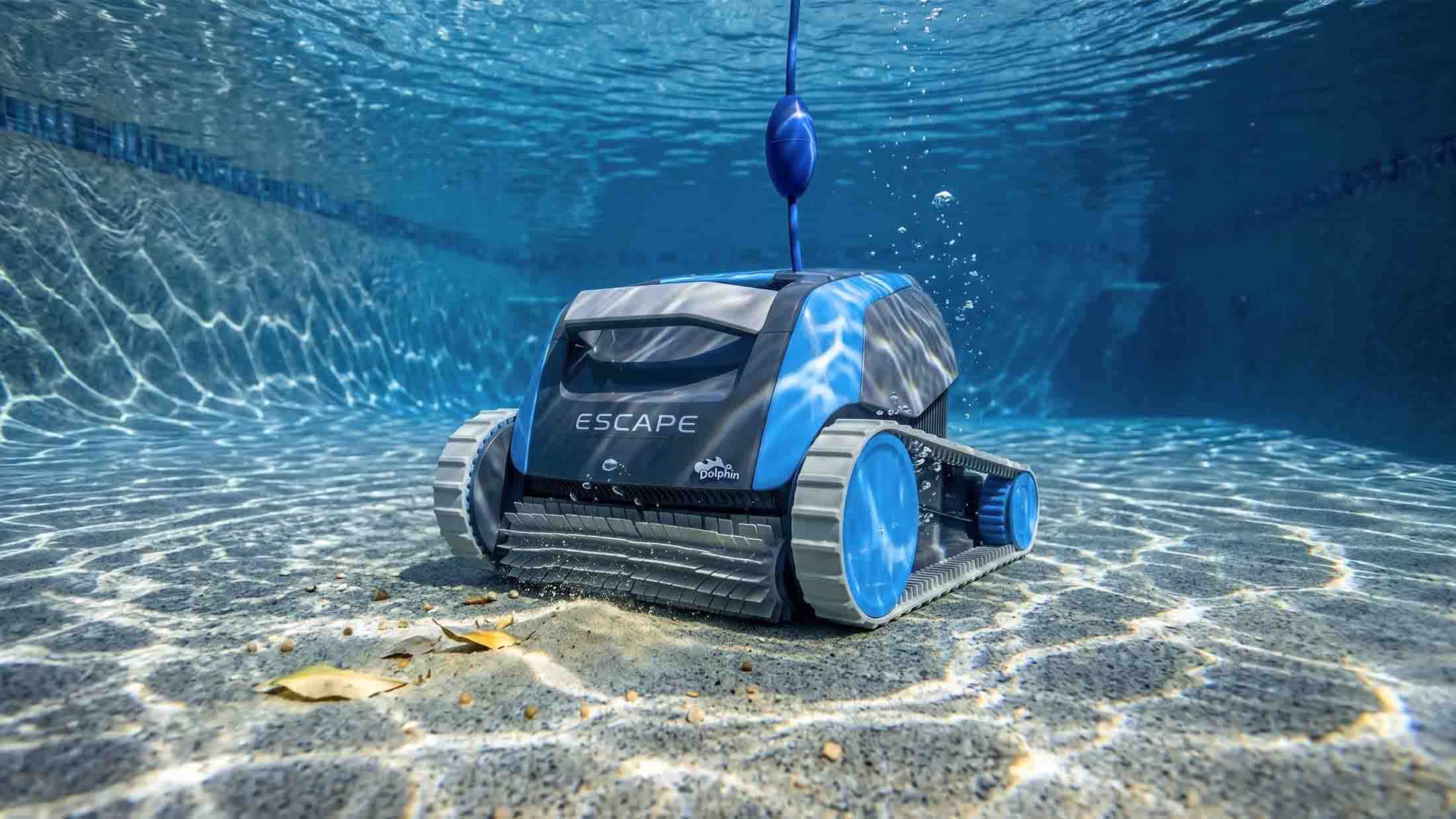
Top pick: Dolphin Escape
$659 today · Free shipping · 30 day trial
The short answer
On a bumpy pool floor the least robot is often the best one: tracks to ride over the dips and little weight to press into a soft base.
For most uneven floors the Dolphin Escape is the right robot: it runs on HyperGrip tracks, weighs 14.2 lb, the lightest in this guide, and is rated for above-ground pools where soft sand bases live. For an in-ground pool over 33 ft, the Dolphin Sigma adds a gyroscope that re-orients it after a tip, and the Dolphin Quantum costs less. The Dolphin Cayman is the Escape's step up when you need a longer cable.
Pool floors are rarely as flat as they look from the deck. Above-ground pools on a sand base pick up footprints and divots. Vinyl bottoms settle or wash out in places. Liners wrinkle. Old plaster heaves, gets patched, or still carries a drain cover from a system that was retired years ago. The best robotic pool cleaner for uneven floors has to drive across all of it.
Two things help: tracks, which ride over a dip that would trap a wheel, and low weight, which is kinder to a soft base. Every Dolphin here has the first. The right pick is usually the lightest one, and that happens to be the least expensive robot on the page.
Our picks, in order

Temporarily out of stock
Lightest on tracks, at home on a soft base
The most common uneven floor is an above-ground one, and the Escape is the above-ground specialist. Nothing in this guide weighs less than its 14.2 lb, so it presses least on a sand or foam base, and its HyperGrip tracks ride across footprints and shallow divots that would catch a wheeled cleaner. Vinyl liner is on its published surface list, and round is on its shape list.
Its 1.5-hour cycle and top-load MaxBin basket keep the routine short. Nothing a pricier robot adds, a waterline scrub, an app or a 50 ft rating, makes a bumpy floor any flatter, which is why the least robot leads here.
Temporarily out of stock
Re-orients itself after a tip on rough plaster
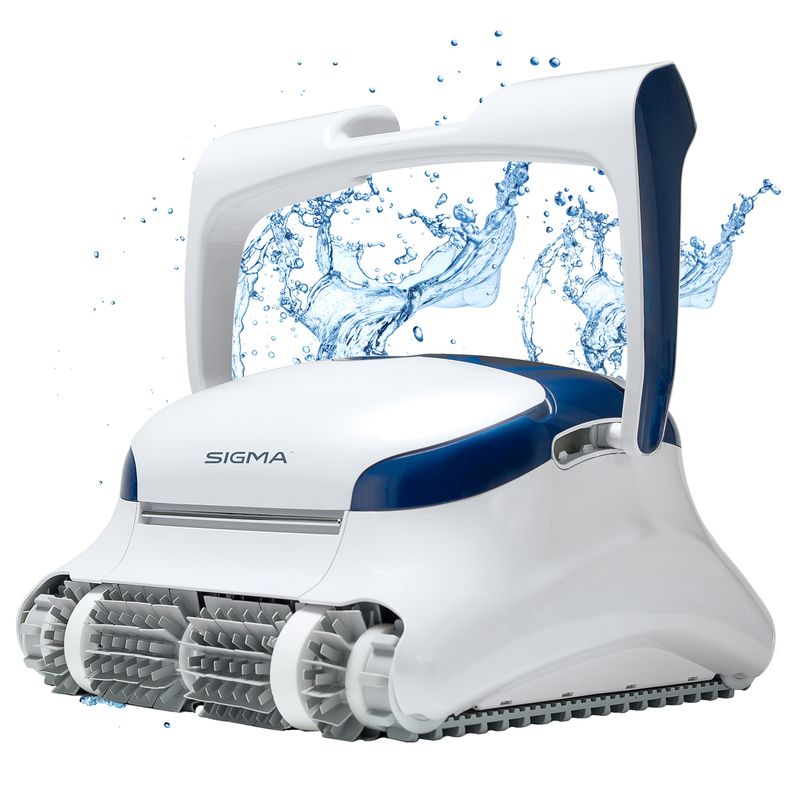
In-ground floors go uneven in harder ways: plaster that has heaved, a patch standing higher than the surface around it, the rim of an abandoned drain. Those tip a robot instead of denting under it. The Sigma is the one pick with an onboard gyroscope, and SmartNav 3.0 uses it to recognize the tilt and re-orient, so a bump costs it a moment and not its bearings.
On a hard floor its 24.6 lb does no harm, and it comes with three ProLine motors, four scrubbing brushes and a 2.5-hour cycle for pools up to 50 ft. NanoFilters are included for the grit that collects in low spots.
Temporarily out of stock
Continuous rubber tracks for in-ground floors, for less
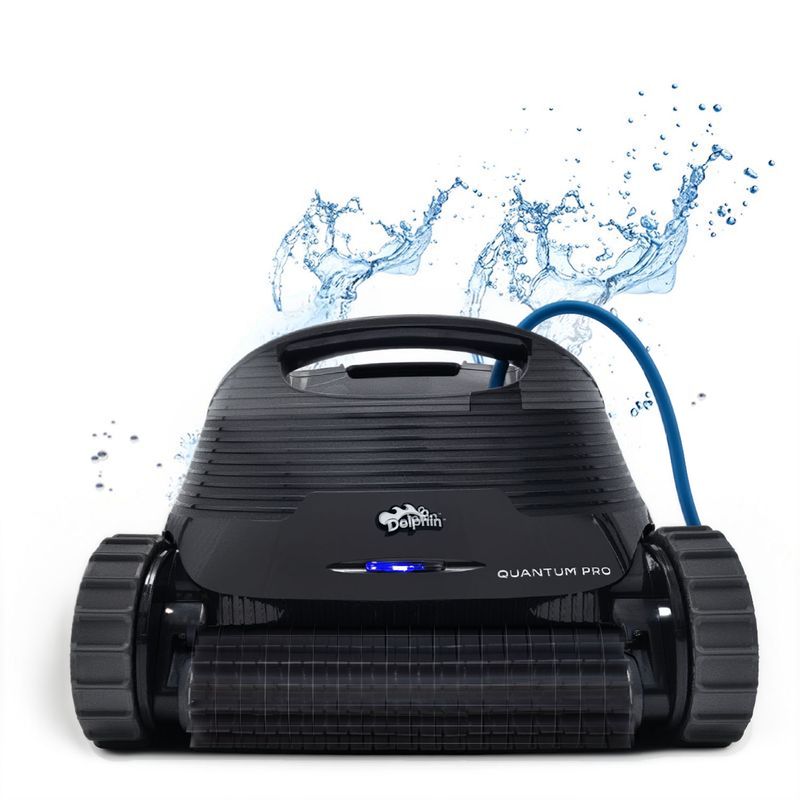
The Quantum is the in-ground answer when the Sigma's price is hard to justify. Its HyperGrip tracks are continuous rubber belts, and at 18.3 lb it is the lighter and lower-priced of the two 50 ft picks. On a settled vinyl bottom or an old plaster floor with a few high and low spots, SmartNav 2.0 scanning and a 2-hour cycle cover the ground.
Its two HyperBrushes, which turn twice as fast as standard brushes, work the shallow dips where dirt settles, and the XXL MaxBin with NanoFilter panels holds it. It has no gyroscope, so it lacks the Sigma's tilt recovery.
Temporarily out of stock
The Escape's step up: longer cable, daily timer
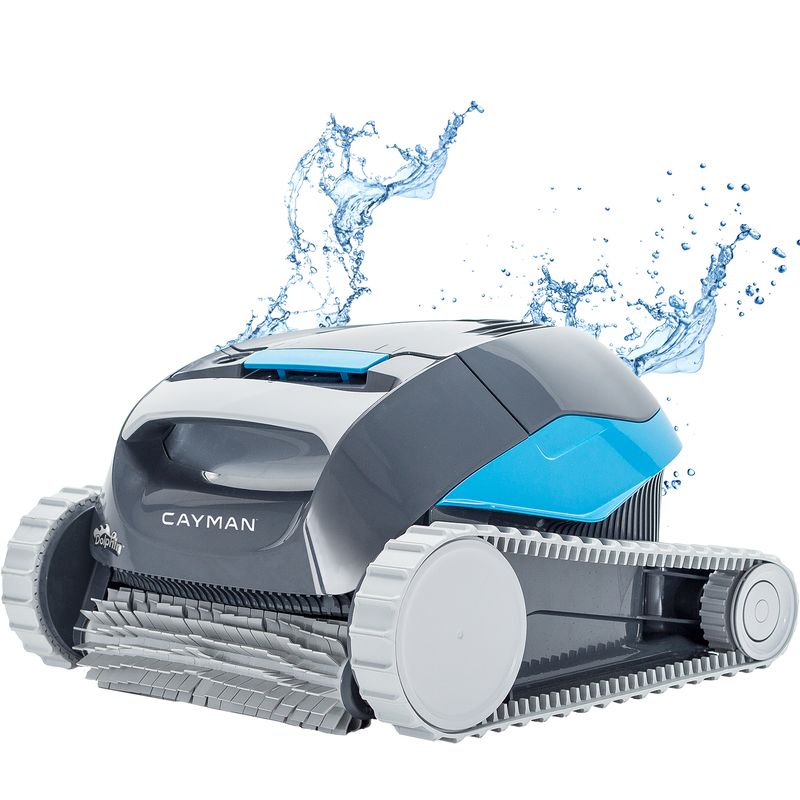
The Cayman belongs to the same Max-Series family as the Escape and weighs just 0.4 lb more, at 14.6 lb. It is the only other pick rated for above-ground pools. It sits fourth because on most uneven floors it does the same work as the Escape for more money; it moves up your list when one of its two extras matters.
The first is a 50 ft cable, the safer choice on large above-ground rounds. The second is a timer that runs a cycle every day, so low spots are cleared daily. Its published surface list also names concrete, plaster and pebble for in-ground floors up to 33 ft.
How to judge a robot for this
A track spans a dip the way a plank spans a puddle: part of it is always on solid ground. A wheel drops in. All four picks here drive on HyperGrip tracks, so none is ruled out on this point; it is the reason they are on the page.
Under an above-ground liner there is usually sand or foam, and it dents. A lighter robot presses less. The Escape is 14.2 lb and the Cayman 14.6 lb. The Quantum is 18.3 lb and the Sigma 24.6 lb, which is why those two are picks for in-ground floors only.
On a heaved or patched floor a robot gets tipped off level. The Sigma's gyroscope senses that and re-orients it. The other picks use SmartNav 2.0 scanning, which carries on with its pattern and relies on the length of the cycle to cover what a detour missed.
A footprint is harmless. A washout that keeps growing, a liner that has slipped or plaster lifting off the shell is a repair, and no robot changes that. Work out which you have, because it decides whether you need a robot, a repair or both.
Side by side
| Specification | Dolphin Escape | Dolphin Sigma | Dolphin Quantum | Dolphin Cayman |
|---|---|---|---|---|
| Price today | $659 | $2349 | $1599 | $1049 |
| Cleans | Floor and walls | Floor, walls and waterline | Floor, walls, waterline, sun shelves and stairs | Floor and walls |
| Traction | HyperGrip tracks | HyperGrip tracks | HyperGrip tracks | HyperGrip tracks |
| Navigation | SmartNav 2.0 | SmartNav 3.0 with gyroscope | SmartNav 2.0 | SmartNav 2.0 |
| Cable | 40 ft | 55 ft with 360° anti-tangle swivel | 55 ft with anti-tangle swivel | 50 ft |
| Robot weight | 14.2 lb | 24.6 lb | 18.3 lb | 14.6 lb |
| Warranty | 2 years | 3 years | 2 years | 2 years |
Uneven covers a lot of ground. Each cause behaves differently under a robot.
A robot cleans a floor; it does not level one. It will not push sand back under a liner, close a washout or flatten a wrinkle, and running it more often will not change the shape of the bottom. It can also be beaten: a deep divot can hold a robot until the cycle ends, and a large wrinkle can turn it back so the area behind stays dirty. If you see either, fix the floor if you can. Small wrinkles can often be worked toward the wall by hand on a warm day. A growing washout or lifting plaster needs a pool professional.
Questions, answered
Ordinary footprints, no. Tracks bridge shallow dents, and the Escape and Cayman are the lightest robots in this guide. A deep divot is different: a robot can drop in and spend the rest of the cycle there. If that happens in the same place twice, that spot needs the base repaired, not a different robot.
No. Grip comes from the tracks and from the water the robot pulls through itself, not from weight. On a hard in-ground floor extra weight does no harm. On a soft above-ground base it is a disadvantage, which is why the two lightest robots are the ones rated for those pools.
Only if tipping is the problem. A gyroscope helps a robot recover when a hard ridge or patch tilts it, which is an in-ground plaster issue, and the Sigma is the pick that has one. On a soft, dented above-ground floor a gyroscope adds nothing; low weight and tracks do the work.
No, it is also suitable. The Premier runs on the same HyperGrip tracks and handles an uneven in-ground floor well over its 3-hour cycle. It is outside this shortlist because the Sigma adds a gyroscope and the Quantum does the same job for less. If leaves are your bigger problem, the Premier is a sound buy.
The verdict
Start with the lightest tracked robot that fits your pool, and spend more only for a named reason. Above-ground or a soft base: the Escape, or the Cayman if the cable has farther to go. In-ground and over 33 ft: the Quantum. In-ground with hard ridges that tip a robot: the Sigma. And if the floor has a deep divot or a tall wrinkle, fix that first, because no robot on this page or any other will drive through it.
Keep reading
