

Try it in your pool for 30 days. Exchange it for another Dolphin for free, or return it with no restocking fee.
Your bag is empty.
By pool type and installation
Top pick: Dolphin Premier
$1949 today · Free shipping · 30 day trial
The short answer
Tablets, liquid or cal-hypo: the robot does not care how chlorine gets in, only how much is in the water while it works. Choose on the pool, then follow the shock-day rules.
The Dolphin Premier is the all-rounder for a chlorine pool: floor, walls and waterline, filter media for every kind of debris and a 3-year warranty. The Dolphin Sigma is the choice when you want more scrubbing and a schedule on your phone. Smaller and above-ground pools need less: the Dolphin Escape covers floor and walls up to 33 ft.
Most pools are chlorine pools, so the best robotic pool cleaner for chlorine pools is, in a sense, just the best robot for your pool. Every robot on this page is built to work in water held at normal chlorine levels, whether the chlorine comes from tablets, liquid or cal-hypo. Chlorine type does not rank them.
Two things are still worth knowing. First, a robot and a heavy chemical dose should not share the water: shock days have rules, and tablets should never sit near the machine. Second, a robot changes what your chlorine has to deal with, because every leaf and every film of algae it removes is something the chlorine no longer has to burn through.
Our picks, in order
Temporarily out of stock
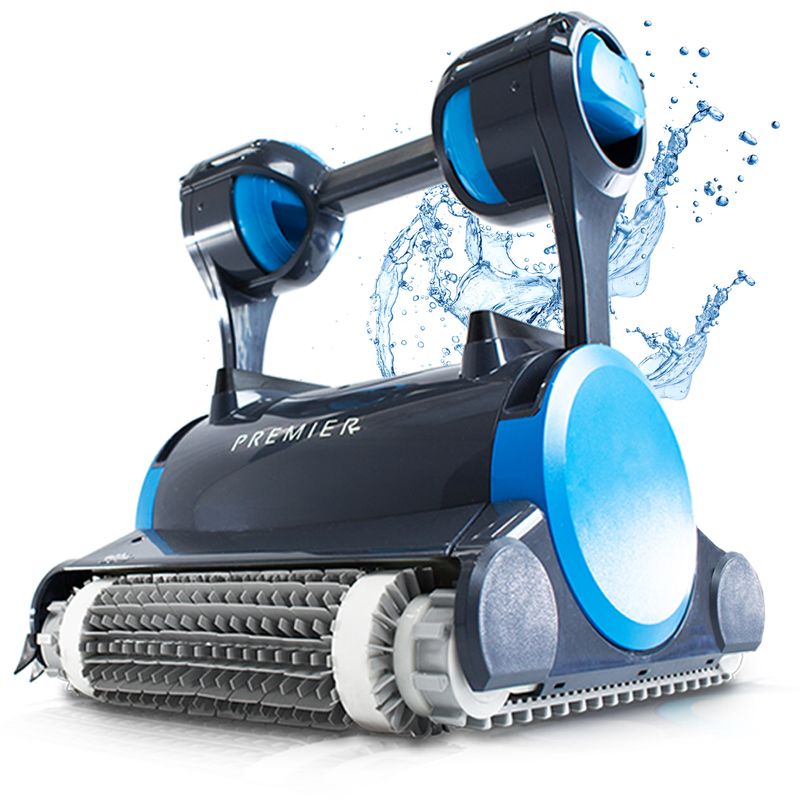
The all-rounder for a tablet or liquid chlorine pool
A chlorine pool can throw anything at a robot over a year, and the Premier is the pick that changes with it. Its Multi-Media system puts three filters in the box: NanoFilters for dust, an oversized bag for leaves and standard fine filters for everyday use. After a shock treatment, once chlorine is back to normal, the NanoFilters collect the fine gray dust that dead algae leaves on the floor.
It runs for 3 hours across floor, walls and waterline, and the timer on the power supply repeats that every day, every 2 days or every 3 days. The 3-year warranty is not prorated.
Temporarily out of stock
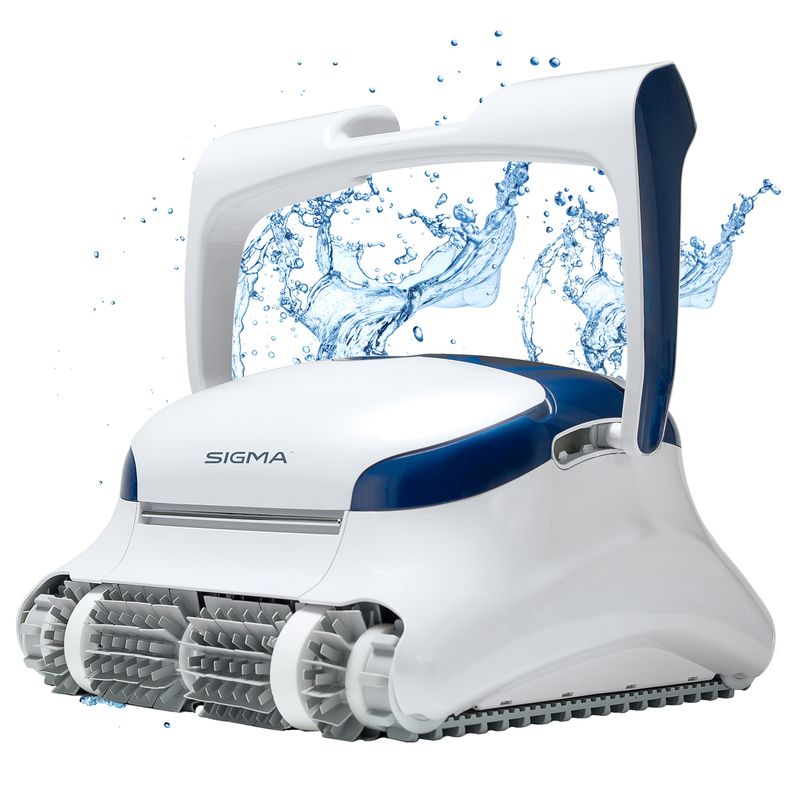
Most scrubbing, scheduled to the day
Brushing lifts film off the walls and into the water, where the filter and the chlorine deal with it, and the Sigma brushes hardest: quad brushes, three motors and 4,500 GPH, on floor, walls and waterline in 2.5 hours.
The myDolphin Plus app sets a weekly schedule by day and time, so you can keep the robot's days clear of your dosing days. The app also flags a full filter. NanoFilters are included, and the warranty is 3 years.
Temporarily out of stock
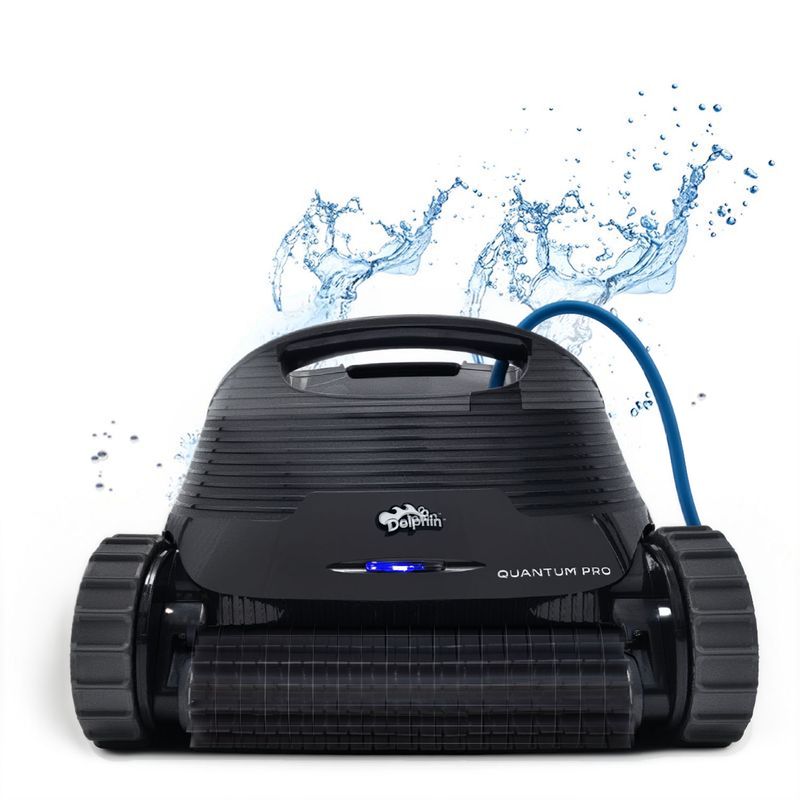
Big basket for the least money at 50 ft
The Quantum is the lowest-priced pick here rated to 50 ft, and no robot in this guide has a bigger basket than its XXL MaxBin, with over 400 square inches of filter area. Debris left to rot in the pool uses up chlorine, and a big basket is how a robot takes a lot of it out in one pass.
Standard panels and a full set of NanoFilter panels are both included. It scrubs the waterline, covers sun shelves, Baja ledges and stairs, and runs a 2-hour cycle on a timer or from the app.

Temporarily out of stock
All a small or above-ground chlorine pool needs
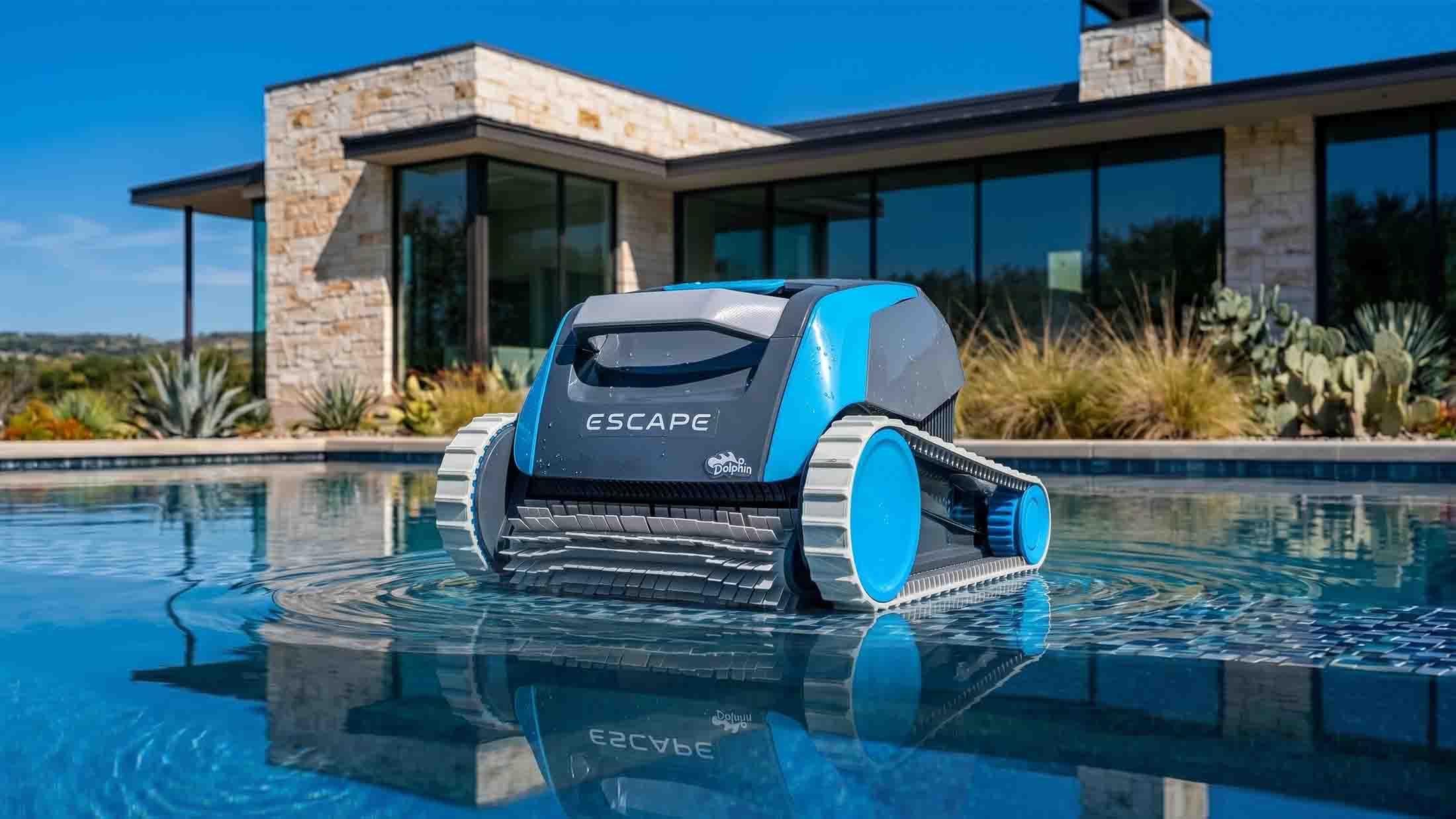
Tablet-fed above-ground pools, with a floater or a small feeder, are exactly where the Escape belongs. It works in above-ground and in-ground pools up to 33 ft, does floor and walls in an hour and a half, and collects debris in a top-load MaxBin basket that is 50% larger than standard Dolphin filters.
At 14.2 lb it is the easiest robot here to lift out before a shock, and the robot that is easy to remove is the one that gets removed. NanoFilter panels are an optional add-on for fine dust. So is scheduling, through the Automation Timer power supply.
How to judge a robot for this
Normal, balanced water is what every robot expects. Trouble comes from extremes: shock-level chlorine, low pH, or a tablet dissolving next to the robot. Those age plastics and brushes on any model, so they are a care matter and not a buying one.
This is the real divider. The Premier, Sigma and Quantum are in-ground robots for pools up to 50 ft. The Escape covers above-ground and in-ground pools up to 33 ft. So does the Dolphin Cayman, with a 50 ft cable and a timer that runs daily.
Leaves want a large basket or a leaf bag. Pollen, dust and the gray powder left after an algae treatment want NanoFilters. Check what ships in the box: the 50 ft robots include fine media, and it is an add-on for the Escape.
Chlorine works on whatever is in the water. A robot that runs every day or two keeps that load low, where one big weekly clean lets it build. A timer or app schedule makes frequent cycles automatic.
Side by side
| Specification | Dolphin Premier | Dolphin Sigma | Dolphin Quantum | Dolphin Escape |
|---|---|---|---|---|
| Price today | $1949 | $2349 | $1599 | $659 |
| Pool type | In-ground | In-ground | In-ground | Above-ground and in-ground |
| Pool length | Up to 50 ft | Up to 50 ft | Up to 50 ft | Up to 33 ft |
| Cleans | Floor, walls and waterline | Floor, walls and waterline | Floor, walls, waterline, sun shelves and stairs | Floor and walls |
| Cable | 55 ft with 360° anti-tangle swivel | 55 ft with 360° anti-tangle swivel | 55 ft with anti-tangle swivel | 40 ft |
| Filtration | Multi-Media: NanoFilters, oversized leaf bag and standard fine filters | NanoFilters and standard filter cartridges | XXL MaxBin basket with standard and NanoFilter panels | MaxBin basket; NanoFilter panels optional |
| Robot weight | 20.3 lb | 24.6 lb | 18.3 lb | 14.2 lb |
| Warranty | 3 years | 3 years | 2 years | 2 years |
Shocking raises chlorine far above the level a pool normally holds. Take the robot out before you add shock, every time, and leave it out until a test shows chlorine has come back down to your normal range. Go by the test, not the clock.
A shock treatment that kills algae leaves it as fine gray dust on the floor. Brush the walls first, let the dust settle, and run the robot with its finest filter. Rinse the filter straight afterward, because that dust packs tight. A robot does not replace the brushing during an algae treatment. It collects what the brushing and the chlorine leave behind.
Trichlor tablets are concentrated and acidic. A tablet resting on the floor, or a floater that has drifted over a parked robot, puts a patch of very strong, low-pH water right where the plastic is. Keep tablets in a feeder or a tethered floater, and never drop one into the pool loose.
Granular shock is the same story: follow the label for dissolving it, so no undissolved grains sit on the floor for the robot to drive through. Pour liquid chlorine in front of a return jet with the pump running, away from the robot. Persistently high chlorine with low pH fades and stiffens brushes and plastics on any robot.
Chlorine is used up by what it meets: leaves, pollen, sunscreen, algae. A robot removes a good share of that before it breaks down, and its scrubbing lifts film off surfaces where it would otherwise sit. With less in the water, the same dose has less to do.
We will not put a number on that, and a robot does not replace sanitizer or the pool's own filter. Keep testing and dosing as you do now. What changes is how hard the chlorine has to work between tests, and how the pool looks.
Questions, answered
When a test shows chlorine is back in your normal range, not after a set number of hours. The wait varies with the dose, sunlight and the size of the pool. Putting the robot back early exposes its brushes and plastics to shock-level chlorine for a whole cycle, which ages them.
Dissolved in the pool at normal levels, no. Sitting next to the robot, yes, over time. A tablet is concentrated and acidic, and the water around it is far stronger than the rest of the pool. Keep tablets in a feeder or tethered floater, and never leave one on the floor.
It can help the chlorine you add go further, because the robot removes debris that would otherwise use it up. We do not promise a saving or quote a figure, since it depends on the pool, the weather and how many people swim. Test as usual and let the results guide the dose.
No. A salt pool is a chlorine pool that makes its chlorine from salt, and the same robots work in both. The difference is in the care: salt pools ask for a fresh-water rinse to stop crust forming. In a tablet or liquid pool, the thing to manage is shock days.
Yes. A robot has its own motors and filter and works independently of the pool's circulation. Running it with the pump off lets fine debris settle on the floor where the robot can reach it, but that is a preference, not a rule.
The verdict
Chlorine is not the deciding factor. Size and debris are. Above-ground, or a small in-ground pool where floor and walls are all you need: the Escape. Up to 50 ft: the Premier if debris varies through the year, the Sigma if you want the most scrubbing on a phone schedule, the Quantum if leaves are the problem and price matters. Whichever it is, it comes out before shock and goes back in after a normal test.
Keep reading
