

Try it in your pool for 30 days. Exchange it for another Dolphin for free, or return it with no restocking fee.
Your bag is empty.
By debris and dirt problem
Top pick: Dolphin Sigma
$2349 today · Free shipping · 30 day trial
The short answer
A robot does not kill algae or replace sanitizer, but the right one scrubs every surface on schedule and filters out what brushing and chlorine have loosened.
The Dolphin Sigma is our pick for algae-prone pools: four scrubbing brushes on the floor, walls and waterline, with NanoFilters included to catch what the brushes loosen. The Dolphin Premier is the runner-up, with the same ultra-fine filters and a lower price. Neither kills algae. That is the job of sanitizer and balanced water. For an above-ground pool, the Escape scrubs the floor and walls.
Start with the part most pages skip: even the best robotic pool cleaner for algae does not kill algae. It carries no sanitizer, and it does not replace chlorine, balanced water or the hand brushing an algae treatment calls for. If your pool is green today, the fix is in the chemistry, and the robot should be out of the water while you shock.
What a good robot does is narrower, and still worth paying for. It scrubs the surfaces where algae takes hold, on a schedule, so a film has less chance to settle in between treatments. And it filters out the fine debris that brushing and chlorine have loosened or killed. Brush count and filtration decide the ranking: the Sigma first, then the Premier and Dolphin Quantum. The Dolphin Escape is the pick for above-ground pools.
Our picks, in order
Temporarily out of stock
Most brushes on every surface
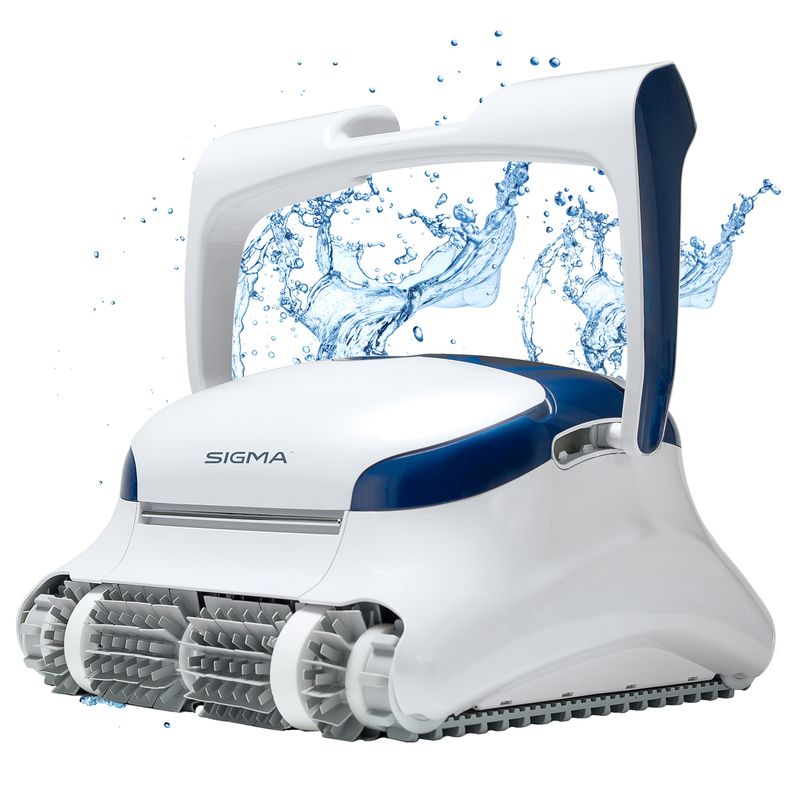
Algae is a scrubbing problem, and the Sigma scrubs hardest: four scrubbing brushes where the others carry two or one. It works the floor, walls and waterline of pools up to 50 ft, and SmartNav 3.0 with an onboard gyroscope keeps its passes systematic, so corners and wall bases are not skipped.
NanoFilters are included for the fine material that brushing and chlorine leave behind, and three commercial-grade motors move 4,500 GPH through them. Its myDolphin Plus app schedules runs by day and time, which keeps the scrubbing regular whether or not you are home.
Temporarily out of stock
Fine filtration with a no-phone timer
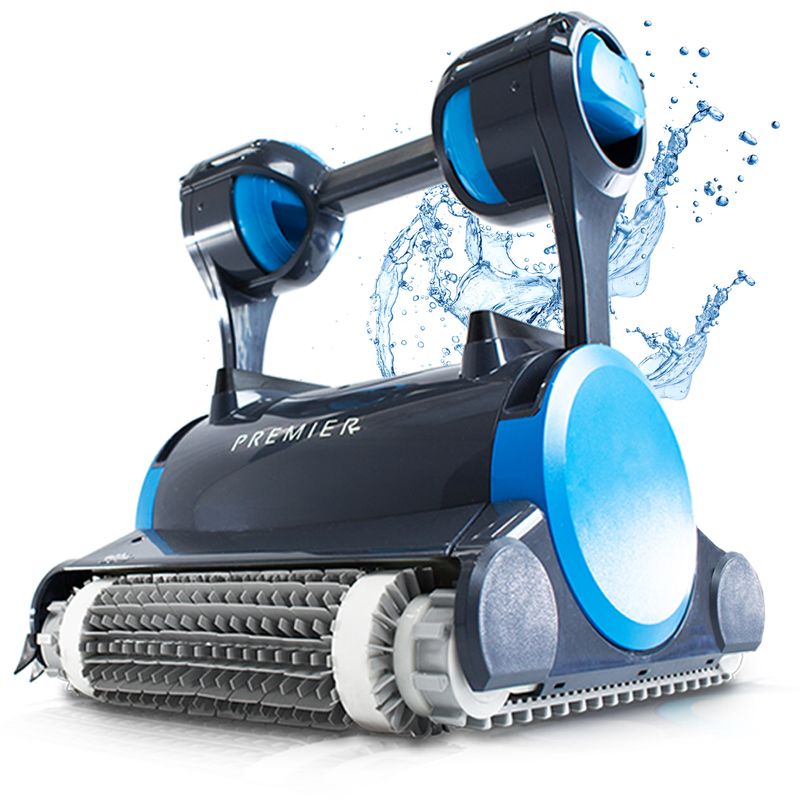
The Premier brings the same NanoFilters and the same 4,500 GPH as the pick above, with dual scrubbing brushes in place of four, at a lower price. It cleans the floor, walls and waterline, and no robot in this guide runs a longer cycle than its 3 hours. The weekly timer on the power supply offers daily, 2-day and 3-day intervals.
After an outbreak, the Multi-Media system earns its keep: run the standard fine filters for the first heavy pass, then the NanoFilters for the dust that is left. The warranty is 3 years.
Temporarily out of stock
Fast brushes that reach steps and ledges
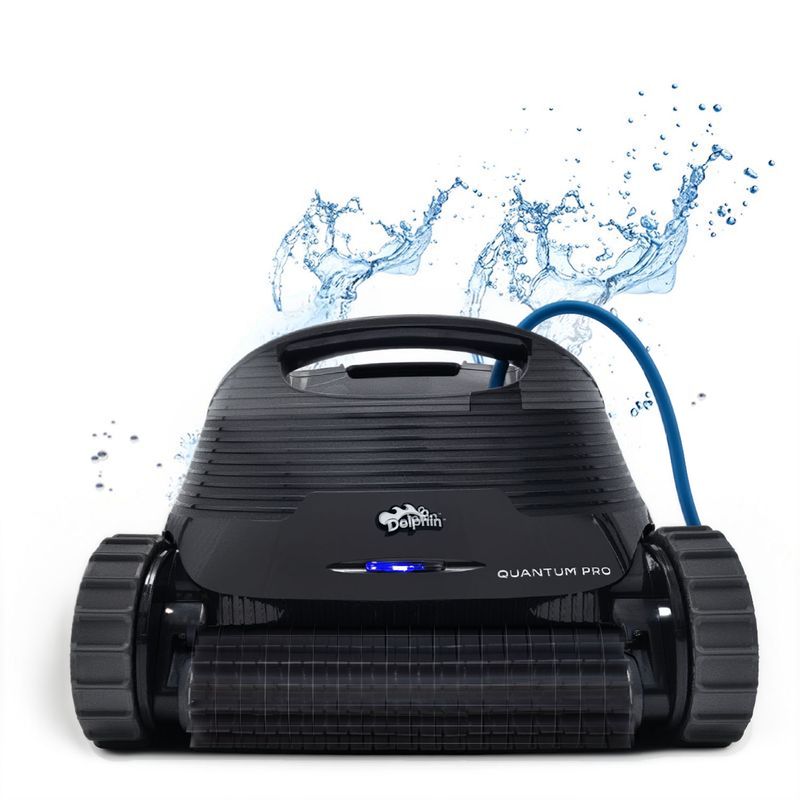
The Quantum's two HyperBrushes turn at double the speed of standard brushes, and it is the only robot here that also cleans stairs, sun shelves and Baja ledges, on top of the floor, walls and waterline. That matters, because steps and shallow shelves get little circulation, and algae likes still water.
NanoFilter panels, a full set, come with the XXL MaxBin basket. Regular runs can come from the weekly timer or from the myDolphin Plus app. It ranks third on brush count and flow, 4,000 GPH against 4,500, and it is the lowest-priced of the three in-ground picks.

Temporarily out of stock
Regular floor and wall scrubbing for less
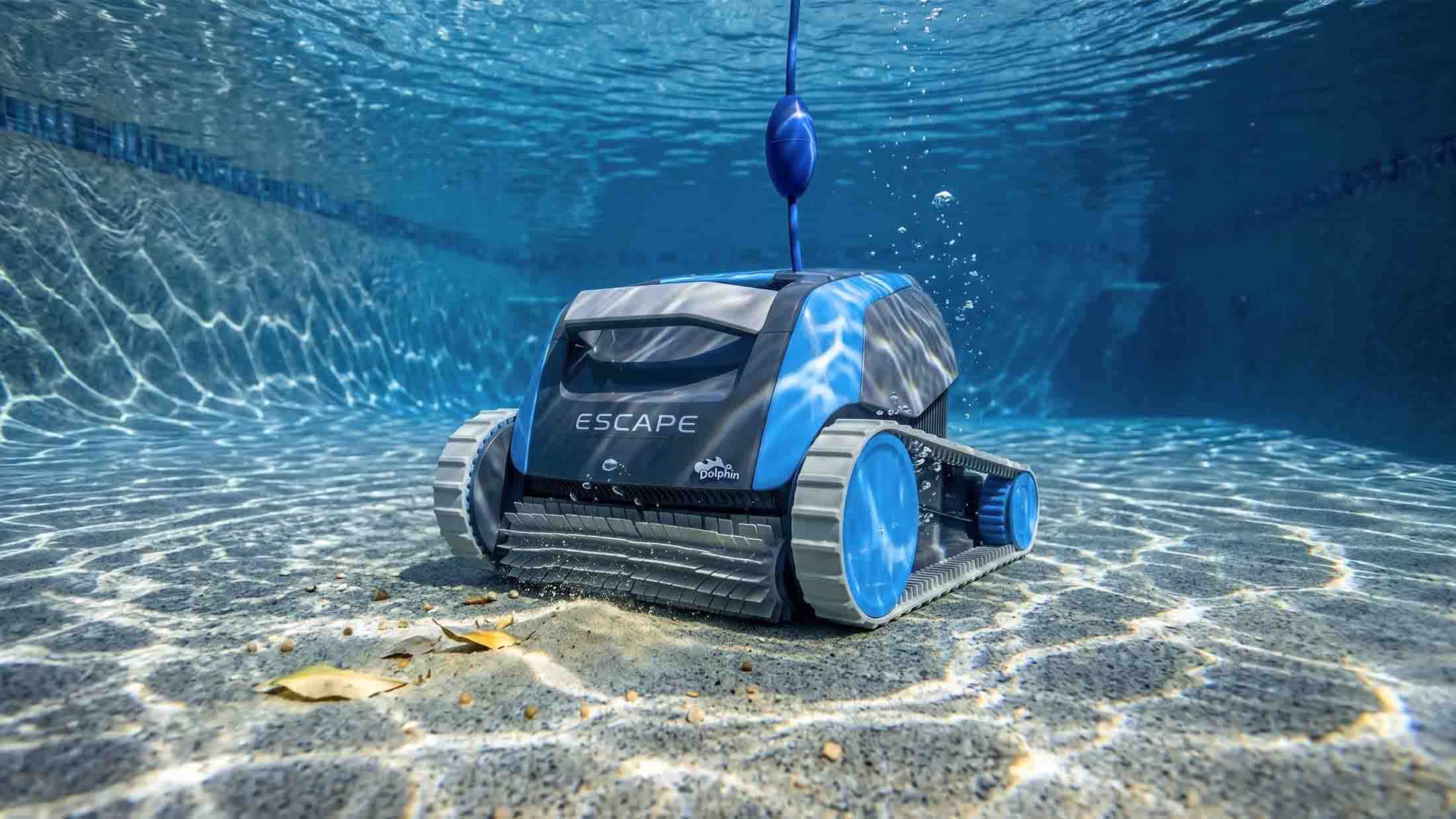
The Escape is the pick for above-ground pools, and the low-cost pick for in-ground pools up to 33 ft. Its HyperBrush runs twice as fast as standard Dolphin brushes and scrubs the floor and walls on every 1.5-hour cycle. Flow is over 4,000 GPH, from dual 24-volt DC motors, into a top-load MaxBin basket.
Two limits are worth knowing. It does not scrub the waterline, so wipe the tile or liner line by hand. And its standard panels pass fine dead algae, so add the optional NanoFilter panels if you are cleaning up after a treatment.
How to judge a robot for this
Algae starts as a film that clings to surfaces. Suction does not remove it; scrubbing does. More brushes, or faster ones, mean more contact on every pass over the floor and walls. This is the first spec to compare.
Algae rarely starts in the middle of the floor. It starts on walls, in corners, behind ladders and along the waterline, where circulation is weakest. A robot that climbs to the surface and scrubs the tile line covers more of those places.
Algae that has been brushed loose or killed by chlorine is very fine debris. Standard panels pass much of it back into the water. Ultra-fine media such as NanoFilters holds it, so it leaves the pool with the filter.
Scrubbing only helps if it happens regularly. A timer or app schedule that sends the robot out several times a week keeps surfaces brushed between your own maintenance. A robot you have to remember to start gets used less.
Side by side
| Specification | Dolphin Sigma | Dolphin Premier | Dolphin Quantum | Dolphin Escape |
|---|---|---|---|---|
| Price today | $2349 | $1949 | $1599 | $659 |
| Filtration | NanoFilters and standard filter cartridges | Multi-Media: NanoFilters, oversized leaf bag and standard fine filters | XXL MaxBin basket with standard and NanoFilter panels | MaxBin basket; NanoFilter panels optional |
| Filter access | Cartridges | Top-load, no tools | Top-load, one-click open | Top-load |
| Brushes | Quad scrubbing brushes | Dual scrubbing brushes | Dual HyperBrush | HyperBrush |
| Flow rate | 4,500 GPH | 4,500 GPH | 4,000 GPH | Over 4,000 GPH |
| Cycle time | 2.5 hours | 3 hours | 2 hours | 1.5 hours |
| Cleans | Floor, walls and waterline | Floor, walls and waterline | Floor, walls, waterline, sun shelves and stairs | Floor and walls |
| Scheduling | Weekly scheduler by day and time | Weekly timer: every day, every 2 days or every 3 days | Weekly timer: every day, every 2 days or every 3 days | Optional Automation Timer: every 24, 48 or 72 hours |
| Warranty | 3 years | 3 years | 2 years | 2 years |
Be exact about the division of labor. It saves money and disappointment.
When the pool is green, the order matters. Take the robot out. Test and balance the water, brush every surface by hand, and shock as the product label directs, with the pool's own pump and filter running. Keep brushing daily while the chlorine does its work.
When the water has cleared and chlorine is back in the normal range, put the robot in with its finest filter to collect the dead material from the floor. Then wash the robot's filters thoroughly, so algae left on them does not go back into the pool.
Once the water is right, routine keeps it that way. Run the robot on a schedule, two or three times a week in swimming season and more often in hot weather. Hand-brush the places it does not reach: top steps, tight corners, behind ladders and around the skimmer mouth. Keep sanitizer in range and the pool filter clean, and watch the spots with weak circulation. A robot cannot make up for low chlorine. What it does is take regular scrubbing off your list.
Questions, answered
Not by itself. Green algae is cleared by sanitizer, balanced water, brushing and filtration. A robot helps with two of those: it scrubs surfaces and filters out loosened and dead algae. Use it after the treatment has taken hold, and between outbreaks to keep surfaces brushed.
No. Take it out, treat the water, and brush by hand while the shock works. A robot in a green pool loads its filter very quickly and should not sit in shock-level chlorine. Put it back when the water has cleared and chlorine has returned to the normal range. Check the manual for chemical limits.
On algae, yes. Film comes off with contact, and four scrubbing brushes put more bristle on the surface per pass than two or one. On smooth vinyl or fiberglass the gap is smaller. On rough plaster, pebble and tile grout, where film hides in the texture, it is larger.
No. Black algae anchors into plaster and grout and has a tough outer layer. It needs a stiff brush, direct treatment and persistence. A robot's brushes are made for surface film and will pass over it. Treat black algae first, then use the robot for routine cleaning.
It scrubs the floor and walls with a HyperBrush on every cycle, which helps keep film from building on the liner. It stops below the waterline, so wipe that line by hand. For fine dead algae after a treatment, fit the optional NanoFilter panels.
The verdict
Fix the chemistry first; no robot on this page does that for you. Then choose by where algae starts in your pool and how much scrubbing you want done for you. The Sigma brings the most brushes and is the pick for stubborn in-ground pools. The Premier gives the same fine filtration for less. The Quantum reaches steps and ledges. For above-ground pools and smaller budgets, the Escape keeps the floor and walls scrubbed. The tile line is yours to wipe.
Keep reading
