

Try it in your pool for 30 days. Exchange it for another Dolphin for free, or return it with no restocking fee.
Your bag is empty.
By pool type and installation
Top pick: Dolphin Premier
$1949 today · Free shipping · 30 day trial
The short answer
A robot can keep the lined swimming zone of a natural pool clear of sediment and biofilm, provided you treat it as a guest in a living system.
For the lined swimming zone of a natural pool, Dolphin Premier is our first choice: NanoFilters for fine sediment, a leaf bag for autumn litter, and a timer that needs no phone. Choose the Sigma instead if biofilm is the bigger fight and you want four brushes and scheduling by day and hour. Neither is approved for natural pools, so ask your builder first.
No robot on this page is published by its maker as approved for natural swimming pools. Everything below is practical guidance for the lined swimming zone only. Keep any robot out of the planted regeneration zone, gravel beds and loose substrate, and get your pool builder's agreement before the first run.
A natural swimming pool cleans its water with plants, gravel and microbes instead of chlorine. That changes what you ask of a robot. The best robotic pool cleaner for natural pools is not the strongest one. It is the one that lifts settled silt, leaf litter and slick biofilm off the swimming zone without disturbing the half of the pool that does the filtering.
Start from the honest position: no Dolphin in this guide is published as approved for this kind of pool. In practice a robot can work a swimming zone with a smooth liner or a concrete floor. The regeneration zone is off limits, and so is anything with gravel or loose stone. Behind the two leaders we rank the Quantum and the Cayman.
Our picks, in order
Temporarily out of stock
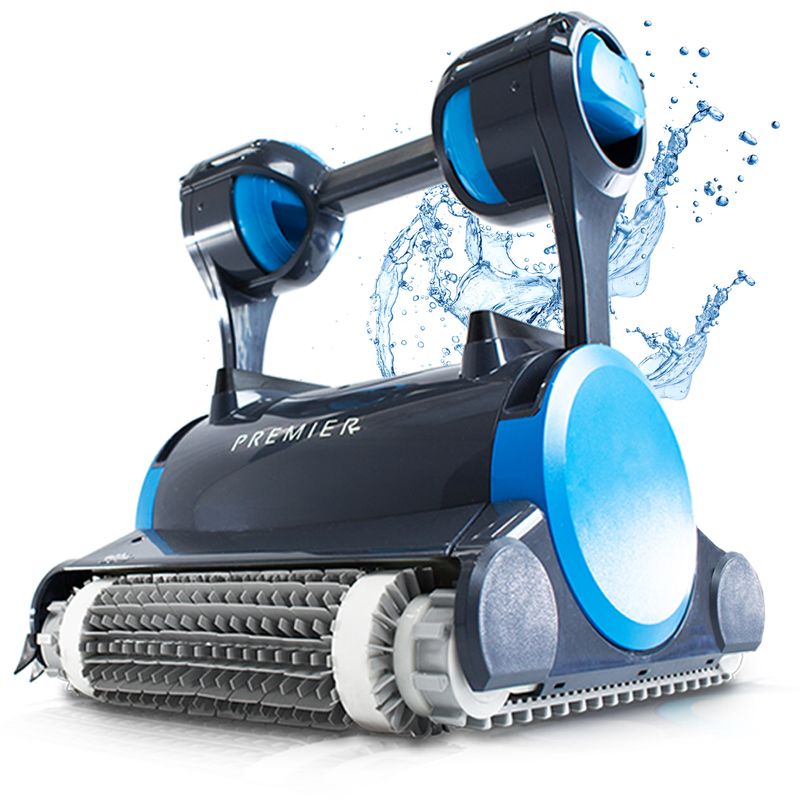
Best filter range for a living pool
A natural pool changes through the year: fine silt in summer, then leaves and reed stems in autumn. The Premier is the one robot here that ships with a dedicated leaf bag as well as NanoFilters. NanoFilters hold the sediment, the oversized leaf bag takes the litter, and standard fine filters cover the weeks between. The timer on the power supply runs every day, every 2 days or every 3 days, and the 3-hour cycle covers floor, walls and waterline in pools up to 50 ft.
Temporarily out of stock
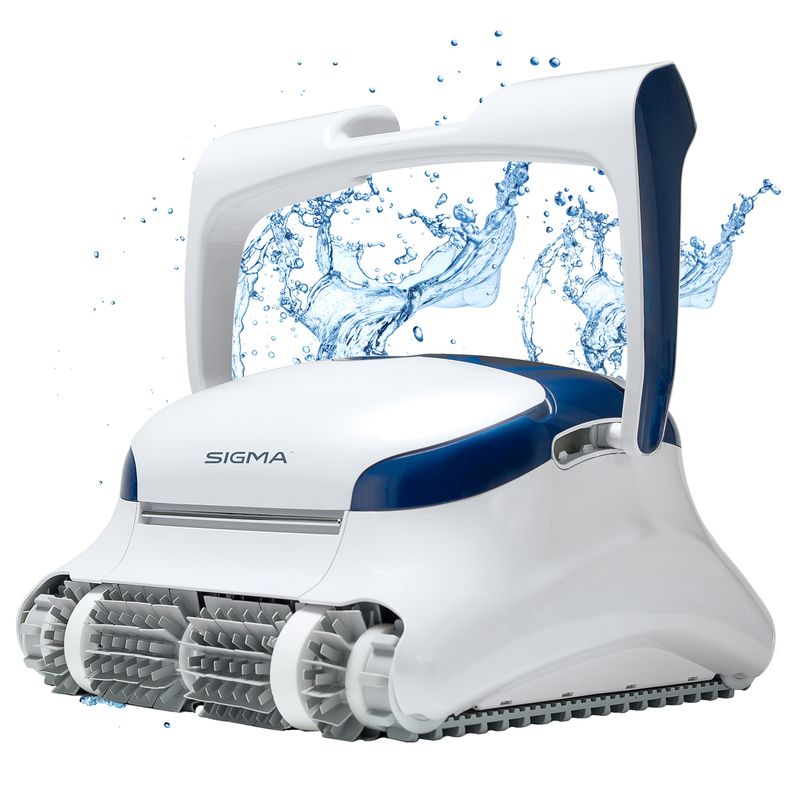
Most brushing against biofilm
Biofilm is a brushing problem, and the Sigma brings four scrubbing brushes where the other picks bring one or two. Three commercial-grade motors pull 4,500 GPH through NanoFilters or standard cartridges, both included. The myDolphin Plus app sets a weekly schedule by day and time, so a cycle can finish before the first swim, and SmartNav 3.0 with an onboard gyroscope keeps the route orderly. It ranks second because it has no leaf bag for heavy litter and carries the highest price on this page.
Temporarily out of stock
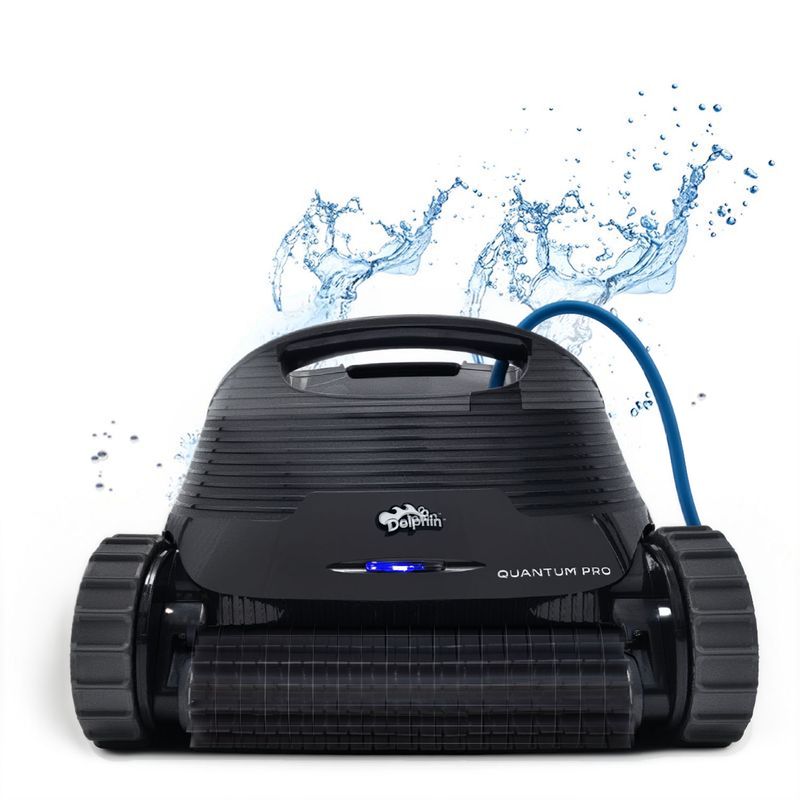
Lowest-priced pick with NanoFilters included
The Quantum covers a natural pool's two main needs for less than the robots above: a full set of NanoFilter panels in the box, and a timer for every day, every 2 days or every 3 days. Its XXL MaxBin basket, with over 400 square inches of filter area, holds plenty of soft sediment before flow drops, and opens from the top with one click. Dual HyperBrushes spin at twice the speed of standard brushes, useful on film. The warranty runs 2 years against 3 on the top two picks.
Temporarily out of stock
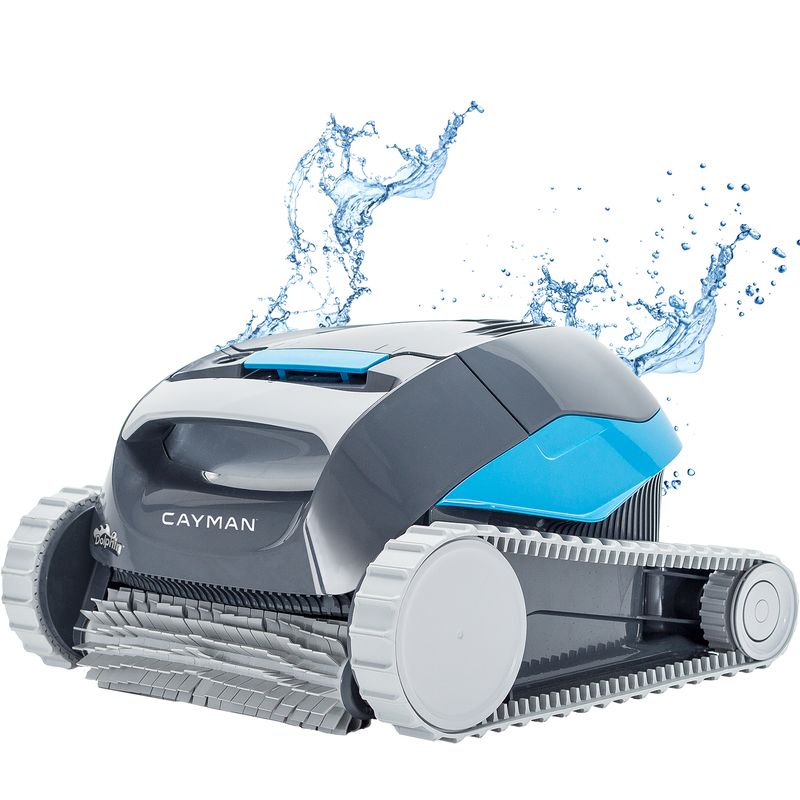
Enough robot for a small swimming zone
Plenty of natural pools have a swimming zone well under 33 ft, and for those the Cayman is the least robot that does the job. It cleans floor and walls, weighs 14.6 lb, and its timer runs every day, a good match for film that regrows daily. The MaxBin basket empties through a top hatch. Two things keep it fourth. NanoFilter panels are an optional add-on, and with this much fine sediment you should buy them. And it stops short of the waterline, where a natural pool often shows a band.
How to judge a robot for this
The dirt here is silt, decayed plant matter and pollen that settles as a soft layer. Standard panels pass some of it back into the water. NanoFilters, the ultra-fine media, hold it. They come in the box with the Premier, Sigma and Quantum and are an add-on for the Cayman.
With no sanitizer in the water, a slippery film grows back on walls and floor within days. That is normal biology, not a fault. No robot stops it, but scrubbing brushes and frequent cycles keep it thin.
Because the film returns so fast, the useful robot runs every day or two without being asked. Look for a timer on the power supply or a schedule in an app, and plan to rinse the filter at least weekly.
The robot belongs on smooth liner or concrete only. Gravel jams tracks and impellers, and planting baskets snag cables. If the wall dividing the two zones stops just under the surface, a climbing robot may reach its top.
Side by side
| Specification | Dolphin Premier | Dolphin Sigma | Dolphin Quantum | Dolphin Cayman |
|---|---|---|---|---|
| Price today | $1949 | $2349 | $1599 | $1049 |
| Pool type | In-ground | In-ground | In-ground | In-ground and above-ground |
| Pool length | Up to 50 ft | Up to 50 ft | Up to 50 ft | Up to 33 ft |
| Cleans | Floor, walls and waterline | Floor, walls and waterline | Floor, walls, waterline, sun shelves and stairs | Floor and walls |
| Cable | 55 ft with 360° anti-tangle swivel | 55 ft with 360° anti-tangle swivel | 55 ft with anti-tangle swivel | 50 ft |
| Filtration | Multi-Media: NanoFilters, oversized leaf bag and standard fine filters | NanoFilters and standard filter cartridges | XXL MaxBin basket with standard and NanoFilter panels | MaxBin basket with fine panels; NanoFilter panels optional |
| Robot weight | 20.3 lb | 24.6 lb | 18.3 lb | 14.6 lb |
| Warranty | 3 years | 3 years | 2 years | 2 years |
Think of a natural pool as two rooms. The swimming zone is the room a robot can clean. The regeneration zone, with its plants, gravel and biological filter, is the room it must never enter. Walk the pool before you order and check each point below.
A natural pool's filter is alive, and chlorine, algaecide or clarifier carried in on a robot can set it back. Rinse a new robot with fresh water before its first cycle. If it has ever worked in a treated pool, wash it thoroughly inside and out, including the filter panels, brushes and the full length of the cable.
Rinse it after each run too, well away from the water, so the sediment it collected does not wash back in. Organic silt clogs NanoFilters quickly, so on a neglected floor expect to rinse the panels after every cycle for the first week or two.
A robot removes what has settled and scrubs what has grown. It does not replace the regeneration zone, the skimmer or the pump that feeds the planted filter. It will not clear water turned cloudy by a young or overloaded biological filter, and it will not strip string algae from the walls. Pull that by hand first, because long strands wind around brushes.
Nor will the walls ever feel like a chlorinated pool; a thin film is part of how these pools work. None of these robots is published for water without sanitizer, so read the water requirements in the manual and take the builder's advice.
Questions, answered
In the lined swimming zone, yes, with conditions. No robot here is published as approved for natural pools, so the decision rests with you and your builder. On a smooth PVC liner or a concrete floor a robot can collect sediment and scrub film. It must stay out of the regeneration zone and off gravel.
Not a different machine, a different priority list. The best robotic pool cleaner for natural pools is the one with ultra-fine filtration, plenty of brush and a schedule, because sediment and biofilm are the whole job. It also needs a fresh-water wash before it goes in, which a chlorine pool never asks for.
More often than in a chlorinated pool. Film comes back within days, so every day or every second day through the warm months is a sensible starting point. The Premier and Quantum timers offer every day, every 2 days or every 3 days.
It is not a published surface for any robot on this page, so we will not tell you it is. The published lists name vinyl liner, which is PVC. EPDM is a rubber sheet, and its seams and folds vary by installer. Ask the builder to confirm they are bonded flat, then watch the first cycles.
The verdict
Get the builder's yes first. Then choose by what settles in your swimming zone. Fine sediment plus seasonal leaf litter: the Premier, for its three included media. Slippery walls and a wish to schedule by the hour: the Sigma. NanoFilters and a timer at the lowest price of the 50 ft robots here: the Quantum. A swimming zone under 33 ft and a daily floor-and-wall clean: the Cayman, with NanoFilter panels added. Whichever you pick, it stays on the smooth side of the dividing wall.
Keep reading
