

Try it in your pool for 30 days. Exchange it for another Dolphin for free, or return it with no restocking fee.
Your bag is empty.
By steps, ledges and tricky features
Top pick: Dolphin Quantum
$1599 today · Free shipping · 30 day trial
The short answer
A swim-out is a seat set into the wall, usually in the deep end, with a step or two. Four robots ranked on reaching it, working around it and collecting what gathers there.
The Dolphin Quantum leads because stairs and shelves are in its published coverage, so it is the robot most likely to climb the swim-out's step and reach the seat. The Dolphin Sigma is second: its gyroscope keeps it oriented in and out of the alcove, and it scrubs the waterline around it. Either way, expect to brush the seat off now and then.
A swim-out is the seat tucked into a corner or an alcove of the pool wall, most often in the deep end, with a step or two leading up to it. It is also a recess with weak circulation, which makes it the spot where leaves and silt end up. Finding the best robotic pool cleaner for swim-outs means asking what a robot can do in a recess.
Three things, in order of difficulty. It can clean the walls and waterline around the alcove, which every waterline robot does. It can work its way in and out without stalling, which takes navigation. And it can climb onto the seat itself, which only a robot made for steps and shelves is likely to manage. The seat often needs a brush-off whatever you buy.
Our picks, in order
Temporarily out of stock
Most likely to reach the seat
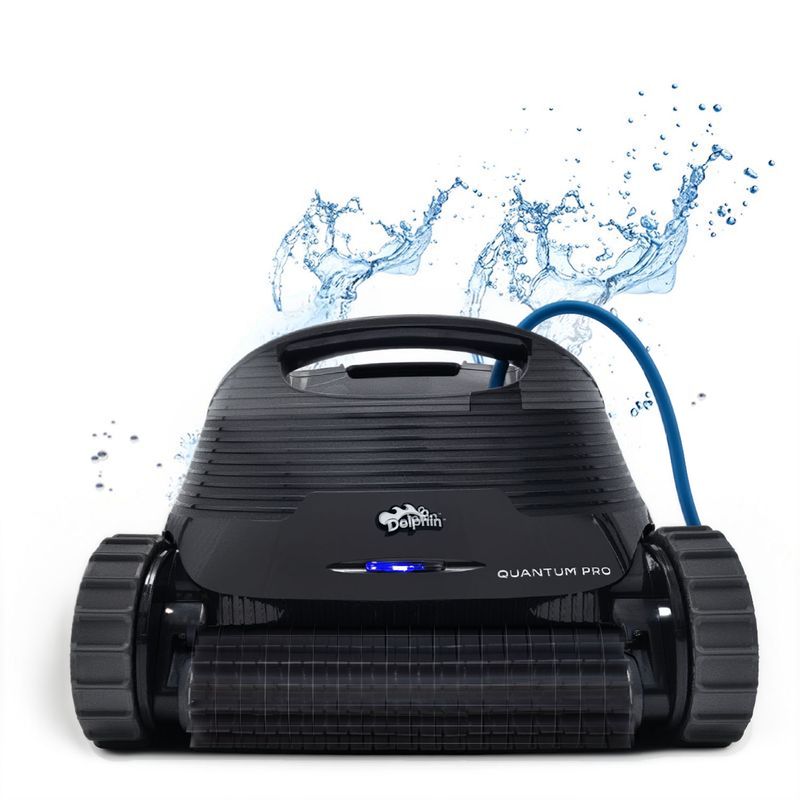
A swim-out is a step and a shelf, and those are what the Quantum's coverage adds to the usual floor, walls and waterline: stairs, sun shelves and Baja ledges. No other pick here publishes them. That is the case for ranking it first, with the caveat that a small or steeply stepped swim-out can still be missed.
When you sweep leaves out of the alcove, the XXL MaxBin basket, with over 400 square inches of filter area, takes them. The 55 ft cable has an anti-tangle swivel for the run to the deep end.
Temporarily out of stock
Best at working in and out of the alcove
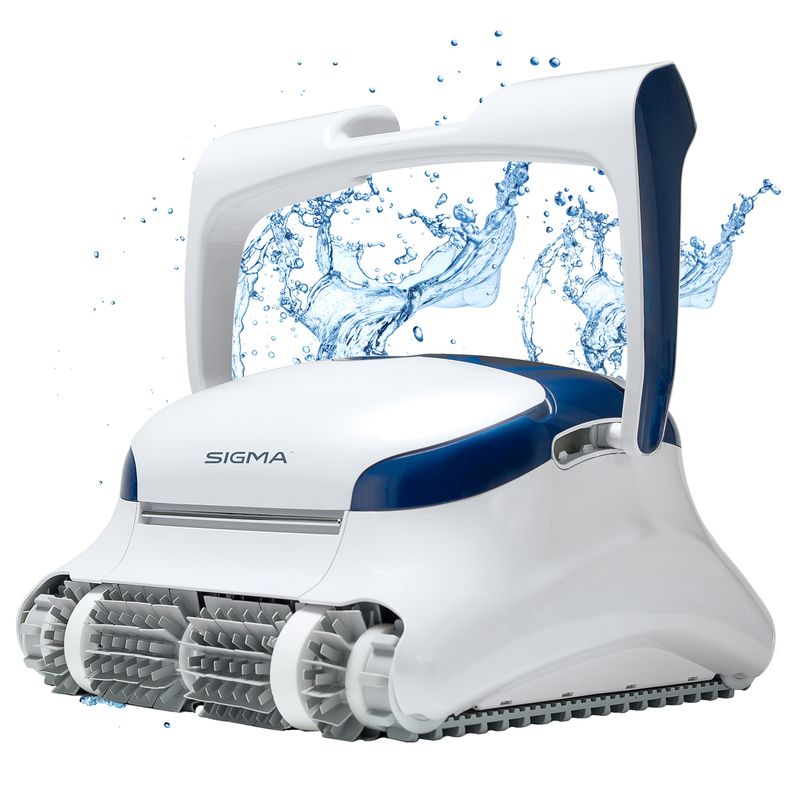
The alcove is a navigation test, and the Sigma is the pick with a gyroscope. SmartNav 3.0 tracks the robot's heading, so the tight turns between a swim-out's side walls do not leave it wandering.
Three motors at 4,500 GPH and quad scrubbing brushes clean the alcove walls and the waterline above the seat. The app's filter alert earns its keep after a leaf sweep. Its coverage is floor, walls and waterline, so the seat itself is yours to brush.
Temporarily out of stock
Scrubs around the seat and swallows the leaves
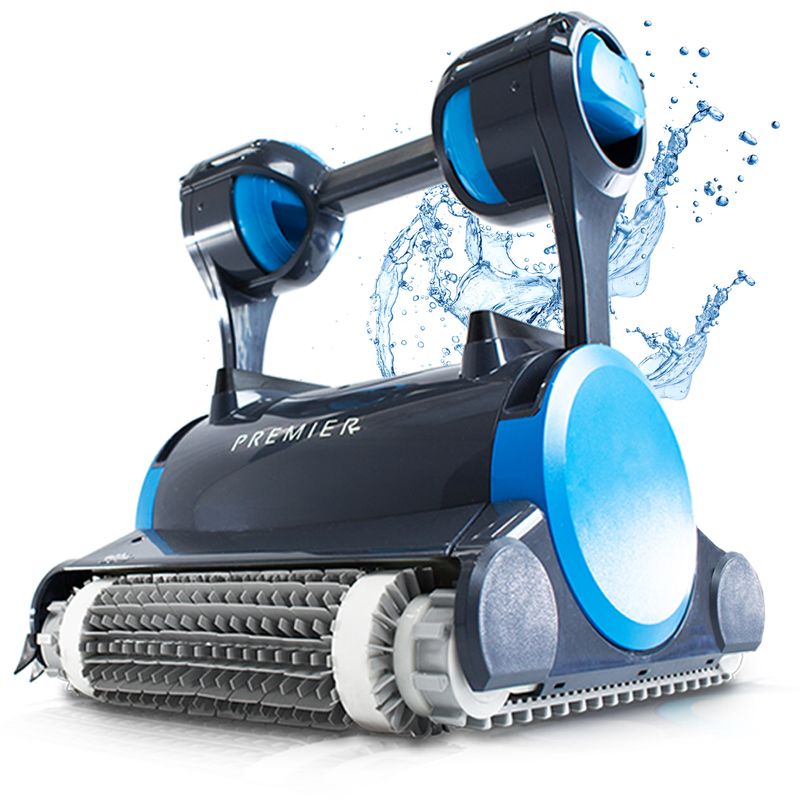
The Premier does not climb onto the seat. What it does is scrub everything around it for 3 hours: the alcove walls, the face of the step and the waterline above, with dual brushes and 4,500 GPH of flow.
Its real advantage at a swim-out is the oversized leaf bag. Leaves gather in the recess; rake or brush them out, and the Premier collects the lot without the filter choking. NanoFilters are included for the silt left behind. Steps and ledges are on its published obstacle list, and the warranty is 3 years.
Temporarily out of stock
Smallest outlay for a swim-out pool up to 33 ft
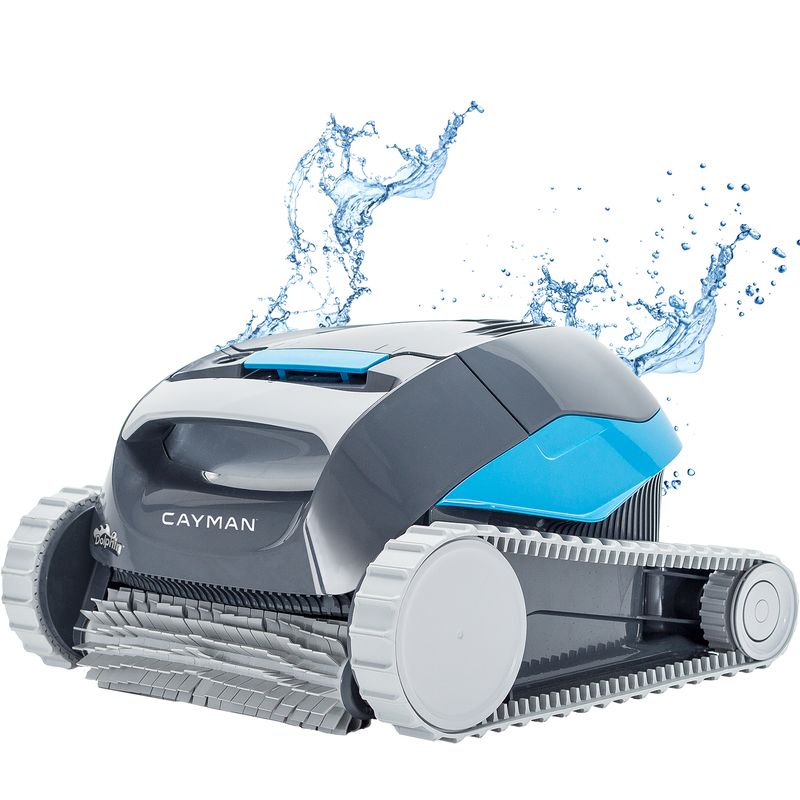
Plenty of swim-outs are in modest pools. If yours is 33 ft or under, the Cayman cleans the floor and the walls around the alcove with a HyperBrush at twice the speed of standard Dolphin brushes, and steps and ledges are on its published obstacle list.
There is no waterline scrubbing, no swivel on the 50 ft cable, and no seat coverage. The timer runs every day, so swept-out debris does not sit long. The MaxBin basket is 50% larger than standard Dolphin filters.
How to judge a robot for this
The seat and its step are small horizontal surfaces. A robot reaches them only if it is made to climb onto them. Of the picks here, the Quantum alone publishes stairs, sun shelves and Baja ledges as surfaces it cleans.
An alcove has two inside corners, a step and a back wall close together. A robot that loses its bearings there wastes its cycle bumping around. The Sigma's gyroscope tracks heading. The Quantum's SmartNav 2.0 senses ladders and drains.
Wind and current push floating debris into the recess, where it sinks. When you sweep it out, it all lands on the floor at once. A large basket, or a leaf bag, takes that load without choking mid-cycle.
Swim-outs usually sit at the deep end, the far point from the entry steps and often from the power outlet. Check the length rating against the pool, then check that the cable reaches the swim-out wall with slack to climb.
Side by side
| Specification | Dolphin Quantum | Dolphin Sigma | Dolphin Premier | Dolphin Cayman |
|---|---|---|---|---|
| Price today | $1599 | $2349 | $1949 | $1049 |
| Cleans | Floor, walls, waterline, sun shelves and stairs | Floor, walls and waterline | Floor, walls and waterline | Floor and walls |
| Traction | HyperGrip tracks | HyperGrip tracks | HyperGrip tracks | HyperGrip tracks |
| Navigation | SmartNav 2.0 | SmartNav 3.0 with gyroscope | SmartNav 2.0 | SmartNav 2.0 |
| Cable | 55 ft with anti-tangle swivel | 55 ft with 360° anti-tangle swivel | 55 ft with 360° anti-tangle swivel | 50 ft |
| Robot weight | 18.3 lb | 24.6 lb | 20.3 lb | 14.6 lb |
| Warranty | 2 years | 3 years | 3 years | 2 years |
From the floor of the deep end, a swim-out is a wall with a notch in it. The robot climbs, meets the lip of the step or the seat, and usually treats it as more wall. Inside the alcove, the side walls are close together and the seat is short, so there is little room to turn.
A robot made for stairs and shelves has the best chance of climbing onto the seat. Even then, a small seat is a small target. The honest expectation: clean walls and waterline around the swim-out from any of the top three picks, and a seat that gets cleaned on some cycles and not others.
A skimmer only pulls in what the surface current brings to it, and that current does not turn into a recess. Floating leaves drift into the alcove, lose momentum, soak and sink onto the seat and into the corner behind the step. A deep-end swim-out is often the farthest point from the skimmer as well.
A robot does not skim the surface, so it will not stop leaves arriving. What helps: aim a return so it pushes surface water past the swim-out toward the skimmer, and rake the alcove before the cycle so the debris is on the floor. Collecting that load is what the oversized leaf bag on the Dolphin Premier is made for.
Pool length is the first check: the rating applies to the longest straight run of the pool. Cable is the second. The robot has to reach the swim-out wall and still have slack to climb it, so run a tape from the power supply's spot to the far corner of the alcove and add the depth of the deep end.
The manual gives a minimum distance between the power supply and the water's edge. If keeping to it leaves the cable short, move the power supply toward the deep end.
Questions, answered
A swim-out is a seat set into a corner or alcove of the wall, usually in the deep end, with a step or two up to it. A bench runs along a wall. For a robot the swim-out is harder: it is smaller, it is recessed, and it sits above the deepest floor.
Sometimes. Only the Quantum names stairs among the surfaces it cleans, so it has the best chance. The Sigma and Premier list steps as obstacles they handle, which means they work around them. A single small step is easy to miss, so brush it when you brush the seat.
The alcove is a dead spot in the pool's circulation. Floating leaves drift in, stall and sink. A robot picks them up once they are on a surface it can reach, but it does not skim the surface. Redirecting a return jet and raking the alcove are the real fixes.
Yes, because the seat is a few square feet and the robot does the rest of the pool. Brushing a swim-out takes about a minute. Vacuuming the floor and scrubbing the walls by hand takes far longer. Buy the robot for the pool and treat seat coverage as a bonus.
Measure before you buy. Run a tape from where the power supply will sit to the far corner of the swim-out, then add the deep-end depth. The Quantum, Sigma and Premier have 55 ft cables with a swivel. The Cayman has 50 ft and no swivel.
The verdict
The swim-out is a few square feet of a much larger job. Pick the robot the whole pool needs, then see what it does for the seat. Up to 33 ft on a budget: the Cayman, and a brush. Up to 50 ft: the Quantum, because it alone is made for steps and shelves. Add the Sigma's navigation if the pool is full of tight spots, or the Premier's leaf bag if trees are the real problem.
Keep reading
