

Try it in your pool for 30 days. Exchange it for another Dolphin for free, or return it with no restocking fee.
Your bag is empty.
By steps, ledges and tricky features
Top pick: Dolphin Sigma
$2349 today · Free shipping · 30 day trial
The short answer
A robot cleans a corner with brush contact and repeated passes, not by fitting into it. Four Dolphins ranked on exactly that, with the honest limit spelled out.
The Dolphin Sigma puts the most brush on a corner: quad scrubbing brushes, three motors and a gyroscope that keeps its approach lines true. The Dolphin Premier is the runner-up, with dual brushes and the longest cycle here for more passes. In a round or coved pool with no square corners, the Dolphin Escape is all you need.
A robot is a box with a brush on the front. A corner is where a box does not fit. That is the whole problem behind the search for the best robotic pool cleaner for tight corners, and it is why no honest answer starts with a robot that squeezes into them. None does.
What a good robot does is arrive at the corner again and again, from one wall and then the other, with a brush that scrubs up to the wall and suction that pulls in what comes loose. This page covers 90-degree wall corners, the joint where wall meets floor, step corners and the dead space behind a ladder. For the last inch of a square corner, keep a hand brush.
Our picks, in order
Temporarily out of stock
Most brush on every corner pass
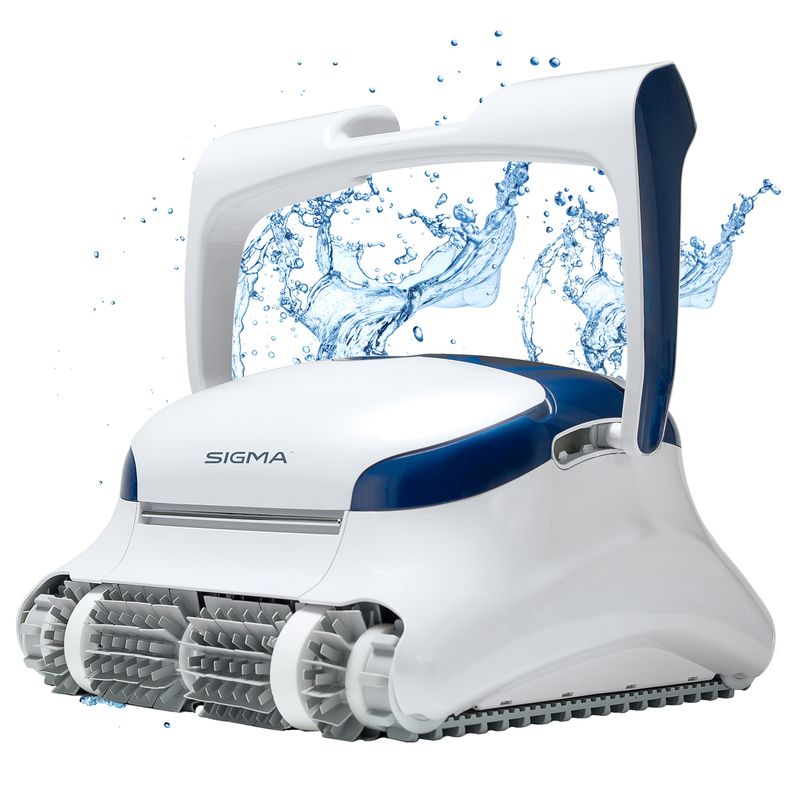
The Sigma is the one robot here with quad scrubbing brushes, so each time it noses up to a corner there is more bristle working the joint. Three commercial-grade motors move 4,500 GPH to carry off what comes loose. SmartNav 3.0 uses an onboard gyroscope to hold straight lines, so it meets walls square instead of glancing off them. It climbs to the waterline, scrubbing the vertical seam where two walls meet. NanoFilters are included for the fine dust corners hold.
Temporarily out of stock
Longest cycle, so the most return visits
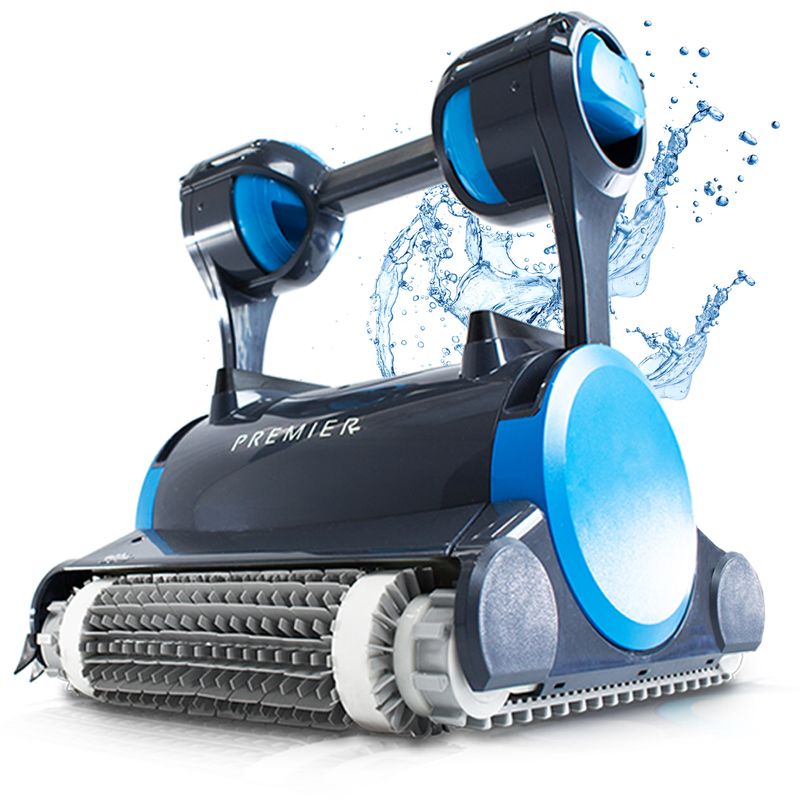
The Premier runs for 3 hours, the longest cycle of the robots in this guide. More time in the pool means more approaches to each corner from more angles. Dual scrubbing brushes do the work, and dual ProLine motors match the Sigma's 4,500 GPH.
The filter choice suits corners. NanoFilters are included for silt and dead algae, and the oversized leaf bag goes in when the corners are full of leaves. The weekly timer on the power supply repeats the job every day, every 2 days or every 3 days.
Temporarily out of stock
Best on step corners
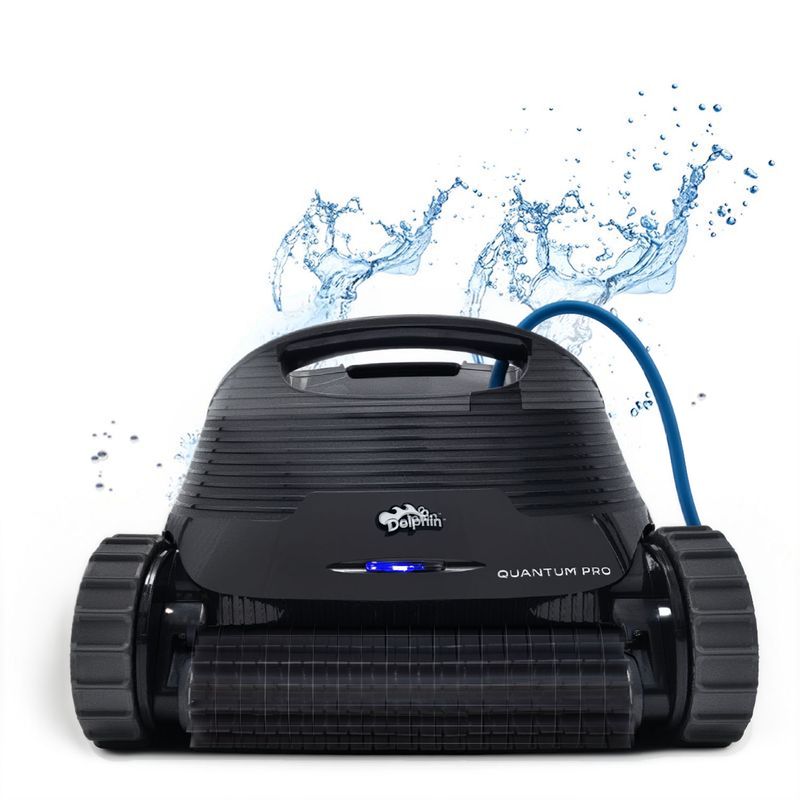
Steps are where most of a pool's corners are, and the Quantum is the pick whose published coverage includes stairs, sun shelves and Baja ledges. Its dual HyperBrush spins at twice the speed of standard brushes, so even a short visit to a step corner means a lot of strokes.
The XXL MaxBin basket, with over 400 square inches of filter area, comes with standard panels and a full set of NanoFilter panels. It is also the lowest-priced 50 ft robot in this guide.

Temporarily out of stock
Enough brush where corners are coved or absent
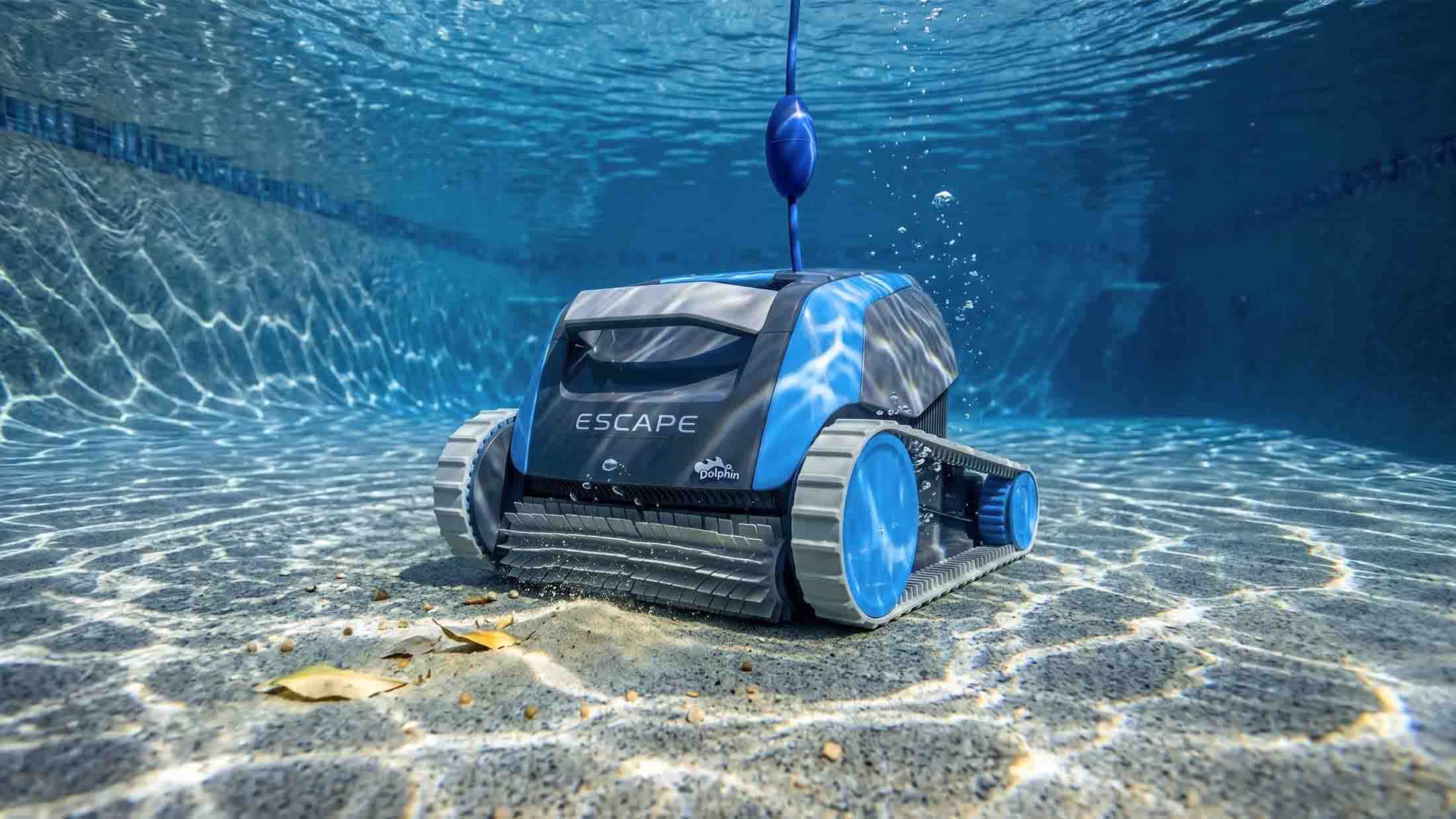
The Escape has one HyperBrush and cleans floor and walls. That is the least brush on this page. It is also all that many pools need, because the pools the Escape is made for have few real corners. A round above-ground pool has none. A rectangular liner pool has a coved joint where the wall meets the floor, which the brush follows easily.
The 1.5-hour cycle is short, so run it more often instead of expecting one pass to finish the job.
How to judge a robot for this
The brush is the only part of the robot that touches the corner. More brushes put more bristle on the joint at each approach. The Sigma has four, the Premier and Quantum two, and the Escape and Cayman one HyperBrush that spins at twice the speed of standard Dolphin brushes.
No single pass cleans a corner. The robot has to come at it from different angles during a cycle, and again over a week of cycles. A longer cycle and a schedule that runs the robot often both add approaches.
Scrubbing only loosens dirt. Flow has to carry it into the filter before it settles back. Corner dirt is mostly fine: silt, pollen and algae dust. So the filter matters as much as the pump rate.
A radius or coved corner lets the brush follow the curve. A true 90-degree corner, where two walls and the floor meet, leaves a small wedge no robot's brush fully reaches. Know which you have before you pay for more brush.
Side by side
| Specification | Dolphin Sigma | Dolphin Premier | Dolphin Quantum | Dolphin Escape |
|---|---|---|---|---|
| Price today | $2349 | $1949 | $1599 | $659 |
| Cleans | Floor, walls and waterline | Floor, walls and waterline | Floor, walls, waterline, sun shelves and stairs | Floor and walls |
| Traction | HyperGrip tracks | HyperGrip tracks | HyperGrip tracks | HyperGrip tracks |
| Navigation | SmartNav 3.0 with gyroscope | SmartNav 2.0 | SmartNav 2.0 | SmartNav 2.0 |
| Cable | 55 ft with 360° anti-tangle swivel | 55 ft with 360° anti-tangle swivel | 55 ft with anti-tangle swivel | 40 ft |
| Robot weight | 24.6 lb | 20.3 lb | 18.3 lb | 14.2 lb |
| Warranty | 3 years | 3 years | 2 years | 2 years |
Pool water circulates in a loop from the returns to the skimmer and the drain. Corners sit outside that loop. Water there slows down, and whatever it carries settles: silt, pollen, leaf fragments. The same still water is where algae gets started, because sanitizer arrives slowly and nothing disturbs the surface.
So a corner needs two things: something to scrub it and something to move water through it. A robot does the first. Pointing a return jet along the wall toward the worst corner helps with the second. A robot does not replace sanitizer, or brushing during an algae treatment.
It drives in until its front meets the wall, scrubs right up to that wall, then turns or climbs. On a later approach it arrives along the other wall. Between the two, the brush covers everything except a small wedge at the very point, where two walls and the floor meet at once.
On a radius corner that wedge does not exist. On a square corner it is roughly the last inch, and it holds very little. Sweep it out with a hand brush every week or two and the robot collects it on the next run.
A ladder creates a corner the robot cannot enter, because the gap between the rails and the wall is narrower than the robot. It cleans around the ladder, not behind it. Lift a removable ladder out now and then, or reach behind it with a brush.
Step corners are the hardest in any pool: small, shallow and square on three sides. The Dolphin Quantum is the pick here with stairs in its published coverage. The Sigma and Premier list steps among the obstacles they handle. With any robot, the top step is the one most likely to need a brush.
Questions, answered
Not quite. The brush reaches the corner from each wall in turn and cleans everything but a small wedge at the point, roughly the last inch. That wedge holds little. A quick sweep with a hand brush every week or two moves it onto the floor, where the robot picks it up.
Because water barely moves there. Sanitizer reaches the corner slowly and nothing scrubs it, so algae gets a head start. A robot helps by scrubbing the area on every cycle, but it does not replace sanitizer or hand brushing during treatment. Aim a return jet at that corner as well.
No. A round pool has no wall corners, only the curved joint where wall meets floor, and a single fast brush follows that well. The Escape is rated for round pools up to 33 ft. Keep the difference, or put it toward the Automation Timer power supply.
For square corners, yes. Four brushes put more bristle on the joint at each approach, which is why the Sigma leads this page. A HyperBrush makes up some ground by spinning at twice the speed of standard brushes. On coved or radius corners the gap between the two narrows.
Before. Brushing pushes the dirt out of the corner onto open floor and into the water, and the robot then collects it. Brushing afterward leaves that dirt sitting until the next cycle. If the robot runs on a schedule, brush the evening before its run.
The verdict
Look at your corners before you look at robots. No square corners, or coved liner joints only: the Escape is enough, and more brushes buy you nothing. Square corners in an in-ground pool up to 50 ft: the Sigma puts the most brush on them, and the Premier gives the most return visits for less. Corners mostly on steps: the Quantum. Whichever you choose, the last inch of a square corner is a hand-brush job.
Keep reading
