

Try it in your pool for 30 days. Exchange it for another Dolphin for free, or return it with no restocking fee.
Your bag is empty.
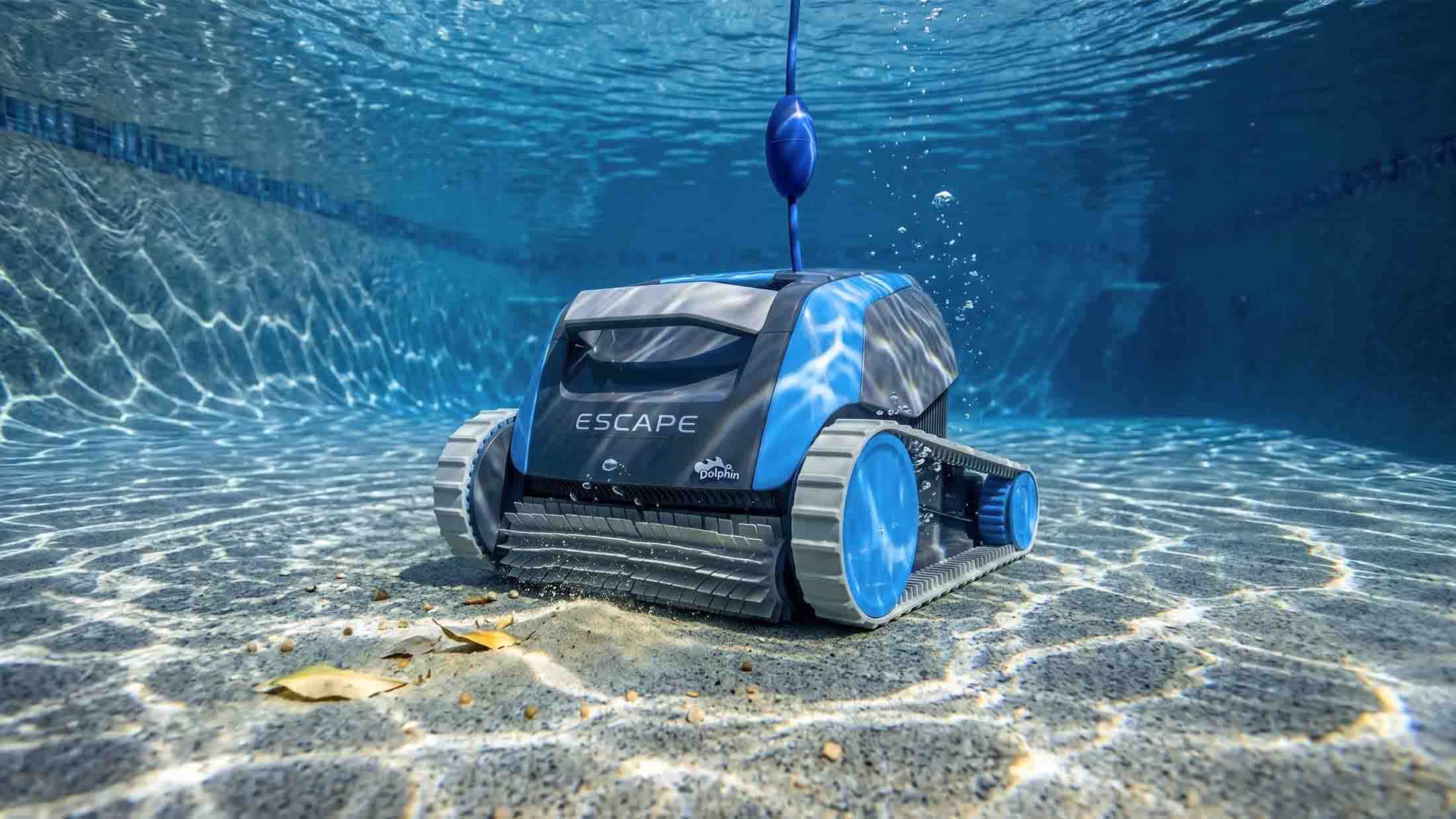
By steps, ledges and tricky features
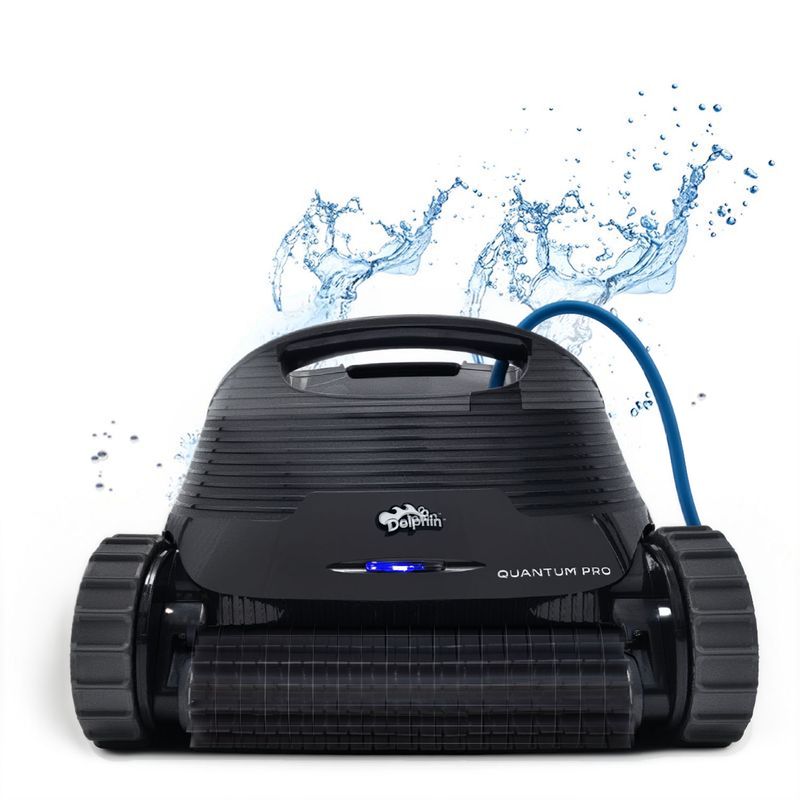
Top pick: Dolphin Quantum
$1599 today · Free shipping · 30 day trial
The short answer
A zero-entry slope ends in water too shallow for any robot. Four Dolphins ranked on how they handle the incline, with the part you clean yourself stated up front.
The Dolphin Quantum is the pick: sun shelves and stairs are in its published coverage, so it works the shallowest water of the four. The Dolphin Sigma is the runner-up for pools where the slope confuses a robot, because its gyroscope senses the incline. Neither cleans the top of the entry. That stretch is a brush and a hose.
No robotic cleaner cleans a beach entry all the way to the dry edge. A robot climbs the slope until the water is too shallow to keep it submerged, then turns back. On some pools it can run up far enough to draw air and stop. Plan to brush or hose down the top few feet yourself.
A beach entry, also called a zero entry, slopes from dry deck down to swimming depth with no step. It is the best-looking way into a pool and the hardest part of one to keep clean. Sand, sunscreen film and leaf bits collect where the water thins out. Anyone looking for the best robotic pool cleaner for beach entry pools should start with what a robot physically cannot do there.
A robot needs water over it to pump and to grip. As it climbs the slope the water gets shallower until the robot can no longer stay submerged, and it turns back. The top stretch stays uncleaned. So the ranking below is about two things: how shallow a robot is made to work, and how well it copes when it runs out of water.
Our picks, in order
Temporarily out of stock
Works the shallowest water of the four
Nothing is rated for a beach entry as such, so look for the robot made for the shallowest surfaces. That is the Quantum. Its published coverage includes sun shelves, Baja ledges and stairs, which are the same thin-water conditions found partway up a zero-entry slope.
HyperGrip continuous rubber tracks hold the incline, and the dual HyperBrush scrubs a textured finish at twice the speed of standard brushes. A full set of NanoFilter panels comes in the box for sand. Among the 50 ft robots here it also costs the least.
Temporarily out of stock
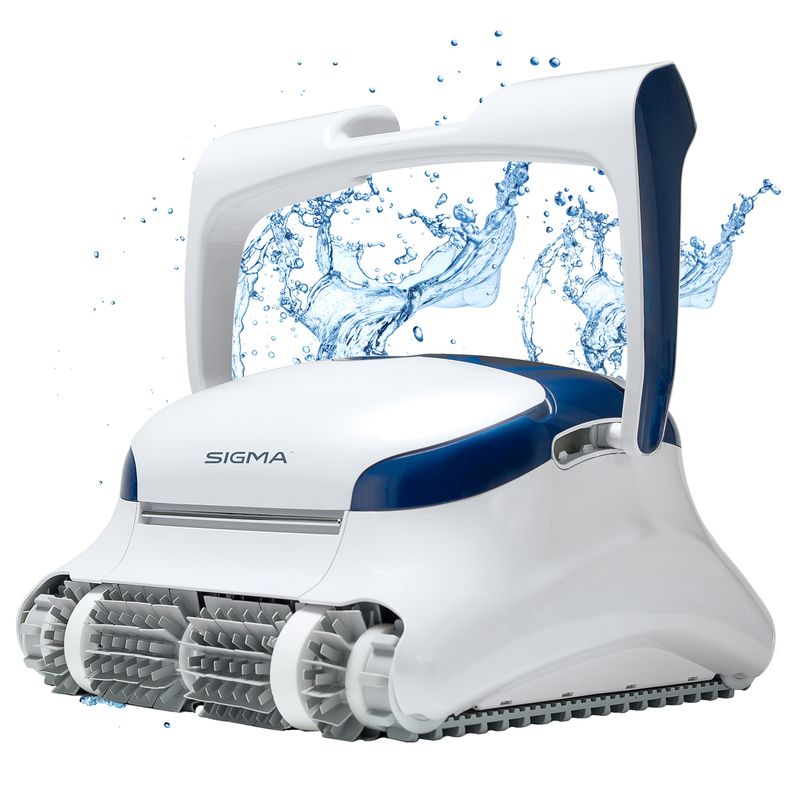
Senses the incline and recovers
The Sigma is the pick with an onboard gyroscope. SmartNav 3.0 reads the robot's tilt and heading, so a long ramp does not leave it guessing whether it is on a floor or a wall. That helps it turn back in good order and pick its pattern up again.
With three motors, 4,500 GPH of flow and four scrubbing brushes, it works the lower slope hard, and NanoFilters are included. The app schedules cycles by day and time and warns you when the filter is full, which happens fast when sand is the debris.
Temporarily out of stock
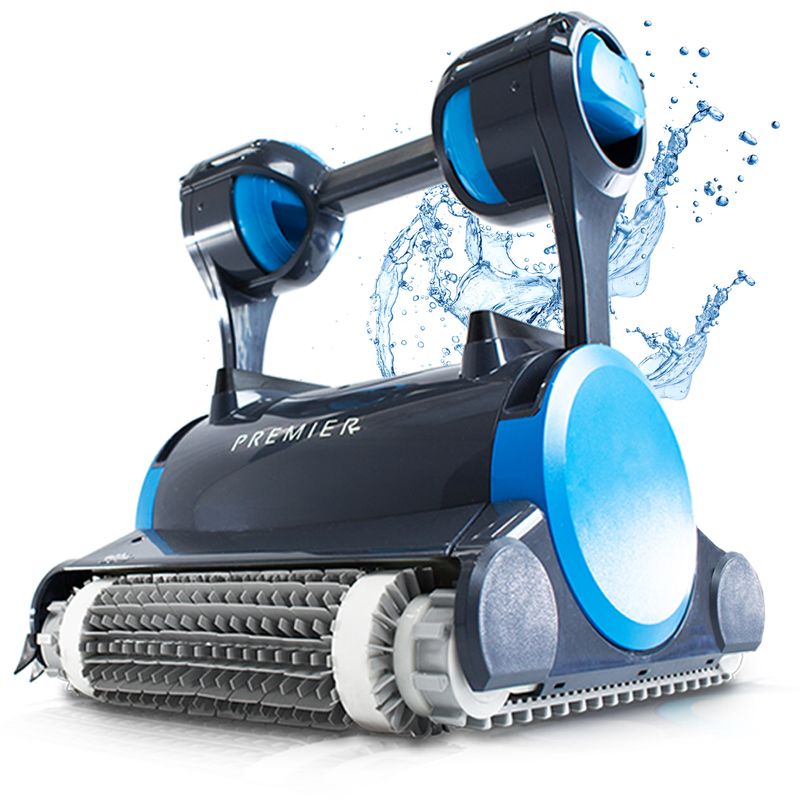
Three hours and fine filters for a sandy entry
The Premier brings time and filtration. Its 3-hour cycle is the longest here, so the lower slope gets more passes, and its Multi-Media system includes NanoFilters for the fine sand a pebble entry sheds. When leaves blow down the ramp, the oversized leaf bag swaps in within seconds.
Dual scrubbing brushes and 4,500 GPH clean floor, walls and waterline, and a weekly timer is set on the power supply, with no phone needed. The warranty is 3 years.
Temporarily out of stock
Lowest spend for a short zero-entry pool
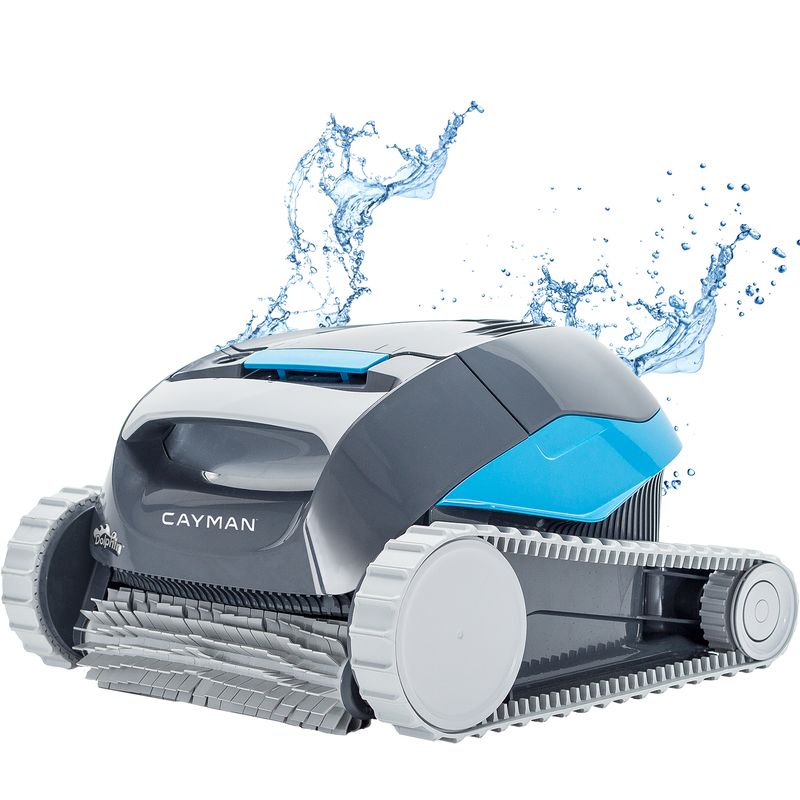
Small beach-entry pools exist, and for one of 33 ft or less the Cayman does the floor and walls for the least money here. HyperGrip tracks hold the slope and the HyperBrush spins at twice the speed of standard Dolphin brushes, which suits a textured entry.
It ships with fine panels, and NanoFilter panels for sand are an optional add-on. There is no swivel on its 50 ft cable and no waterline scrubbing, and on a beach entry the waterline is a long strip. The timer runs every day.
How to judge a robot for this
Every robot has a minimum depth, and the manual gives it. Among these four, the Quantum's published coverage reaches furthest into shallow water: sun shelves, Baja ledges and stairs. That is the closest thing to a beach-entry rating you will find.
A long, gentle incline is not a wall and not a floor. A robot that senses its own tilt handles the turn-back more cleanly. The Sigma's onboard gyroscope does that. The others rely on SmartNav 2.0 scanning.
Pebble and textured entries hold fine sand in their surface, and bathers carry more in. Standard filter panels let the finest of it through. NanoFilters catch it. They come with the Quantum, Sigma and Premier and are an optional add-on for the Cayman.
The slope adds length. Measure the longest straight run from the waterline at the entry to the far wall, and check it against the rating: 50 ft for the first three picks, 33 ft for the Cayman.
Side by side
| Specification | Dolphin Quantum | Dolphin Sigma | Dolphin Premier | Dolphin Cayman |
|---|---|---|---|---|
| Price today | $1599 | $2349 | $1949 | $1049 |
| Cleans | Floor, walls, waterline, sun shelves and stairs | Floor, walls and waterline | Floor, walls and waterline | Floor and walls |
| Traction | HyperGrip tracks | HyperGrip tracks | HyperGrip tracks | HyperGrip tracks |
| Navigation | SmartNav 2.0 | SmartNav 3.0 with gyroscope | SmartNav 2.0 | SmartNav 2.0 |
| Cable | 55 ft with anti-tangle swivel | 55 ft with 360° anti-tangle swivel | 55 ft with 360° anti-tangle swivel | 50 ft |
| Robot weight | 18.3 lb | 24.6 lb | 20.3 lb | 14.6 lb |
| Warranty | 2 years | 3 years | 3 years | 2 years |
Follow a robot up a beach entry. On the lower slope it cleans normally: there is water above it, the pump has flow and the tracks have weight on them. Higher up, the water thins and the top of the robot nears the surface. At some point it reverses. That turning point is the upper limit of what it cleans.
On some pools the robot overshoots. A very gentle gradient carries it into water so shallow that the intake draws air, and it stops. The cycle is over until you move it back to deeper water and restart it.
The top few feet of the entry are yours. It is also the easiest part of the pool to reach, because you can stand on it. Push a pool brush down the slope, or use a garden hose to rinse sand and film toward deeper water. Everything you send down ends up where the robot works.
Do it before the cycle, not after. On a pebble or textured entry, brush across the surface as well as down it, because fine sand sits in the low spots. The waterline band on the slope may need a hand scrub too: it shifts with the water level and bakes in the sun.
First, start it from the deep end, not the entry, so it meets the slope from below. Second, after a stall, hold the robot under water and let the trapped air out before you restart it. Third, look at the cable. If the power supply sits near the entry, moving it toward the deep end leaves less cable for the climb. It is a blunt tool, so watch a cycle after you move it.
If it still runs aground, talk to a Dolphin Expert before you give up on the robot.
Questions, answered
No. Every robot turns back where the water becomes too shallow to keep it submerged. The top few feet of the slope need a brush or a hose. The Quantum handles the shallowest water of the robots in this guide, so it is the best bet for the upper slope, but it does not reach the dry edge.
It can. On some pools a robot runs far enough up the slope to draw air, and it stops. Starting it from the deep end reduces the chance. The Sigma's gyroscope senses the incline, and the Quantum is made for shallow shelves.
We do not quote a minimum depth, because it is not a figure to guess at. The manual for each robot gives it. What we can say is which robot is published for shallow surfaces: the Quantum, whose coverage includes sun shelves, Baja ledges and stairs.
People walk in from the deck with sand on their feet. Small waves wash debris up the slope and leave it there. And pebble or textured finishes hold fine grains in their surface. Brush the entry down toward deeper water and use fine filters in the robot.
The shortlist is similar, because both come down to shallow water. A robot made for stairs and shelves, like the Quantum, suits both. The difference is the expectation. Steps are small and a robot may cover them. A beach entry always ends in a strip that no robot reaches.
The verdict
Accept the limit first: the top of the entry is a brush job with every robot. Then choose on shallow-water ability. The Quantum is the least robot that is made for thin water. Pay more for the Sigma only if robots have stalled on your slope before. Choose the Premier for leaves as well as sand. Choose the Cayman only if the whole pool is 33 ft or less.
Keep reading
