

Try it in your pool for 30 days. Exchange it for another Dolphin for free, or return it with no restocking fee.
Your bag is empty.
By debris and dirt problem
Top pick: Dolphin Premier
$1949 today · Free shipping · 30 day trial
The short answer
Pollen is a few intense weeks a year: a skimmer problem while it floats, then an ultra-fine filtration problem once it waterlogs and sinks.
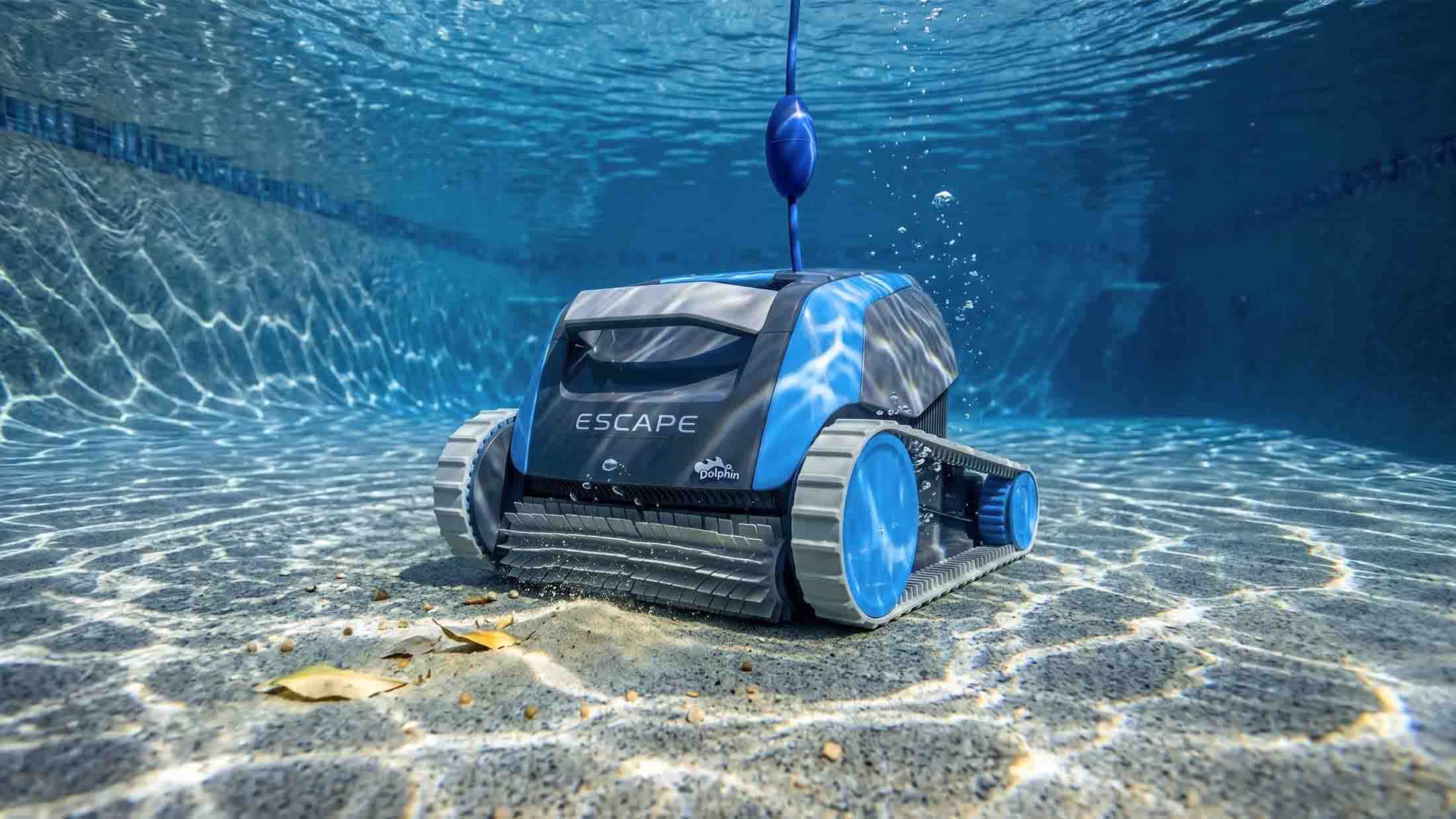
The Dolphin Premier is our pollen pick. It includes NanoFilters for the fine dust that sinks and an oversized leaf bag for the catkins that fall with it, and its timer runs daily through the season. The Dolphin Sigma is the alternative if you want app scheduling and four brushes on the tile line, where the yellow ring forms. For above-ground pools, choose the Escape and add NanoFilter panels.
Every spring the same thing happens. A yellow-green film spreads across the water, collects in the corners and rings the tile. A few days later the film is gone from the surface and a fine yellow dust is on the floor. Both are pollen. While it floats it belongs to the skimmer. Once it waterlogs and sinks it is the robot's job, and most robots are not equipped for it out of the box. The best robotic pool cleaner for pollen needs ultra-fine media, because sunk pollen passes through standard panels and drifts back down.
On the Premier and Sigma that means the included NanoFilters, and on the Dolphin Quantum the included NanoFilter panels. For the Dolphin Escape the panels are an optional extra. The season is short, so the real question is whether a few weeks of pollen justifies a bigger robot or just a finer filter.
Our picks, in order
Temporarily out of stock
One robot for pollen dust and catkins
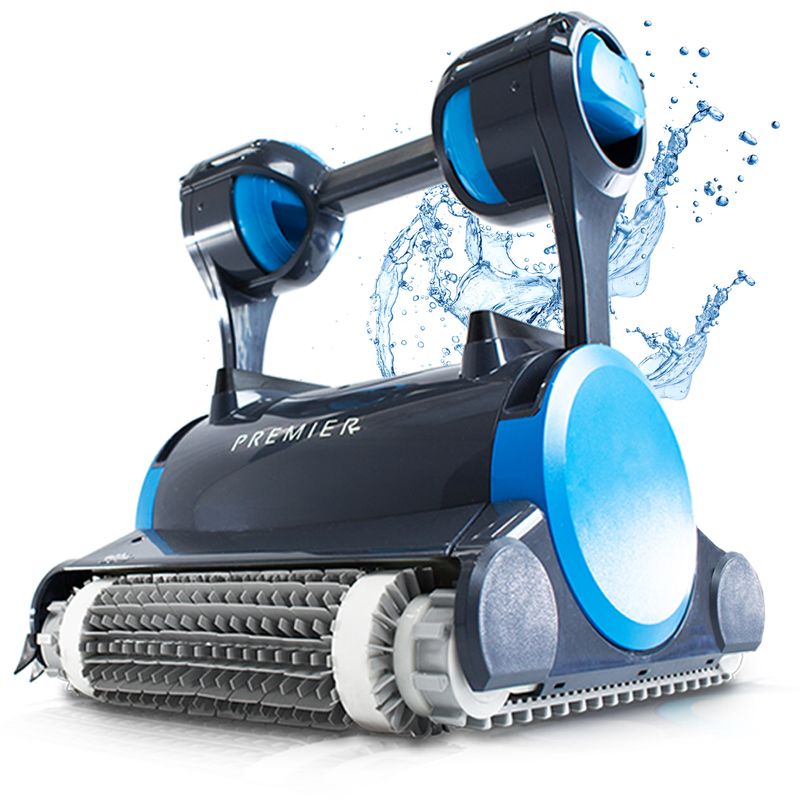
Pollen season is two kinds of debris at once, and the Premier includes purpose-made media for both. NanoFilters hold the sunk powder. The oversized leaf bag takes catkins, seed husks and spring blossom in bulk. Both come in the box and change over in seconds through the top, no tools needed, so you can run the bag after a windy night and the NanoFilters the rest of the week.
The weekly timer runs a cycle every day through the peak, and dual scrubbing brushes clean the yellow ring off the waterline of pools up to 50 ft.
Temporarily out of stock
Best on the yellow ring, with app scheduling
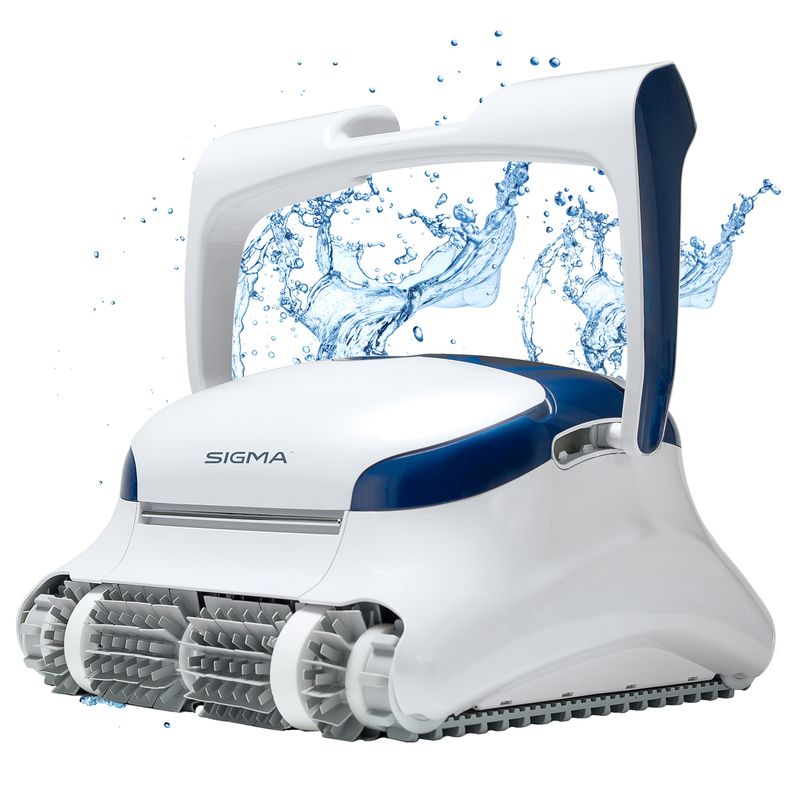
The Sigma includes NanoFilters and standard filter cartridges, and it puts four scrubbing brushes on the walls and waterline, where pollen dries into a yellow ring. With the myDolphin Plus app you pick the days and times for the week, move to daily when the trees start, and get a filter alert when the cartridges have loaded, which in peak season can be every cycle.
Its three commercial-grade motors push 4,500 GPH. It is second for a simple reason: it costs the most, and pollen is a short season.
Temporarily out of stock
Big basket with fine panels at a middle price
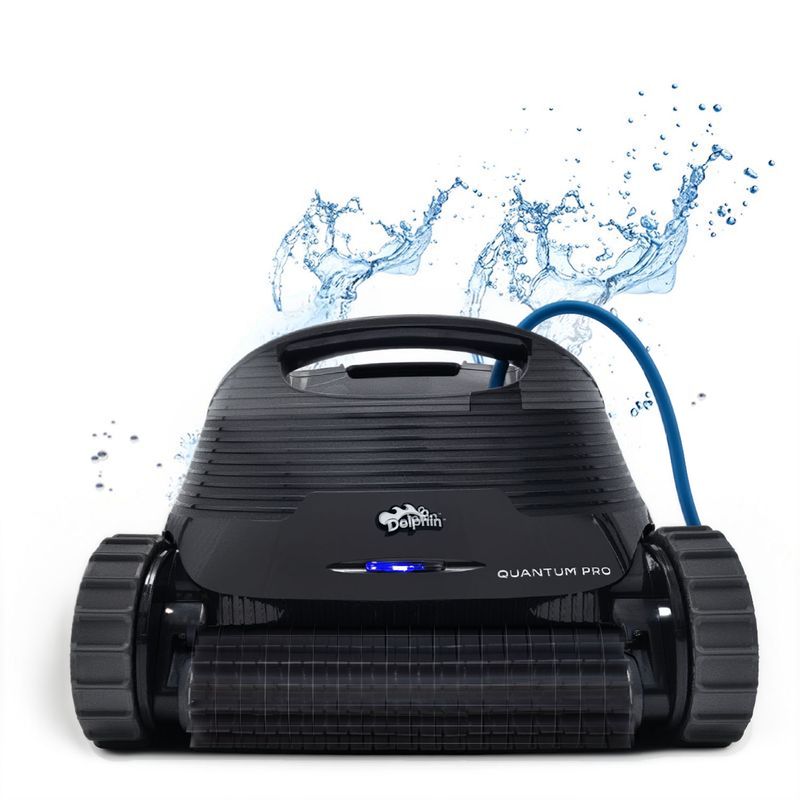
The Quantum covers both halves of pollen season in one basket. Its full set of NanoFilter panels holds the fine dust, and when catkins are dropping you swap to the standard panels and let the XXL MaxBin take the volume: it has more than 400 sq in of filter area. The top-load basket releases with a single click, which matters when you are rinsing daily.
Schedule it from the weekly timer or the app. Its HyperBrushes also clean stairs, sun shelves and Baja ledges, the shallow spots where sunk pollen is easiest to see.

Temporarily out of stock
A fine-filter add-on away from the job
For a few weeks of pollen in a pool up to 33 ft, the least expensive fix on this page is an Escape with the optional NanoFilter panels. Its standard panels will not hold sunk pollen. The fine panels will, and they sit in a top-load MaxBin basket, 50% larger than standard Dolphin filters, that comes out easily for the daily rinse.
The 1.5-hour cycle is short enough to start by hand every morning, and the optional Automation Timer power supply can start it every 24 hours if you would rather not. It works in above-ground and in-ground pools, on the floor and walls.
How to judge a robot for this
Sunk pollen is a powder. Standard panels hold a little and release the rest in the exhaust water. NanoFilters and NanoFilter panels are the media that keep it. For a short season, a set of fine panels on the shelf may be all the upgrade you need.
Trees shed for weeks, not a day, and each morning brings a new layer. A timer or app that runs the robot daily keeps the floor clear without you thinking about it. Rinse the filter every time during the peak.
Oak, pine and birch drop more than powder. Catkins, the long stringy tassels, sink in clumps and fill a filter by volume. That is a capacity job. It calls for a leaf bag or a large basket, the opposite of what fine media is good at.
Floating pollen leaves a yellow ring on the tile as the water level moves. Robots that climb to the surface and scrub there remove it as part of the cycle. With a floor-and-wall robot, the ring is a job for a sponge.
Side by side
| Specification | Dolphin Premier | Dolphin Sigma | Dolphin Quantum | Dolphin Escape |
|---|---|---|---|---|
| Price today | $1949 | $2349 | $1599 | $659 |
| Filtration | Multi-Media: NanoFilters, oversized leaf bag and standard fine filters | NanoFilters and standard filter cartridges | XXL MaxBin basket with standard and NanoFilter panels | MaxBin basket; NanoFilter panels optional |
| Filter access | Top-load, no tools | Cartridges | Top-load, one-click open | Top-load |
| Brushes | Dual scrubbing brushes | Quad scrubbing brushes | Dual HyperBrush | HyperBrush |
| Flow rate | 4,500 GPH | 4,500 GPH | 4,000 GPH | Over 4,000 GPH |
| Cycle time | 3 hours | 2.5 hours | 2 hours | 1.5 hours |
| Cleans | Floor, walls and waterline | Floor, walls and waterline | Floor, walls, waterline, sun shelves and stairs | Floor and walls |
| Scheduling | Weekly timer: every day, every 2 days or every 3 days | Weekly scheduler by day and time | Weekly timer: every day, every 2 days or every 3 days | Optional Automation Timer: every 24, 48 or 72 hours |
| Warranty | 3 years | 3 years | 2 years | 2 years |
Yellow dust on the floor sends many owners to the algaecide shelf. Check first. Treating pollen as algae wastes chemicals, and treating algae as pollen lets it spread.
Brush a patch and watch it over two days. Pollen lifts in a loose cloud, settles anywhere, and does not return to the same spot once it is filtered out. It also keeps the trees' calendar: if cars and patio furniture are yellow, the pool will be too. Mustard algae clings a little, favors shaded walls and steps, and is back in the same places a day or two after brushing.
Fresh pollen floats, and the pool's skimmer is the tool for that stage. Run the pump longer during the peak so the surface keeps moving toward the skimmer, and fit a skimmer sock, a fine mesh sleeve over the basket, to catch pollen that would otherwise pass through the pool filter. What the skimmer misses waterlogs and sinks within a day or so. That is the robot's share: fine media, a daily cycle, and a rinse of the filter after every run. Neither tool replaces the other.
The long tassels that oaks, pines and birches drop are not dust. They sink in tangled clumps and fill a filter by bulk long before it clogs. Ultra-fine media is the wrong choice for a heavy catkin day: it has little room and blinds quickly. Use a leaf bag or standard panels in a large basket, clear the catkins, then switch back to fine media for the powder left behind. If the clumps are thick enough to see from the deck, a leaf rake first saves a cycle.
Questions, answered
It is almost always tree pollen that floated, waterlogged and sank. It arrives with the bloom, coats cars and furniture at the same time, and brushes up in a loose cloud. If it returns to the same shaded spots after brushing, suspect mustard algae instead and test the water.
Yes, for the floating share. A skimmer sock traps pollen at the skimmer basket, before it reaches the pump and filter. Rinse or replace it daily in peak season. It does nothing for pollen already on the floor, which is where the robot and its fine filter take over.
During the peak weeks, yes. New pollen lands daily, and a thin layer is easier on the filter than a thick one. The Sigma schedules it from its app, and the Premier and Quantum from a timer. With the Escape, start it by hand or add the optional Automation Timer.
Some, not most. The standard panels catch clumps and catkins but let the fine sunk powder through, so the floor looks dusty again by the next day. Add the optional NanoFilter panels for pollen season and switch back afterward.
It can load it quickly. Heavy pollen raises filter pressure faster than normal, so check the gauge more often during the bloom and clean or backwash when it climbs. A skimmer sock takes much of that load off the filter.
The verdict
Pollen is seasonal, so spend accordingly. If your pool is 33 ft or under, an Escape with optional NanoFilter panels covers the sunk dust for a few weeks a year. If the pool is larger, or you want the tile ring scrubbed and the catkins handled, the Premier is the pick. The Quantum is close behind on value, and the Sigma adds app control. In every case the skimmer does the first half of the job.
Keep reading
