

Try it in your pool for 30 days. Exchange it for another Dolphin for free, or return it with no restocking fee.
Your bag is empty.
By feature
Top pick: Dolphin Sigma
$2349 today · Free shipping · 30 day trial
The short answer
Two brushes scrub more of the pool on every pass, but only three of the five Dolphins in this guide carry them. Here is what the second brush buys.
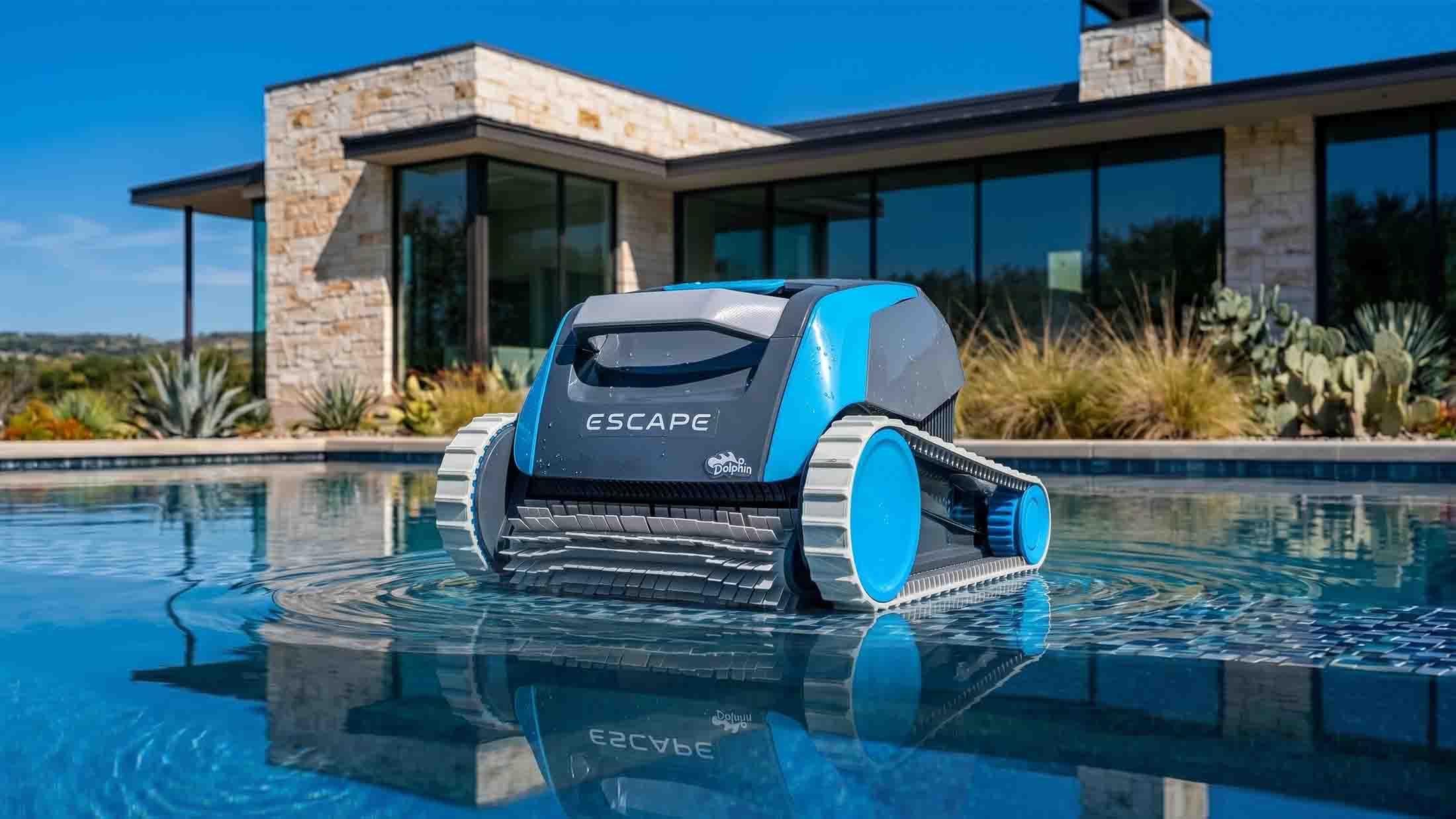
The Dolphin Sigma is the top pick: four scrubbing brushes, the most brush contact of the five Dolphins compared here, on an in-ground robot for pools up to 50 ft. Choose the Dolphin Premier for two brushes and a longer 3-hour cycle at a lower price, or the Dolphin Quantum for two fast HyperBrushes at the lowest price of the three. The Escape has one brush, not two.
Suction only collects what is already loose. The film that makes a wall feel slick, the dust packed into a rough finish and the band of scum at the water's edge all have to be scrubbed off before a filter can catch them. That is the brush's job, and it is why shoppers ask for the best robotic pool cleaner with dual brushes. A robot with a brush at each end scrubs on the way out and on the way back, and it puts more brush against the wall when it climbs.
This guide compares five Dolphins. Three have more than one brush, and all three are in-ground robots. The two Max-Series models, including our own Escape, carry a single HyperBrush. So this page ranks the three, then says plainly who should keep the money and buy a one-brush robot instead.
Our picks, in order
Temporarily out of stock
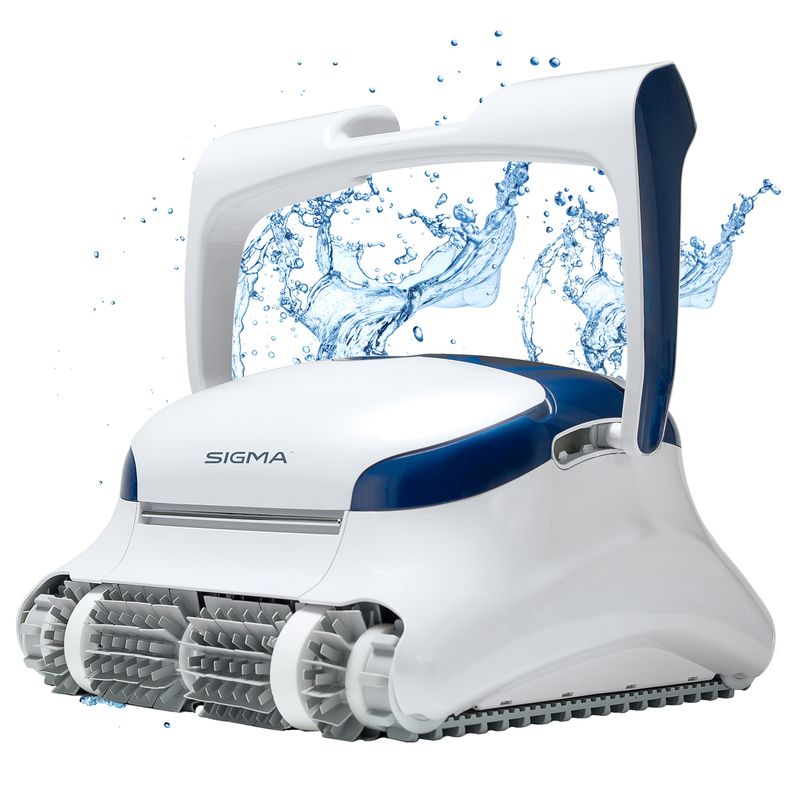
Most brush contact: four scrubbing brushes
The Sigma goes past dual. Four scrubbing brushes put more bristle on the floor and wall at once than any other Dolphin compared here, and three commercial-grade ProLine motors move 4,500 GPH to carry off what they loosen. Its NanoFilters, described as filtering down to 2 microns, hold the fine material that scrubbing creates.
SmartNav 3.0 with an onboard gyroscope keeps the passes even, so the brushes reach the whole pool. It cleans floor, walls and waterline in 2.5 hours and carries a 3-year warranty.
Temporarily out of stock
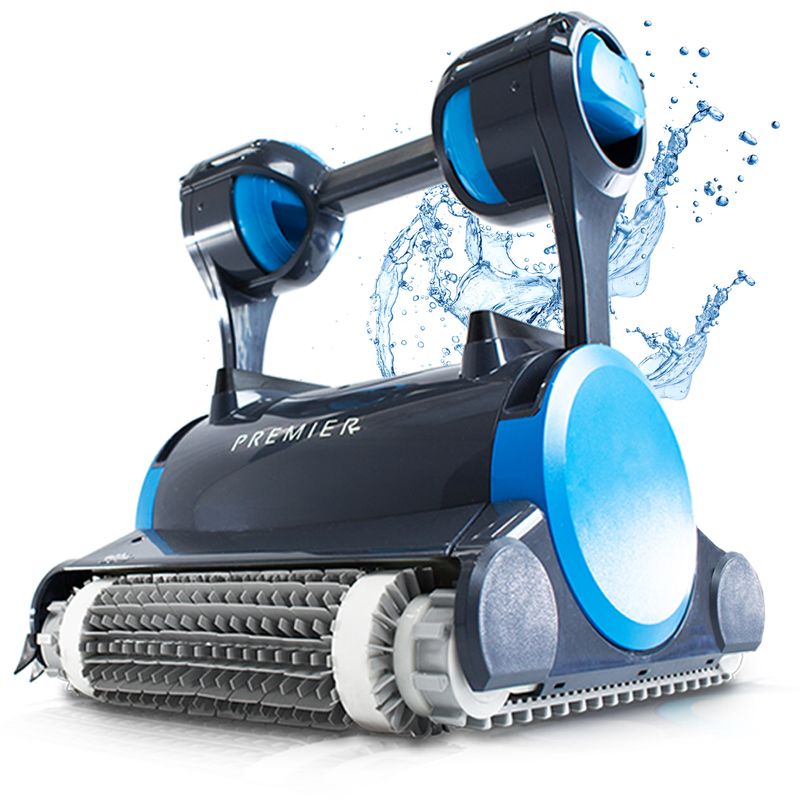
Two brushes and the longest scrub
The Premier is the straightforward dual-brush robot: two scrubbing brushes, so one is always leading whichever way it travels, and a 3-hour cycle, the longest of the five. More time in the water means more passes over the same wall.
Dual ProLine motors move 4,500 GPH. The Multi-Media system includes NanoFilters for fine material and an oversized leaf bag for the weeks when the problem is leaves, not film. It scrubs floor, walls and waterline, runs on a weekly timer set at the power supply, and carries a 3-year warranty at a lower price than the Sigma.
Temporarily out of stock
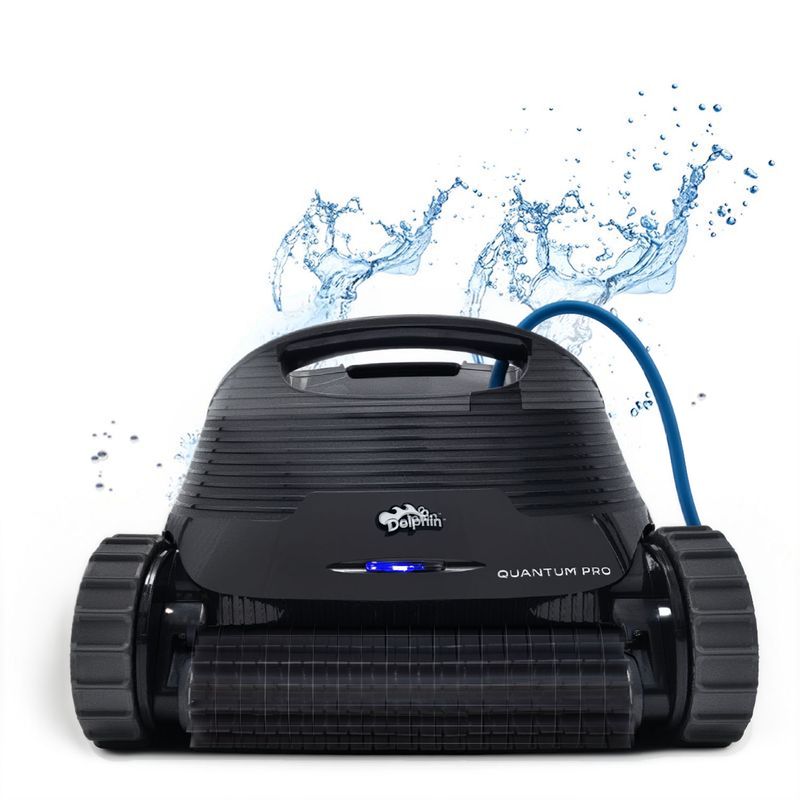
Two HyperBrushes at the lowest price of the three
The Quantum is the least robot that still gives you two brushes, and its pair is the fast kind: dual HyperBrush, spinning at twice the speed of standard brushes. That suits textured finishes, where dirt sits down in the low spots.
It also reaches places the other two do not list: sun shelves, Baja ledges and stairs, as well as the floor, walls and waterline. The XXL MaxBin ships with both standard and NanoFilter panels. The cycle is 2 hours, flow is 4,000 GPH, and no 50 ft robot in this guide is priced lower.
How to judge a robot for this
A robot's pump moves water through a filter. It cannot peel anything off a surface. Brushes break the grip of algae film, biofilm and stuck dirt so the flow can carry them into the filter. More brush contact means more of that film lifted in each cycle.
There are two ways to scrub harder: add brushes or spin them faster. The Sigma has four scrubbing brushes and the Premier has two. The Quantum has two HyperBrushes that spin at twice the speed of standard brushes. Count puts more bristle down at once. Speed works each spot harder.
A brush only cleans what the robot drives over. All three picks climb the walls and scrub the waterline, where sunscreen and body oils collect. The Quantum also covers sun shelves, Baja ledges and stairs. Tight corners and top steps still need a hand brush now and then.
Scrubbing turns film into fine particles. If the filter is too coarse they pass straight through and settle again. The Sigma, Premier and Quantum all include NanoFilters alongside their standard filters, so what the brushes lift can be held.
Every robot here with two or more brushes is built for in-ground pools up to 50 ft. If your pool sits above the ground, or it is in-ground, 33 ft or shorter and collects ordinary dirt, a single fast brush may be all you need.
Side by side
| Specification | Dolphin Sigma | Dolphin Premier | Dolphin Quantum |
|---|---|---|---|
| Price today | $2349 | $1949 | $1599 |
| Cleans | Floor, walls and waterline | Floor, walls and waterline | Floor, walls, waterline, sun shelves and stairs |
| Scheduling | Weekly scheduler by day and time | Weekly timer: every day, every 2 days or every 3 days | Weekly timer: every day, every 2 days or every 3 days |
| App | myDolphin Plus (Wi-Fi and Bluetooth) | No app; controls on the power supply | myDolphin Plus (Wi-Fi) |
| Filtration | NanoFilters and standard filter cartridges | Multi-Media: NanoFilters, oversized leaf bag and standard fine filters | XXL MaxBin basket with standard and NanoFilter panels |
| Brushes | Quad scrubbing brushes | Dual scrubbing brushes | Dual HyperBrush |
| Navigation | SmartNav 3.0 with gyroscope | SmartNav 2.0 | SmartNav 2.0 |
| Cable | 55 ft with 360° anti-tangle swivel | 55 ft with 360° anti-tangle swivel | 55 ft with anti-tangle swivel |
| Warranty | 3 years | 3 years | 2 years |
Run your hand down the wall a foot below the surface. If it feels clean, your chemistry and circulation are doing their job and a brush has little film to fight. If it feels slick a few days after a cleaning, film is forming faster than it is being removed, and more brush contact will show.
Then look at the finish. Smooth vinyl and fiberglass let dirt slide off easily. Plaster roughens with age, and pebble has low spots where fine dirt packs in. The rougher the surface, the more the brush matters and the less the pump does alone.
Last, look at the water's edge. A gray or yellow band there is oil and fine dust, and only a robot that climbs to the surface will scrub it. All three picks do. The single-brush Cayman and Escape clean floor and walls and stop below the waterline.
No brush count replaces sanitizer. A robot scrubs film loose and filters it. It does not kill algae or balance water. During an algae treatment you still brush the pool by hand, especially the steps, the corners and behind ladders, and you run the robot afterward to collect what has settled.
Brushes do not remove stains, scale or calcium deposits either. Those are chemistry problems. And two brushes do not make a robot bigger than its rating: check pool length and cable reach first, brush count second.
Brushes are wear parts. Rough plaster and pebble wear them faster than vinyl does. A worn brush still spins, but it glides over film instead of biting into it, and wall climbing often suffers too.
Questions, answered
Yes, for scrubbing. A robotic pool cleaner with dual brushes works the surface in both directions of travel and holds more bristle against a wall as it climbs. On a small pool with loose debris and clean walls, one fast brush collects the same dirt. On walls that turn slick between cleanings, the second brush shows.
Count. The Premier and Quantum each have two brushes. The Sigma has four scrubbing brushes, which puts more bristle on the surface at once. The Quantum takes a different route to the same end, with two HyperBrushes that spin at twice the speed of standard brushes.
Not among the five Dolphins compared here. The three robots with more than one brush are rated for in-ground pools only. For an above-ground pool the choice is the Escape or the Cayman. Each has a single HyperBrush and cleans floor and walls.
No robot gets rid of algae by itself. Sanitizer and shock do that, and you brush by hand during the treatment. What two brushes do well is scrub early film off the walls and floor before it becomes a bloom, and collect the settled material afterward if a fine filter is fitted. Take the robot out of the pool before you shock.
Eventually. Brushes wear with use, faster on rough plaster and pebble than on vinyl or fiberglass. Watch for bristles or fins that have gone flat, and for a robot that has started slipping on walls it used to climb. Brushes are replaceable. Talk to a Dolphin Expert and we will match the right brush to your model.
The verdict
Buy on brushes only after the pool fits. In-ground, up to 50 ft, with film that keeps returning to the walls and waterline: the Sigma's four brushes do the most scrubbing. Two brushes and long cycles for less: the Premier. Two fast brushes at the lowest price of the three, plus shelves and stairs: the Quantum. Above-ground pool, or a small pool with ordinary dirt: one HyperBrush on the Escape is the least robot that does the job.
Keep reading
