

Try it in your pool for 30 days. Exchange it for another Dolphin for free, or return it with no restocking fee.
Your bag is empty.
By pool shape and design
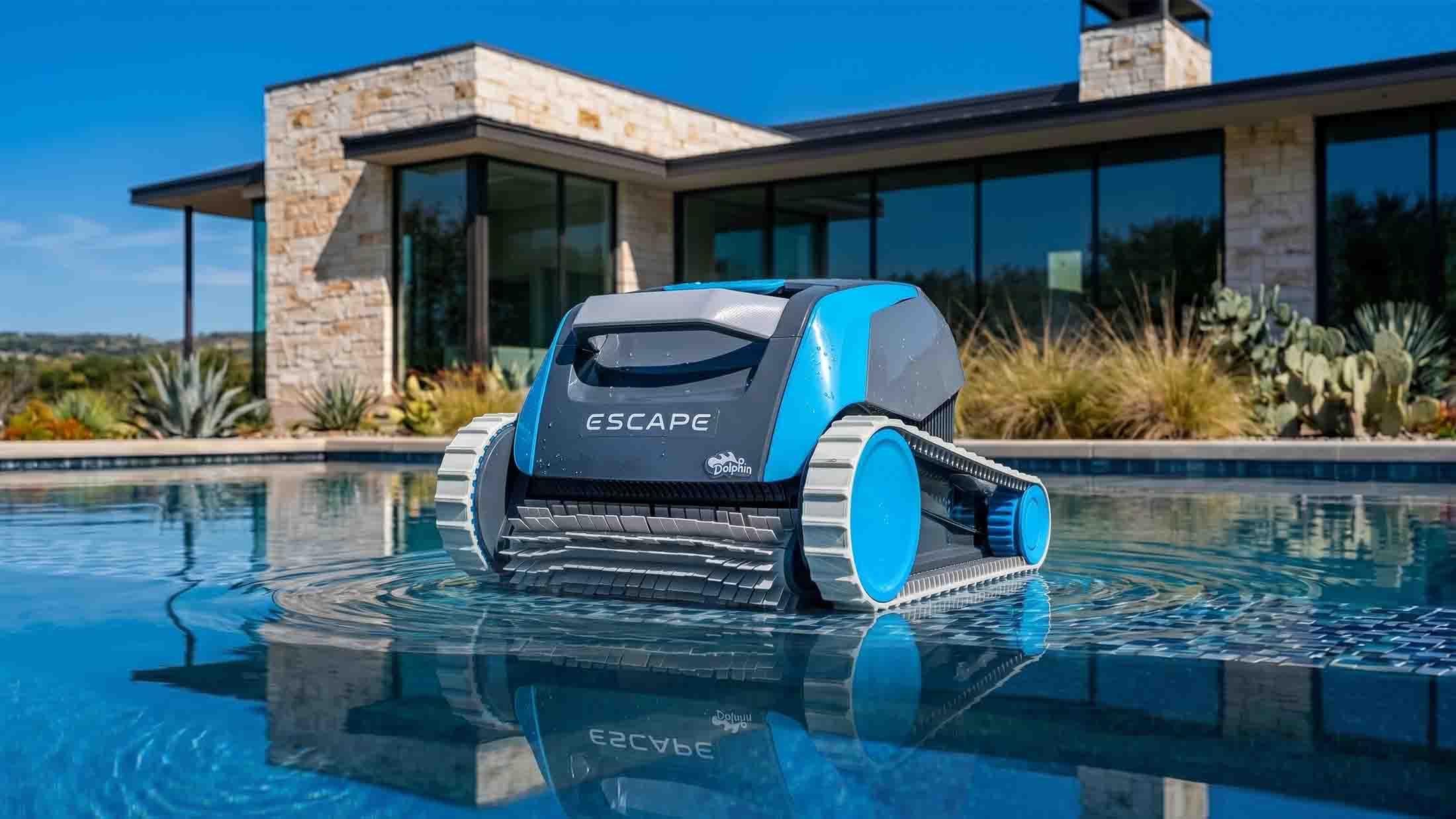
Top pick: Dolphin Sigma
$2349 today · Free shipping · 30 day trial
The short answer
An L-shaped pool is two legs and an inside corner, so the right robot depends on reach into both legs and a cable that does not hang up at the elbow.
The Dolphin Sigma is our top pick for an L-shaped pool: its gyroscope keeps a heading through the turn at the elbow, and its 55 ft swivel cable reaches both legs. The Dolphin Premier is the runner-up, and the one robot here whose published shape list names L-shaped pools. The Quantum gets you a 50 ft rating for the least money here. A small L whose longer leg fits inside 33 ft can use the Cayman.
An L-shaped pool is really two pools that share a corner. There is a long leg, a short leg and an inside corner where they meet, and a robot dropped into one leg has to find its way around that corner to clean the other. The best robotic pool cleaner for L-shaped pools is decided by two checks most buyers skip: whether the robot and its cable reach the far end of both legs, and where the power supply sits.
That holds for a true L, with two legs at a right angle, and for a lazy L, where a shorter leg angles off the main rectangle. Get the placement right and these robots handle either shape without fuss. Get it wrong and the cable spends every cycle sawing across the inside corner.
Our picks, in order
Temporarily out of stock
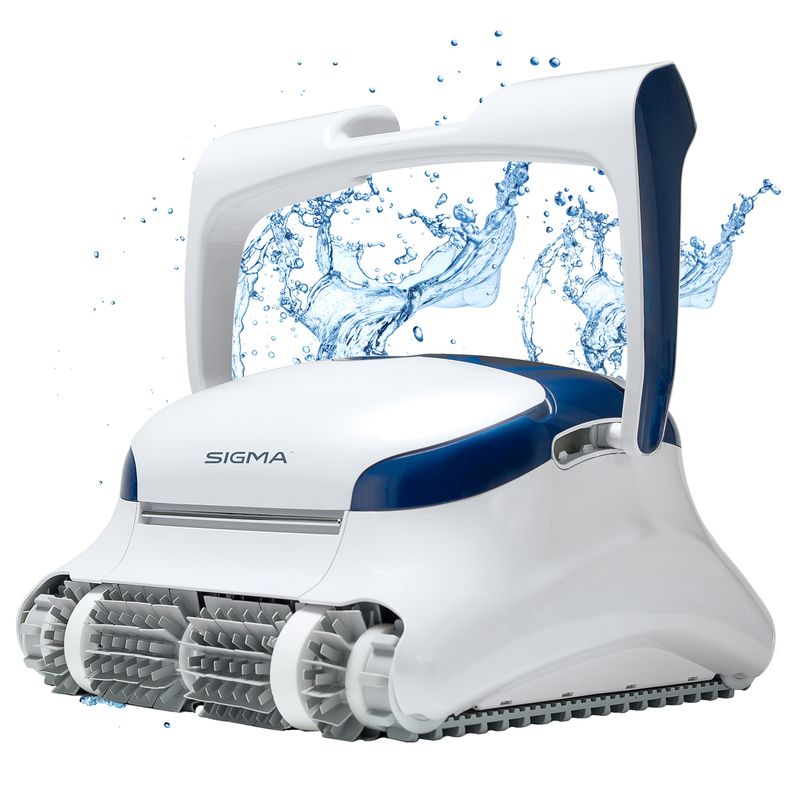
Best coverage of both legs
The risk in an L is a robot that cleans the leg it started in and visits the other as an afterthought. The Sigma is the pick least likely to do that. Its SmartNav 3.0 navigation carries an onboard gyroscope, which keeps the robot on its heading across the elbow and corrects it after the inside corner deflects it. Because the 55 ft cable turns on a 360-degree anti-tangle swivel, repeated trips around the corner do not wind it up. Quad brushes scrub floor, walls and waterline in 2.5 hours.
Temporarily out of stock
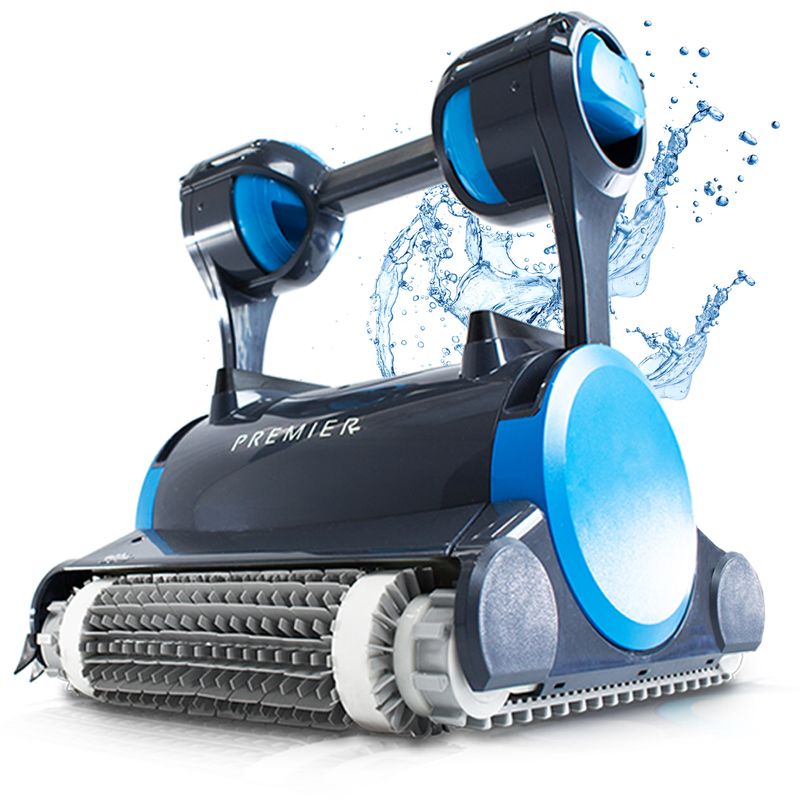
The one that lists L-shaped pools
Of the five Dolphins compared in this guide, the Premier is the only one whose published shape list names L-shaped pools. The specs back that up: a 3-hour cycle that gives SmartNav 2.0 scanning time to finish one leg and work the other, a 55 ft cable with a 360-degree swivel, and dual ProLine motors moving 4,500 GPH. An L has more corners than a rectangle, corners are where leaves settle, and the oversized leaf bag in the box is made for them.
Temporarily out of stock
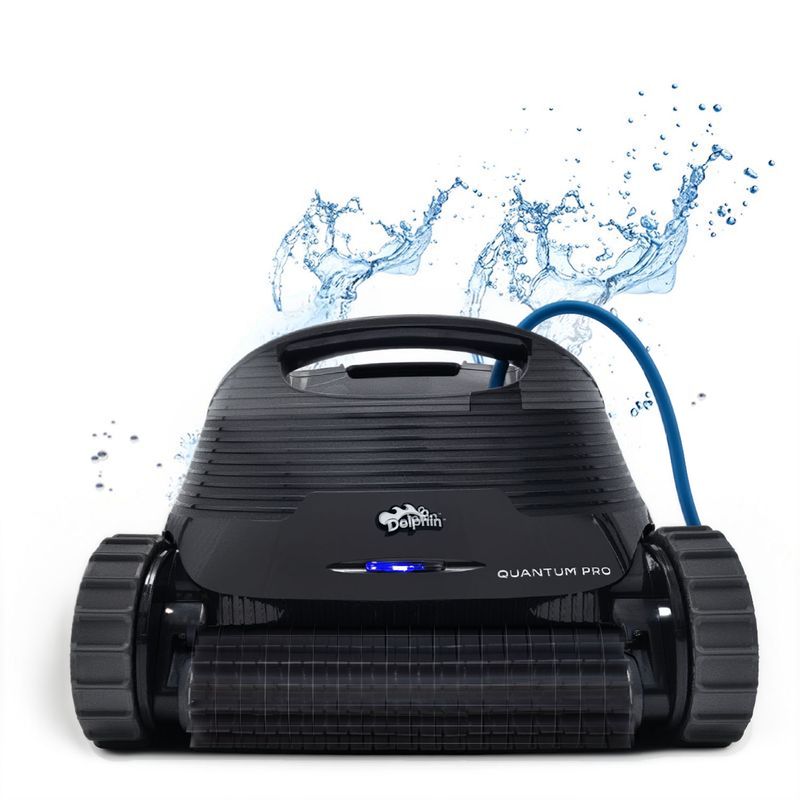
Least expensive pick that reaches both legs
If the longer leg measures more than 33 ft, the Quantum is where to start. It has an anti-tangle swivel on 55 ft of cable, it scrubs the waterline, and its two HyperBrushes turn twice as fast as standard brushes through a 2-hour cycle. A lazy L often puts the steps in the short leg, and stairs are named in the Quantum's published coverage along with sun shelves and Baja ledges. Emptying it takes one click on the top-load XXL MaxBin basket.
Temporarily out of stock
Small L only, longer leg 33 ft or less
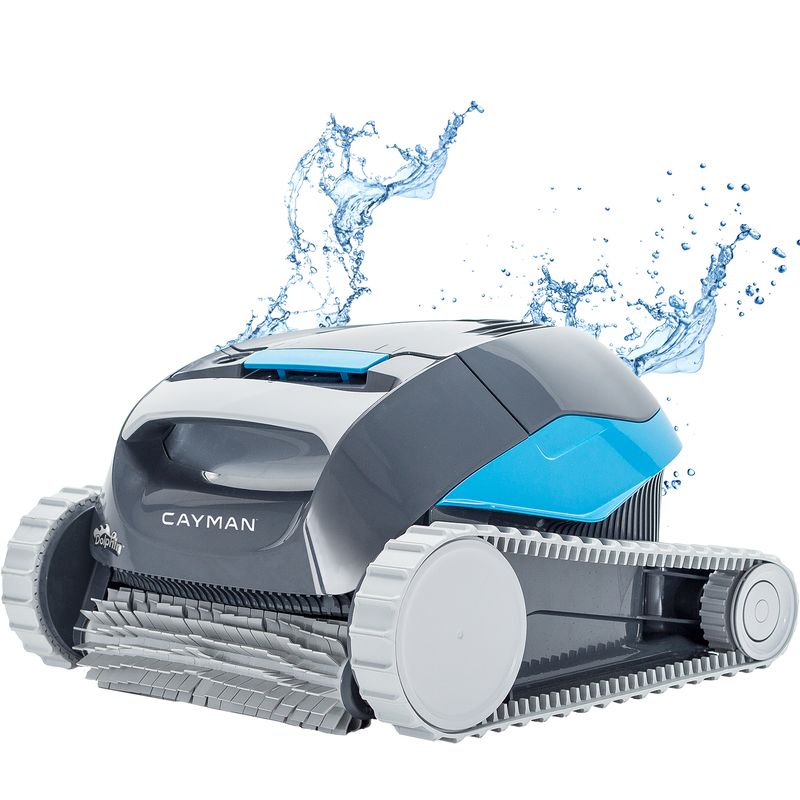
A small L, the kind fitted into a tight yard, can be done with the Cayman, provided the longer leg stays inside 33 ft. Its 50 ft cable is long enough to reach both legs of a small L from the elbow, and its published obstacle list covers steps, ladders, drain covers and ledges. A HyperBrush scrubs floor and walls in 2 hours. The price of saving money is the cable: there is no swivel, and the inside corner is exactly where an untended cable catches.
How to judge a robot for this
A rating describes a pool's longest straight run, which in an L is the longer leg. The cable is the separate check, because it has to follow the route around the elbow. An L with a 30 ft leg and a 20 ft leg is a 30 ft pool for the rating, and it needs a cable that reaches the far end of each leg.
Put it at the elbow, where the legs meet, and the cable has a direct path into each leg. Put it at the end of one leg and the cable must bend around the inside corner to reach the other, which adds length and drag on every pass.
Rounding the elbow again and again twists a cable. The three 50 ft picks carry cables that rotate on a swivel and stay straight. A cable without one, like the Cayman's, can kink and hang on the inside corner unless you untwist it regularly.
A robot can settle into the leg it started in. The Sigma's gyroscope holds its heading as it crosses the elbow. The Premier, Quantum and Cayman rely on SmartNav 2.0 scanning, not a gyroscope, and cover both legs across a full cycle.
Side by side
| Specification | Dolphin Sigma | Dolphin Premier | Dolphin Quantum | Dolphin Cayman |
|---|---|---|---|---|
| Price today | $2349 | $1949 | $1599 | $1049 |
| Navigation | SmartNav 3.0 with gyroscope | SmartNav 2.0 | SmartNav 2.0 | SmartNav 2.0 |
| Cable | 55 ft with 360° anti-tangle swivel | 55 ft with 360° anti-tangle swivel | 55 ft with anti-tangle swivel | 50 ft |
| Pool length | Up to 50 ft | Up to 50 ft | Up to 50 ft | Up to 33 ft |
| Cleans | Floor, walls and waterline | Floor, walls and waterline | Floor, walls, waterline, sun shelves and stairs | Floor and walls |
| Cycle time | 2.5 hours | 3 hours | 2 hours | 2 hours |
| Scheduling | Weekly scheduler by day and time | Weekly timer: every day, every 2 days or every 3 days | Weekly timer: every day, every 2 days or every 3 days | Timer: every day |
| Warranty | 3 years | 3 years | 2 years | 2 years |
A robot's rating describes the longest straight run of a pool, and in an L that run is the longer leg. Measure that leg end to end, from the outside corner to its far wall. If it comes to 33 ft or less, a robot with a 33 ft rating covers it. If it is longer, buy a 50 ft robot.
The second measurement is cable. From where the power supply will sit, measure to the far end of each leg along the route the cable would take, then add the distance the supply must sit back from the water. As an example only, with a setback of roughly 12 ft and the supply at the elbow, a 30 ft leg needs about 42 ft of cable. Move the supply to the far end of the short leg and the same pool can need more than 55 ft, which no cable here has. Use the setback in your own manual.
The elbow is the deck where the two legs meet. From the inside corner, or from the outside corner opposite it, the cable has a direct line down each leg. That one decision removes most L-shaped pool problems: the runs are shorter, and the cable never bends around the inside corner.
What goes wrong otherwise is predictable. The cable drapes across the inside corner and rubs on it every time the robot crosses. On a cable with no swivel, the twists collect at exactly that point.
A true L has two full legs. A lazy L is a rectangle with a shorter leg angled off one end, commonly the shallow entry. For a robot the lazy L is the easier of the two: the main body cleans like any rectangle, and the short leg is a shallow bay. The steps are the open question. The Quantum names stairs in its published coverage. With the others, expect the lower steps to be cleaned as the robot reaches them and the top step to need a brush.
Questions, answered
Not for the rating. The length rating is judged on the longer leg, which is the pool's longest straight run. At 33 ft or under, the Cayman fits. Over that, choose a 50 ft robot. Adding the legs is still a sound, conservative check on the cable, which has to follow the route around the elbow. With a longer leg past 50 ft, talk to us before you order.
At the elbow, where the two legs meet, set back from the water by the distance in the manual. From the end of a leg, the cable has to wrap the inside corner to reach the other leg, and the run can exceed the cable's length.
Usually, yes. The main body of a lazy L is a plain rectangle and the angled leg is a short, shallow bay. A true L has two full legs, so the robot has farther to go around the elbow.
Yes, when the pool is within the robot's rating and the cable reaches. If one leg looks neglected, the usual causes are a cycle that was stopped early or a cable held back by the inside corner. Fix the power supply position first.
The corner is not the problem for the robot, which treats it as a wall edge to turn away from. The cable is what catches. A swivel cable and a power supply at the elbow prevent most of it. With a non-swivel cable, watch the corner during the first few cycles.
The verdict
Size on the longer leg, measure the cable route through both legs, and plan to put the power supply at the elbow. If the longer leg is over 33 ft, you want a swivel cable and a 50 ft rating, and the Quantum is the least robot that has both. The Premier adds a longer cycle and names L-shaped pools on its shape list. The Sigma adds the gyroscope. If the longer leg fits inside 33 ft and its 50 ft cable reaches both ends, the Cayman does it, with some cable tending.
Keep reading
