

Try it in your pool for 30 days. Exchange it for another Dolphin for free, or return it with no restocking fee.
Your bag is empty.
By pool shape and design
Top pick: Dolphin Sigma
$2349 today · Free shipping · 30 day trial
The short answer
When a pool has a peninsula, an island, a channel or two floor levels, the robot has to find its way around something, and these four are ranked on how well they recover.
For an irregular-shaped pool, start with the Dolphin Sigma: its gyroscope lets it recover its heading after an obstacle turns it, and a 360-degree swivel keeps the cable from knotting. The Quantum is second, the lightest 50 ft pick to move between zones and the one that senses ladders and drains. The Dolphin Premier and, for small pools, the Cayman follow.
Irregular is not the same as curvy. A T-shaped pool, a pool with a peninsula or an island, a cut-out where the spa sits, a narrow channel joining two basins, a floor on two levels: in each of these the robot is not just following an odd outline. It has to get around something. The best robotic pool cleaner for irregular-shaped pools is the one that recovers its bearings after an obstacle spins it, and keeps its cable clear while it does.
It pays to be straight about limits before you spend anything. A robot will not cross a raised divider or go over a spillway, and it may skip a channel too narrow to turn in. Zones that are cut off from each other get cleaned one at a time.
Our picks, in order
Temporarily out of stock
Best at finding its line again
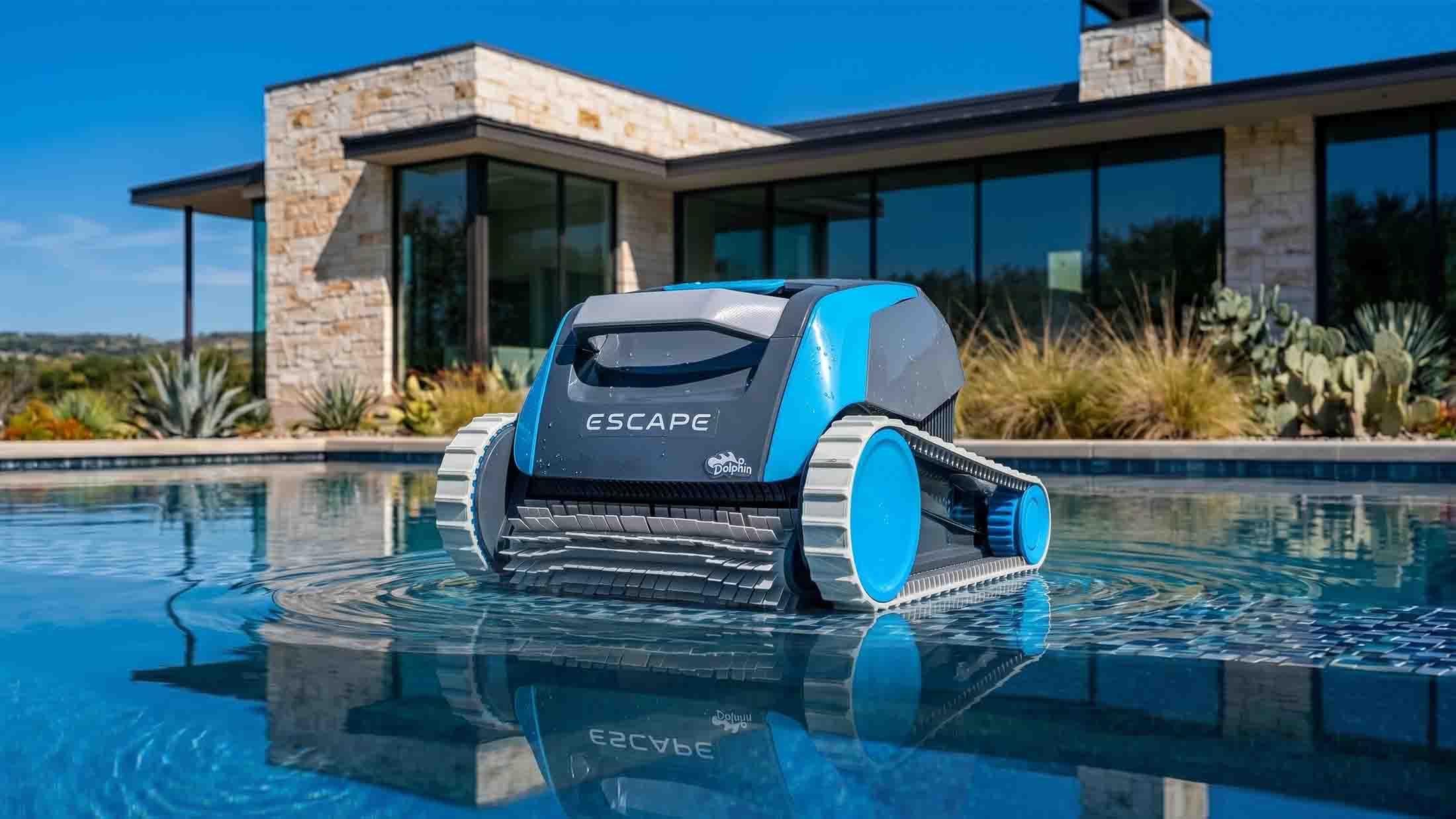
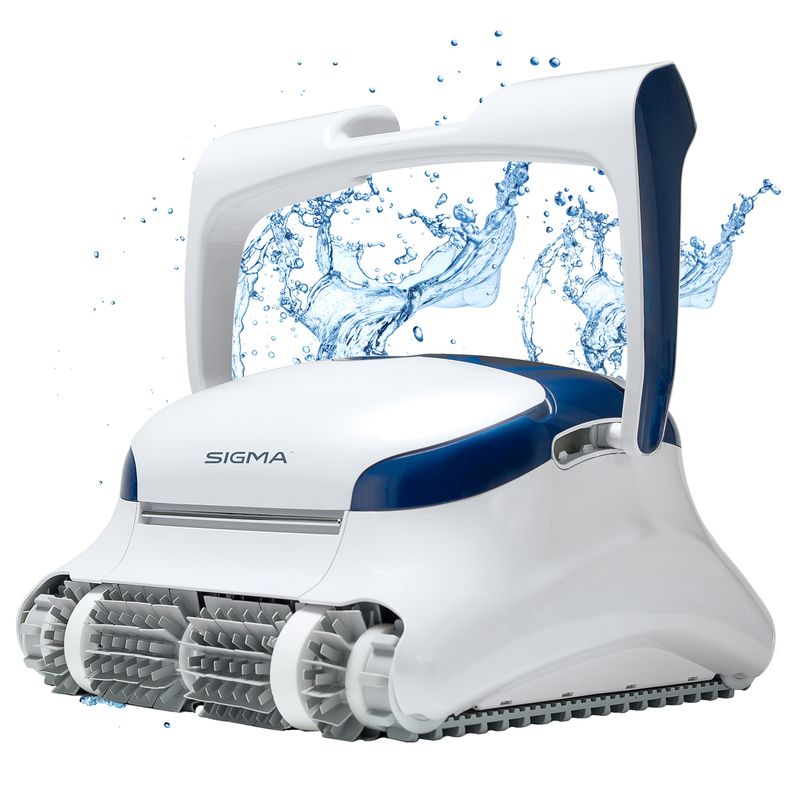
Every obstacle in an irregular pool is a chance for a robot to lose track of where it was going. The Sigma is the only pick with an onboard gyroscope, part of SmartNav 3.0, and that is what lets it carry on in the right direction after a peninsula or an island has turned it around. Its 55 ft cable sits on a 360-degree anti-tangle swivel, which matters when the robot circles. Quad brushes and three ProLine motors clean floor, walls and waterline in 2.5 hours.
Temporarily out of stock
Lightest 50 ft pick to move zone to zone
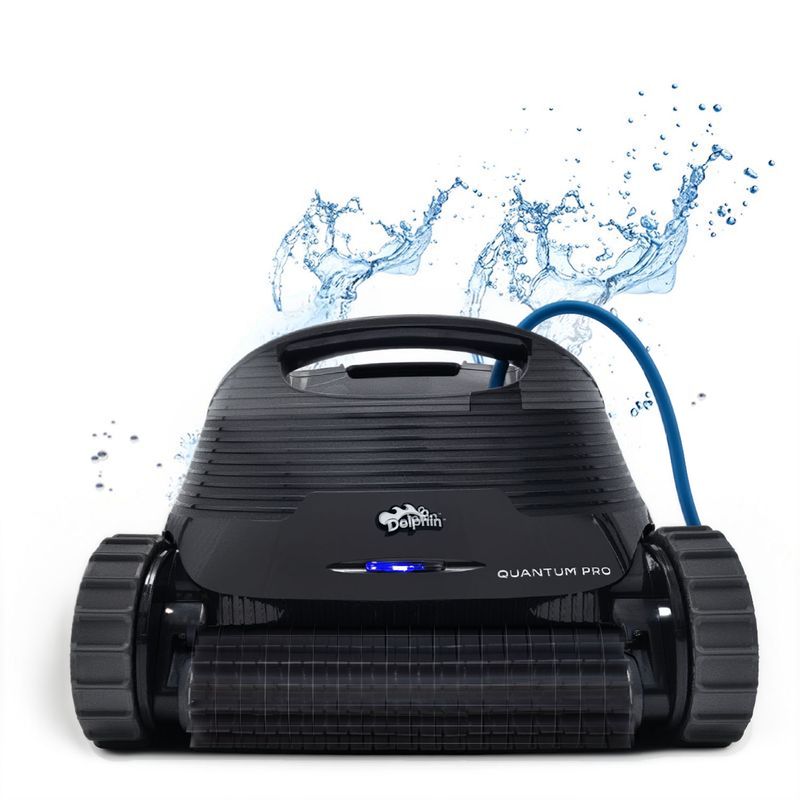
Irregular pools often mean lifting the robot out of one zone and into another, and that is where the Quantum moves ahead of the Premier on this page. At 18.3 lb it is the lightest of the three 50 ft robots, its 2-hour cycle is the shortest of them, and the basket lifts out of the top with one click, so two zones back to back is realistic. SmartNav 2.0 senses ladders and drains, its 55 ft cable carries an anti-tangle swivel, and its published coverage includes sun shelves, Baja ledges and stairs.
Temporarily out of stock
Longest cycle for a pool with many arms
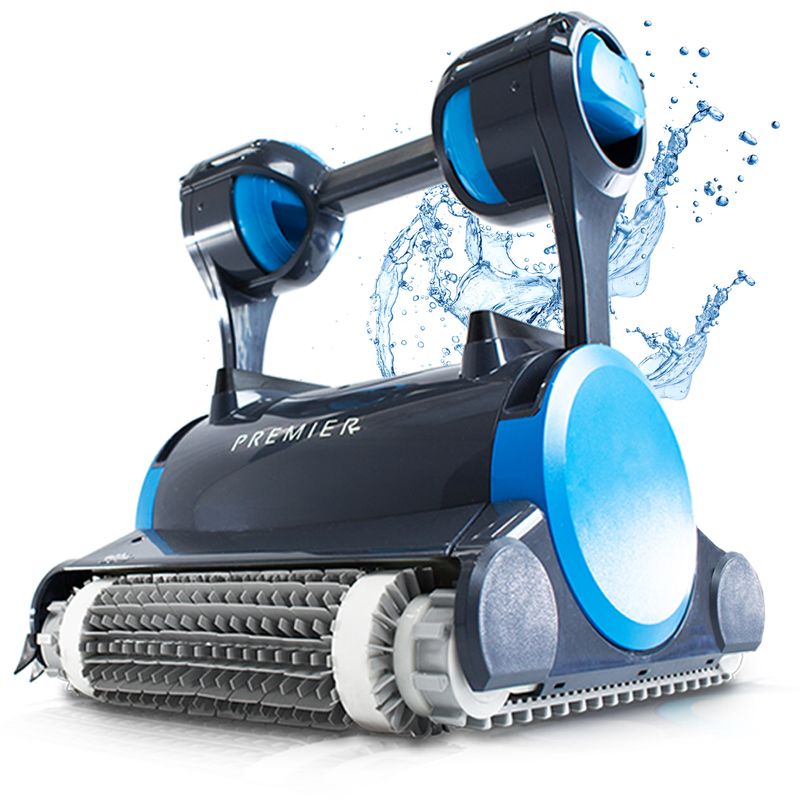
The Premier's case is patience. Three hours of SmartNav 2.0 scanning gives it more passes at an awkward plan than any other pick, which helps when a T or a cross has arms the robot only enters now and then. It is also alone among these robots in naming L-shaped pools on its published shape list, alongside freeform. Its cable is 55 ft long and swivels through 360 degrees, and the oversized leaf bag suits the debris that tends to settle in dead-end arms. It sits third because 20.3 lb and a 3-hour cycle make zone-by-zone cleaning slow.
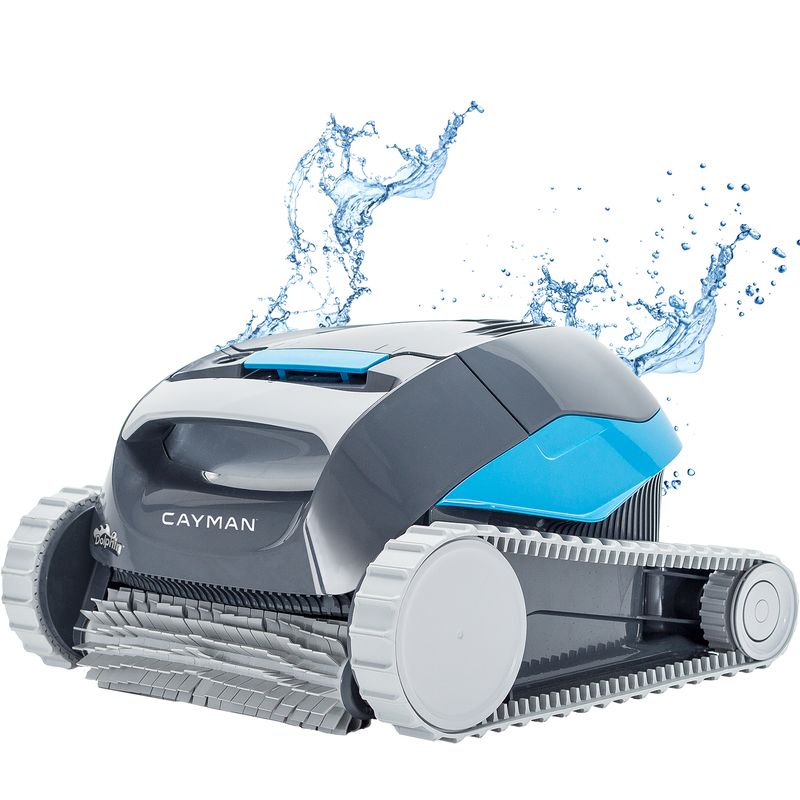
Temporarily out of stock
Small irregular pools, 33 ft and under
For a compact pool with a jog in the wall, a spa cut-out or a short second arm, the Cayman is the least robot we would put in. It is rated to 33 ft, lists steps, ladders, drain covers and ledges among the obstacles it handles, and at 14.6 lb it is easy to lift from one zone to another. The 50 ft cable gives it reach around a corner, though with no swivel you untwist it by hand. Its cycle is 2 hours for floor and walls, and its timer runs every day.
How to judge a robot for this
Peninsulas, islands and inside corners turn a robot when it did not plan to turn. The Sigma's onboard gyroscope tells it which way it now faces, so it resumes a sensible line. The Quantum, Premier and Cayman run SmartNav 2.0 scanning with no gyroscope, and the Quantum also senses ladders and drains.
A cable follows the robot around whatever it circles. On a swivel, the twists spin out. Without one, they stack up until the cable kinks. The three 50 ft picks have swivels. Even so, no swivel stops a cable from looping an island, so where the power supply sits still matters.
If the floor runs continuously from one area to the next, that is one zone and one cycle. A raised wall, spillway or divider makes two zones, and you lift the robot across. Low weight and a short cycle make that less of a chore.
Irregular plans are often long one way and wide the other. The rating covers the longest straight run: up to 50 ft for the first three picks and 33 ft for the Cayman. The cable then has to reach the end of every arm from one power supply position.
Side by side
| Specification | Dolphin Sigma | Dolphin Quantum | Dolphin Premier | Dolphin Cayman |
|---|---|---|---|---|
| Price today | $2349 | $1599 | $1949 | $1049 |
| Navigation | SmartNav 3.0 with gyroscope | SmartNav 2.0 | SmartNav 2.0 | SmartNav 2.0 |
| Cable | 55 ft with 360° anti-tangle swivel | 55 ft with anti-tangle swivel | 55 ft with 360° anti-tangle swivel | 50 ft |
| Pool length | Up to 50 ft | Up to 50 ft | Up to 50 ft | Up to 33 ft |
| Cleans | Floor, walls and waterline | Floor, walls, waterline, sun shelves and stairs | Floor, walls and waterline | Floor and walls |
| Cycle time | 2.5 hours | 2 hours | 3 hours | 2 hours |
| Scheduling | Weekly scheduler by day and time | Weekly timer: every day, every 2 days or every 3 days | Weekly timer: every day, every 2 days or every 3 days | Timer: every day |
| Warranty | 3 years | 2 years | 3 years | 2 years |
Before choosing a robot, sketch the pool and mark every place where the floor is interrupted. A slope between shallow and deep is not an interruption. A raised wall between pool and spa is. So is a spillway, a divider that comes close to the surface, or a bench that cuts one basin off from another. Each area a robot can drive around without leaving the floor or walls is one zone.
Count the zones honestly. One zone means one cycle. Two means lifting the robot across and running it again, and moving the power supply if the cable will not reach. In a pool with three zones, weight, cycle time and basket access matter more than any navigation feature.
A peninsula is the easier case. Set the power supply where it looks straight down both sides, so the cable runs out along one flank or the other and never has to bend around the tip.
An island is harder. A robot that travels all the way around drags its cable into a loop, and a swivel removes twist, not the loop itself. Put the power supply where the cable reaches both sides without circling, look at the cable when the first few cycles end, and move the supply if it keeps wrapping.
A robot needs room to turn. A connecting channel only a few feet wide may be entered and backed out of, or avoided altogether, so do not count on it. Short vertical steps between floor levels are unpredictable too: a robot may ride up on one cycle and not on the next. Treat any area it reaches unreliably as its own zone and place the robot there for a separate run, or brush that area out toward the main floor before a cycle.
Questions, answered
Yes, it will work the floor and walls around an island. The catch is the cable, which gets pulled around with it. A swivel sheds the twists, and placing the power supply so both sides are in reach cuts down on wrapping. With a non-swivel cable, expect to untangle it.
No. A robot climbs a wall to the waterline and turns back. It does not cross a raised divider, drive over a spillway or drop into the next basin. Separated areas are cleaned one after another by lifting the robot across.
There is no published minimum, so do not buy on the hope that it will. A robot needs enough width to turn around. As a rough guide, a channel much under 5 ft wide is marginal for any of them, and the robot may skip it. Plan to brush a narrow channel out into open water.
No. One robot cleans both, one after the other. Lift it out of the first section, empty the basket if it is full, and start it in the second. This is why the 18.3 lb Quantum ranks above the 20.3 lb Premier here.
Nothing in the published specs for these robots says they store a map between cycles. Each cycle, SmartNav scans and plans as it goes, and the Sigma adds a gyroscope to keep track of its heading. So coverage comes from a full cycle and good setup, not from the robot memorizing your pool.
The verdict
One connected zone with a peninsula, an island or several arms: the Sigma, or the Premier if a long cycle on a timer suits you better. Two or more separated zones: the Quantum, because you will be lifting it and running it twice. A small pool inside 33 ft with one awkward feature: the Cayman. If you are unsure how many zones you really have, describe the pool to us and talk to a Dolphin Expert.
Keep reading
