

Try it in your pool for 30 days. Exchange it for another Dolphin for free, or return it with no restocking fee.
Your bag is empty.
By pool length and dimensions
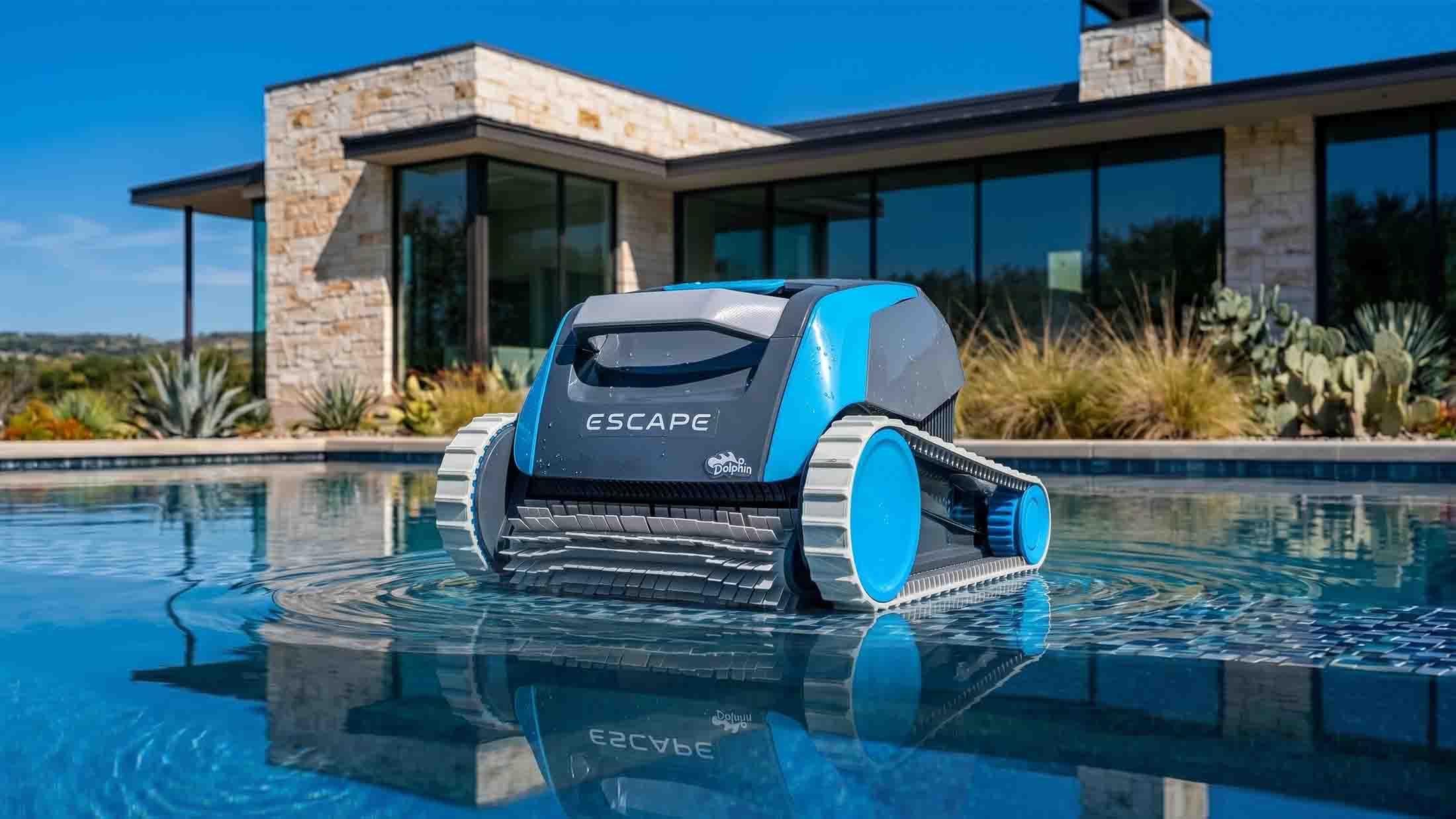
Top pick: Dolphin Escape
$659 today · Free shipping · 30 day trial
The short answer
Ten feet of pool means little floor, tight turns, shallow water and 30 feet of cable you will never use. Here is the least robot that copes, and when to skip it.
If you want a robot for a 10-foot pool, buy the Dolphin Escape: the lightest at 14.2 lb, the shortest cable at 40 ft and a 1.5-hour cycle. For an in-ground plunge pool in plaster, concrete or pebble, choose the Cayman. The Quantum only earns its price in an in-ground pool with steps, a ledge and a tile line. Check your water depth before buying any of them.
Start with the honest part: the best robotic pool cleaner for a 10-foot pool may be no robot at all. A pool this size has about 80 square feet of floor. A wall brush and a hand vacuum clean it in a few minutes, and for many owners that is the right answer. A robot makes sense when you would rather not do that job twice a week, or when leaning over the wall with a pole is the problem.
If that is you, buy the smallest, lightest robot that suits your pool type. Size works in reverse here. Reach is irrelevant. What matters is whether the water is deep enough, whether the robot has room to turn, and what you do with the cable you do not need. A 10 ft pool is usually one of three things: a small round above-ground pool, a stock-tank or plunge pool, or a compact spool.
Our picks, in order

Temporarily out of stock
Least cable, least weight, shortest cycle
Everything about a 10 ft pool favors the smallest robot, and the Escape is it. Its 40 ft cable is the shortest of the three picks, so there is less spare to manage. At 14.2 lb it is the easiest to lift over a wall. The 1.5-hour cycle is the shortest, and even that crosses a floor this small many times over, with the remaining time spent on the walls.
It is published for round pools and for vinyl liner, fiberglass, gunite and tile. That covers most above-ground pools and most spools. The MaxBin basket loads from the top, so emptying it is a quick job between swims.
Temporarily out of stock
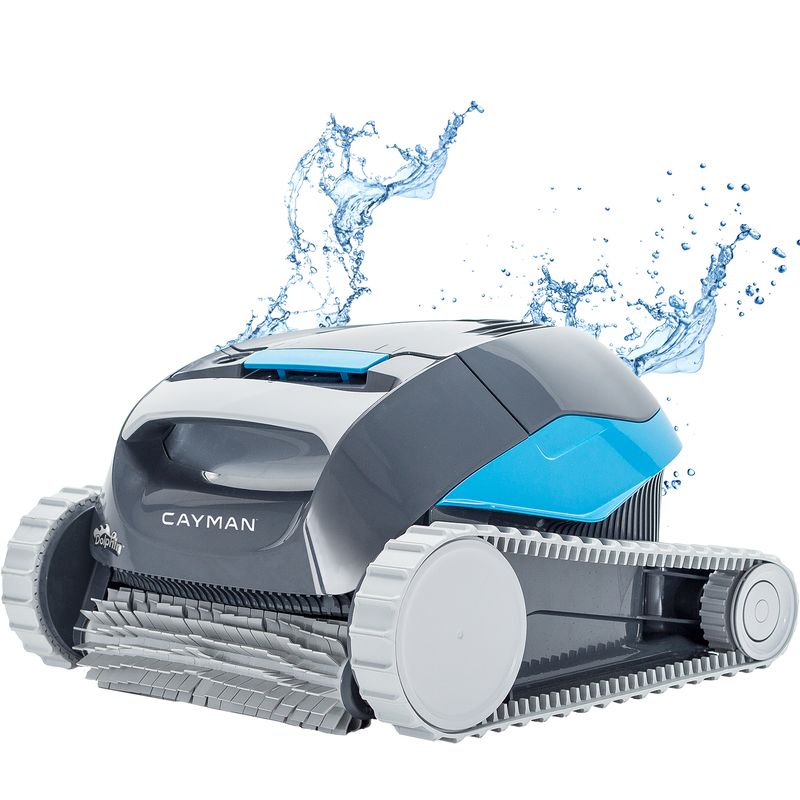
For in-ground plunge pools in plaster or pebble
A 10 ft in-ground plunge pool is usually concrete under a plaster, pebble or tile finish, and it is usually deep for its size. Concrete, plaster and pebble are all named on the Cayman's surface list, and its rating covers both pool types. It weighs 14.6 lb and cleans floor and walls in 2 hours.
The other reason to choose it is the timer. A plunge pool tends to get used daily, and the Cayman's power supply starts a cycle every day with no input from you. The 50 ft cable is far more than this pool needs, so keep the spare on the deck.
Temporarily out of stock
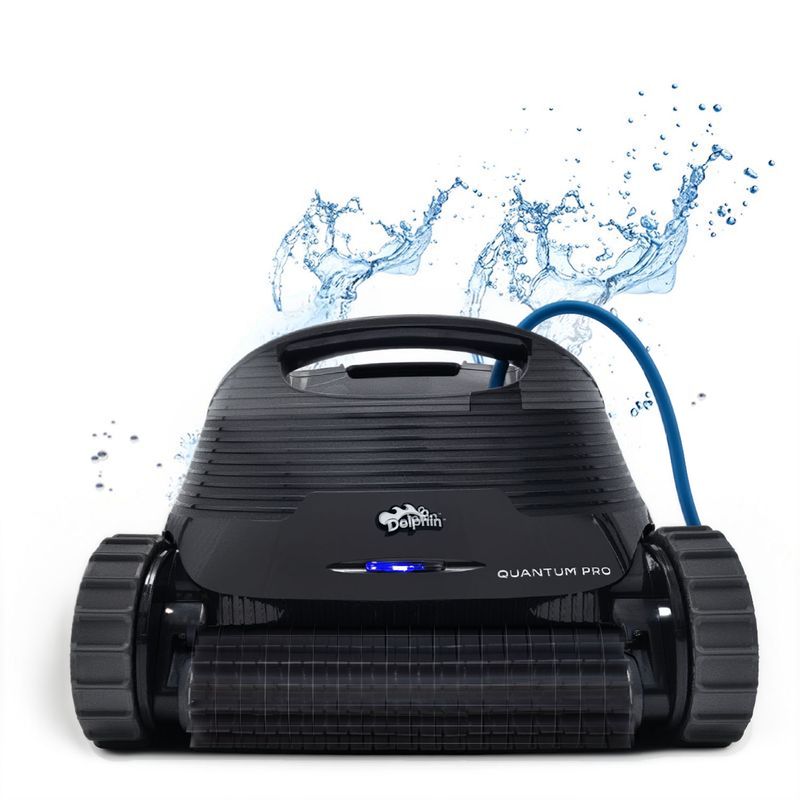
Only for a plunge pool with steps and a tile line
In a small in-ground plunge pool or spool, the floor is the least of the cleaning. Most of what you see is wall, a bench and a band of tile at the waterline. The Quantum is the one robot here that lists the most of it: floor, walls, waterline, ledges and stairs, which makes it the nearest match for a bench. Two HyperBrushes do the scrubbing, and you can start a cycle from the myDolphin Plus app over Wi-Fi before you walk outside.
Be realistic about scale. This is a robot rated for 50 ft, with a 55 ft swivel cable, working in a pool a fifth of that length.
How to judge a robot for this
A robot must stay fully submerged to run. Many 10 ft frame pools and stock tanks hold only about two feet of water. The manual for each robot gives its minimum depth. Measure your water and check that figure before you order.
A robot pivots at each wall to start a new pass. In a 10 ft circle it turns constantly, which is fine. But a ladder, a step or a bench corner takes up a bigger share of a small pool and gives the robot more to work around.
The shortest cable in these guides is 40 ft, and the pool is 10 ft across. Extra cable in the water is what tangles. The less cable a robot carries, the less you have to park on the ground, so at this size shorter is better.
A robot without a timer comes out when each cycle ends, and one on a schedule still comes out at least weekly, often while you lean over a frame rail. A 14 lb robot and a 20 lb or 24 lb robot are different experiences when you do that three times a week.
Side by side
| Specification | Dolphin Escape | Dolphin Cayman | Dolphin Quantum |
|---|---|---|---|
| Price today | $659 | $1049 | $1599 |
| Pool length | Up to 33 ft | Up to 33 ft | Up to 50 ft |
| Cable | 40 ft | 50 ft | 55 ft with anti-tangle swivel |
| Cycle time | 1.5 hours | 2 hours | 2 hours |
| Cleans | Floor and walls | Floor and walls | Floor, walls, waterline, sun shelves and stairs |
| Navigation | SmartNav 2.0 | SmartNav 2.0 | SmartNav 2.0 |
| Scheduling | Optional Automation Timer: every 24, 48 or 72 hours | Timer: every day | Weekly timer: every day, every 2 days or every 3 days |
| Robot weight | 14.2 lb | 14.6 lb | 18.3 lb |
| Warranty | 2 years | 2 years | 2 years |
Measure from the floor to the surface, not the height of the wall. A 30 in wall usually holds about two feet of water. A 48 in wall holds around three and a half. A robot needs to be completely covered to run, and it needs water above it to climb.
Each robot's manual gives a minimum working depth. We do not quote one here, because a number we guessed would be worse than no number. If your pool is under the manual's figure, do not buy the robot. If it is close, talk to a Dolphin Expert with your measurement before you order.
A 40 ft cable in a 10 ft pool leaves most of its length unused. That is useful in one way: the power supply can sit as far back from the water as the manual asks, with cable to spare. In the pool, though, spare cable is a nuisance. Feed in only enough for the robot to reach the far wall and the floor beneath it. Lay the rest on the ground in loose loops, not a tight coil.
The Escape and Cayman have no swivel, so twists build up as the robot turns. Pull the cable straight through your hands when you take the robot out, and the next cycle starts clean.
A robot is optional at this size, and sometimes it is the wrong purchase. Skip it if the pool is a seasonal frame pool that comes down each fall, if the water is shallower than the manual allows, or if the pool is a stock tank. A wall brush, a leaf net and a small hand vacuum handle all three.
Buy the robot if the pool is permanent, sits under trees, or is hard for you to reach into. If price is the sticking point, look at our certified open-box robots before giving up on the idea.
Questions, answered
No, provided the water is deep enough to keep the robot submerged. These robots have a maximum pool length, not a minimum. The best robotic pool cleaner for a 10-foot pool is the Escape, because it has the least cable and weight to manage. Whether a robot is worth buying at this size is a separate question.
We cannot promise it. Stock tanks are galvanized steel or molded plastic, and neither appears on the published surface list of any robot here. Most also hold about two feet of water, which may be under the manual's minimum. For a stock tank, a brush and a small hand vacuum are the safer choice.
It can, because the robot turns often and the Escape and Cayman have no swivel. The fix is simple. Put only the cable you need in the water, keep the rest loose on the ground, and straighten it after each cycle. The Quantum's cable does have an anti-tangle swivel, but it is an in-ground robot.
Only if it runs on a timer: a scheduled robot may stay in the water between cycles, with a lift-out and rinse at least weekly. In a 10 ft pool the robot and its cable take up real swimming room, so otherwise lift it out when the cycle ends, rinse it and the basket with fresh water, and store it in the shade. Always take it out before shocking the pool.
The verdict
First decide whether you want a robot at all; a brush and a hand vacuum are a fair answer here. Then check depth against the manual. If both pass, an above-ground round or a vinyl or fiberglass spool gets the Escape. An in-ground plunge pool in plaster, concrete or pebble gets the Cayman. Only a tiled plunge pool with steps and a ledge justifies the Quantum. The Premier and Sigma would clean it too, but nothing about 10 ft needs them.
Keep reading
