

Try it in your pool for 30 days. Exchange it for another Dolphin for free, or return it with no restocking fee.
Your bag is empty.
By pool shape and design
Top pick: Dolphin Cayman
$1049 today · Free shipping · 30 day trial
The short answer
A spool is small enough to clean by hand, so here is the least robot that earns its place in one and the surfaces it will still leave for you.
For a spool, the Dolphin Cayman is the sensible buy: it cleans the footwell floor and the walls below the benches in 2 hours, weighs 14.6 lb and runs every day on its own timer. The Dolphin Escape does the same job for less on fiberglass, tile, gunite or vinyl. Choose the Dolphin Quantum if you want steps, ledges and the waterline in the cycle: its published coverage lists waterline, shelves, ledges and stairs.
Start with the honest part. A spool, the spa-size pool of 10 to 16 ft with bench seating, jets and a heater, can be brushed and vacuumed by hand without much trouble. A robot here is a convenience, not a necessity. If you are still reading, you want the convenience, and the best robotic pool cleaner for spool pools is simply the least expensive one that suits your finish.
The catch is geometry. In a spool the open floor is a small footwell, and most of the surface you see is bench top and step. Most robots are built for floors and walls. So the real choice is between cleaning the footwell and walls and brushing the benches yourself, or paying more for the one robot whose published coverage reaches shelves and stairs.
Our picks, in order
Temporarily out of stock
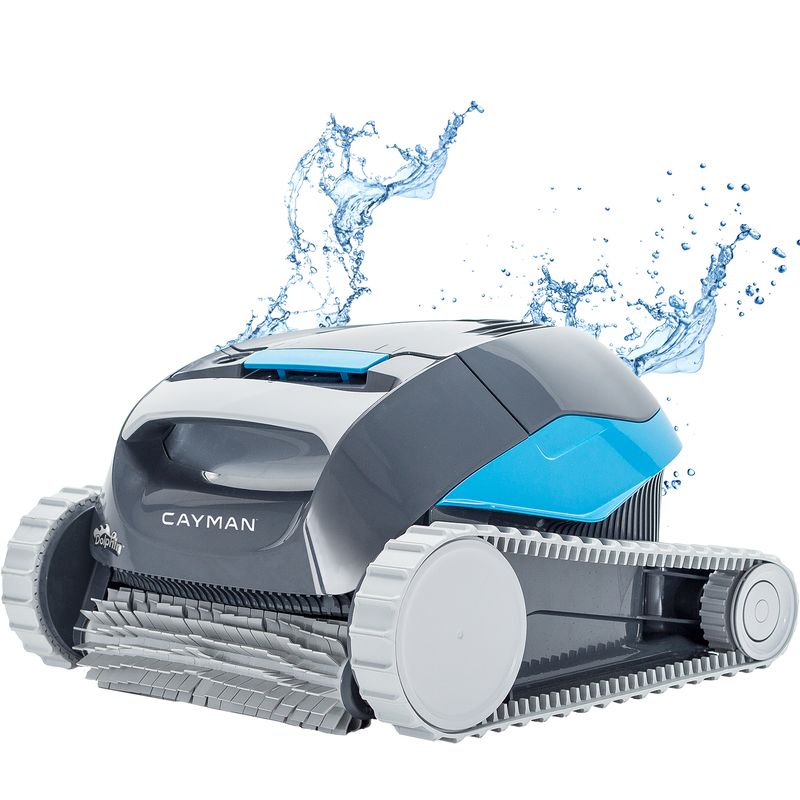
Footwell and walls at a sensible price
In a spool the Cayman does the part of the job a robot does best. It cleans the footwell floor and climbs the short walls under the benches on HyperGrip tracks, with a HyperBrush that spins at twice the speed of a standard Dolphin brush. Its published surfaces include plaster, pebble, tile and gunite, the usual spool finishes.
Its timer runs a cycle every day from the power supply, which suits a spool used most evenings. The MaxBin lifts out through a top hatch with one tab, and at 14.6 lb the robot is easy to pull before a soak.

Temporarily out of stock
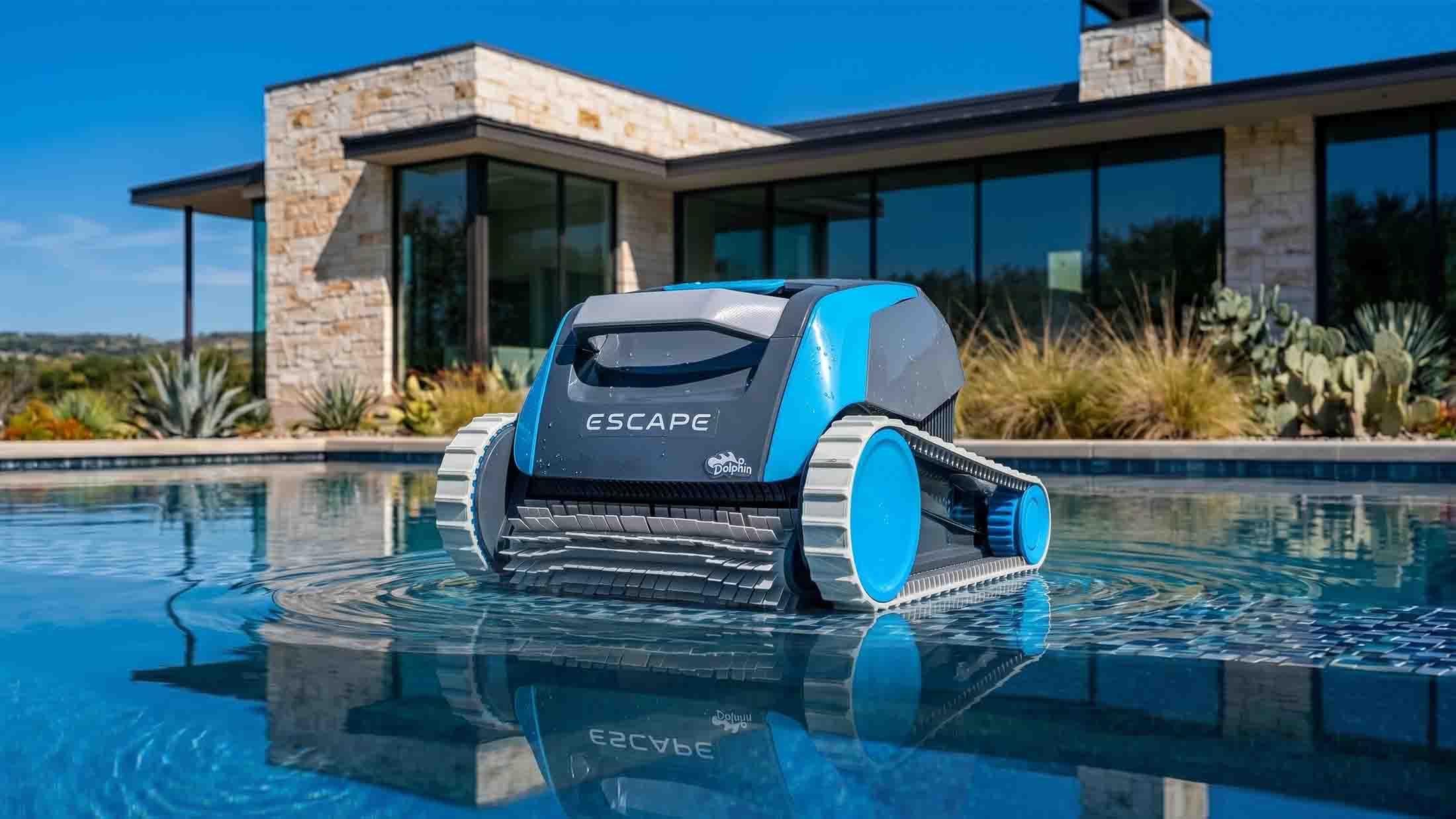
Lowest-priced pick for a fiberglass spool
If a robot is a convenience, it makes sense to pay as little as possible for it, and the Escape is the lowest-priced pick here. It covers the same footwell and walls with the same HyperBrush and tracks as the Cayman, in a 1.5-hour cycle that a floor this small does not stretch. Many spools are one-piece fiberglass shells, and fiberglass is on the Escape's published surface list along with tile, gunite and vinyl liner.
You start each cycle yourself, which is rarely a hardship beside a pool this size, and the optional Automation Timer power supply adds scheduling later if you miss it.
Temporarily out of stock
When steps, ledges and waterline are the job
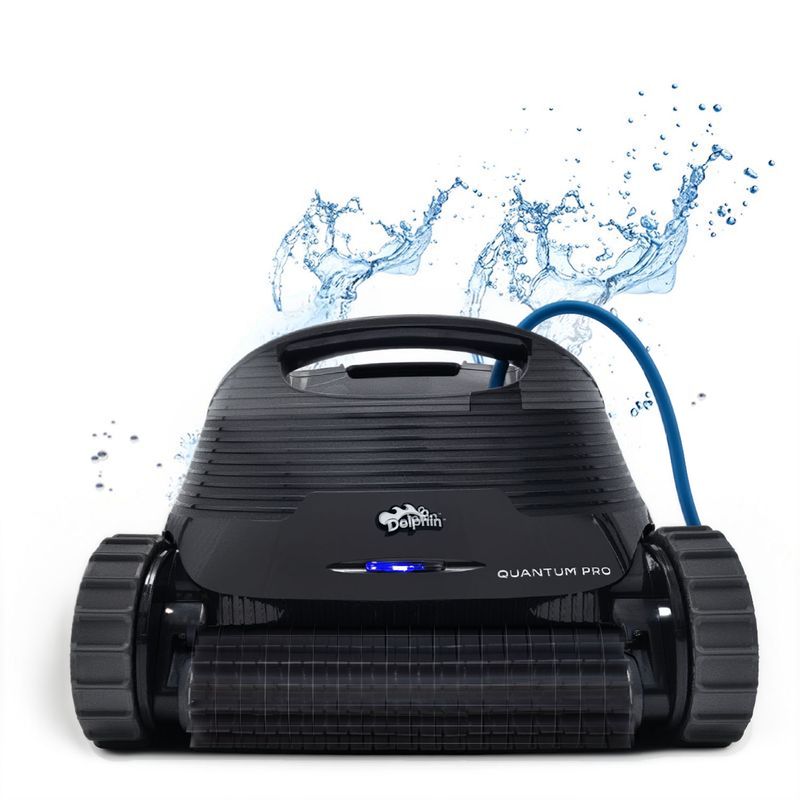
Benches and steps are most of what you see in a spool, and the Quantum is the pick whose published coverage goes beyond floor and walls: it names the waterline, sun shelves, Baja ledges and stairs. In warm water shared by a few people, the waterline is where oils and lotion collect, and the Quantum's dual HyperBrushes scrub it every cycle.
The myDolphin Plus app starts it from the house over Wi-Fi, and the 55 ft cable has an anti-tangle swivel for a pool that is all turns. In a spool its 50 ft rating buys coverage, not capacity.
How to judge a robot for this
Look at the spool empty of people. The footwell is the floor a floor-and-wall robot will clean, along with the short walls beneath the seats. Everything above that, the bench tops and entry steps, is either brushed down by hand before a cycle or left to a robot whose coverage lists stairs and ledges.
Spa jets, a spillover or a waterfall push a light robot and its floating cable around, and stir up the debris it is trying to collect. Every robot here should run with jets and water features off. If yours cannot be switched off for the length of a cycle, a robot is the wrong tool.
A spool is often kept at pool temperature by day and turned up for a soak at night. Run the robot at pool temperature, not hot-tub temperature, and check the working range in its manual. We do not print a number because the spec sheets do not give one.
The robot usually comes out before a soak, since the footwell is where your feet go, so weight matters more than in a big pool. The weights, lightest first: Escape 14.2 lb, Cayman 14.6 lb, Quantum 18.3 lb. None includes a caddy.
Side by side
| Specification | Dolphin Cayman | Dolphin Escape | Dolphin Quantum |
|---|---|---|---|
| Price today | $1049 | $659 | $1599 |
| Navigation | SmartNav 2.0 | SmartNav 2.0 | SmartNav 2.0 |
| Cable | 50 ft | 40 ft | 55 ft with anti-tangle swivel |
| Pool length | Up to 33 ft | Up to 33 ft | Up to 50 ft |
| Cleans | Floor and walls | Floor and walls | Floor, walls, waterline, sun shelves and stairs |
| Cycle time | 2 hours | 1.5 hours | 2 hours |
| Scheduling | Timer: every day | Optional Automation Timer: every 24, 48 or 72 hours | Weekly timer: every day, every 2 days or every 3 days |
| Warranty | 2 years | 2 years | 2 years |
A robot is worth having in a spool when it saves a chore you would otherwise skip. That is usually true if the spool is used most days, sits under trees, or belongs to someone who would rather not handle a brush and vacuum hose. It is usually not true if the spool is covered when idle and used a few times a month.
Check the footwell too. A robot needs open floor to travel and turn. If the floor between the benches is only a few feet across, any robot will spend its cycle bumping from seat to seat, and a hand brush will do the same work faster. If you are unsure, send us the dimensions and talk to a Dolphin Expert before ordering.
Two spool habits keep a robot working properly. First, switch off the jets, the blower and any spillover or waterfall for the whole cycle. Moving water shoves the robot off its path, drags the cable and lifts debris back off the floor.
Second, run the robot with the water at pool temperature, not turned up for a soak. Every robot has a working water-temperature range in its manual; check it against how warm you keep the spool, and take the robot out before you heat the water for the evening. Take it out as well before you shock or add chemicals, which act fast in a small volume of water.
Here is the division of labor, so nothing comes as a surprise after the first cycle.
Questions, answered
It depends on use. For a spool that runs most days, a robot keeps the footwell and walls clean without your attention, and the Escape or Cayman keeps the cost in proportion. For a spool that is covered and used now and then, hand cleaning is quick and a robot is hard to justify.
Run it at pool temperature instead. Each robot's manual gives a working water-temperature range, and a pool robot is meant to run at pool temperatures, not hot-tub ones. We do not quote the figure because it is not on the spec sheets; check your manual, and take the robot out before you turn the heat up.
The Cayman and Escape will not; they clean floor and walls. The Quantum is the pick that lists sun shelves, Baja ledges and stairs in its coverage, so it has the best claim on a bench, but a narrow seat or one with a raised edge can still be missed. A quick brush before the cycle covers any robot.
No. The length rating is a ceiling, not a target. A robot rated for 33 ft simply repeats its coverage more times in a 12 ft spool. What matters at this size is the robot's weight, its cable management and whether the footwell gives it room to turn.
The verdict
First decide whether you want a robot at all; a spool does not need one. If you do, match the robot to the finish and stop there: the Cayman for plaster or pebble, the Escape for fiberglass, tile or vinyl. Move up to the Quantum only if brushing steps and wiping the waterline are the chores you want gone, and treat its work on a bench as a bonus. The 30 day in-pool trial, with free exchanges and no restocking fee, lets you find out in your own spool.
Keep reading
