

Try it in your pool for 30 days. Exchange it for another Dolphin for free, or return it with no restocking fee.
Your bag is empty.
By feature
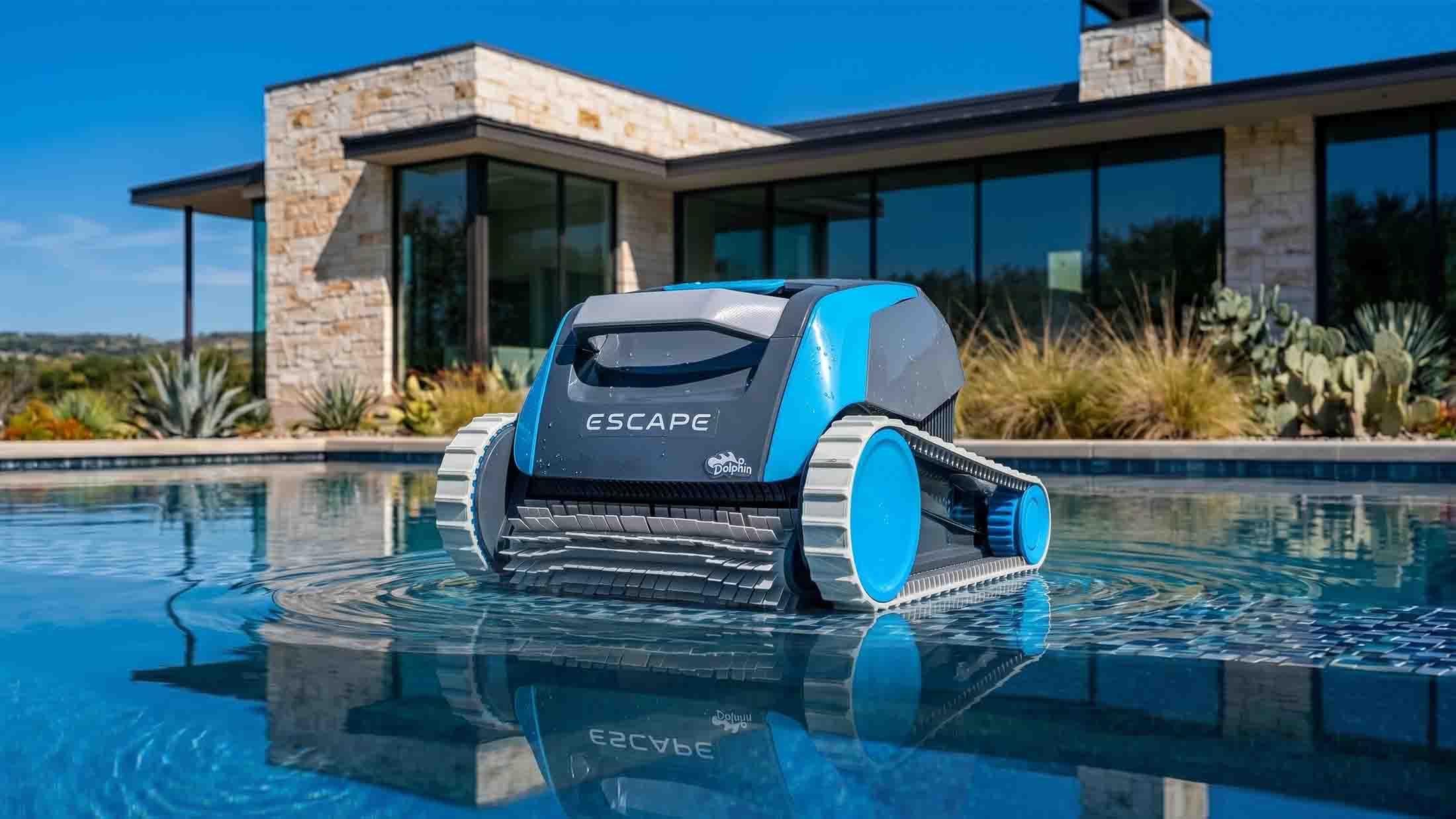
Top pick: Dolphin Escape
$659 today · Free shipping · 30 day trial
The short answer
None of the Dolphins here parks itself at the waterline. What you are really after is an easy lift, so this guide ranks the robots by how little effort they take to get out.
No Dolphin here parks at the waterline, so choose on weight. The Dolphin Escape is the lightest robot in this guide at 14.2 lb, with a top-load basket you empty in seconds. The Cayman is nearly as light at 14.6 lb and has a longer 50 ft cable. For an in-ground pool that needs waterline cleaning, the Quantum is the lightest full-coverage pick at 18.3 lb.
No robot in this guide lists automatic waterline parking. When a cycle ends, each one stops where it is and has to be brought up by hand: draw the cable in gently, then lift by the handle. The picks below are the closest fit because they are the easiest to retrieve, not because they park themselves.
Automatic waterline parking is a feature found mostly on cordless robots. At the end of a cycle the robot climbs the wall and waits at the surface, so the owner can lift it out without hauling it up from the floor. If you came looking for the best robotic pool cleaner with automatic waterline parking, here is the direct answer: none of the five Dolphins compared here lists it, and we are not going to invent a pickup mode for any of them.
The wish behind the search is still a fair one. Nobody wants to drag a heavy machine up through eight feet of water. So this page answers the real question: which robot is the least work to get out of the pool? That comes down to weight, how the cable brings the robot up, and what you do with it once it is on the deck.
Our picks, in order

Temporarily out of stock
Lightest robot to lift out
At 14.2 lb the Escape is the lightest of the robots in this guide, and that matters more than any parking trick once the cycle ends. Draw in the 40 ft cable, take the handle, let the water run out, and lift. The MaxBin basket loads from the top, so emptying it does not mean flipping the robot over. The cycle is short too: 1.5 hours on floor and walls, which suits a drop-in, lift-out routine on the same afternoon. It works in above-ground pools and in-ground pools up to 33 ft.
Temporarily out of stock
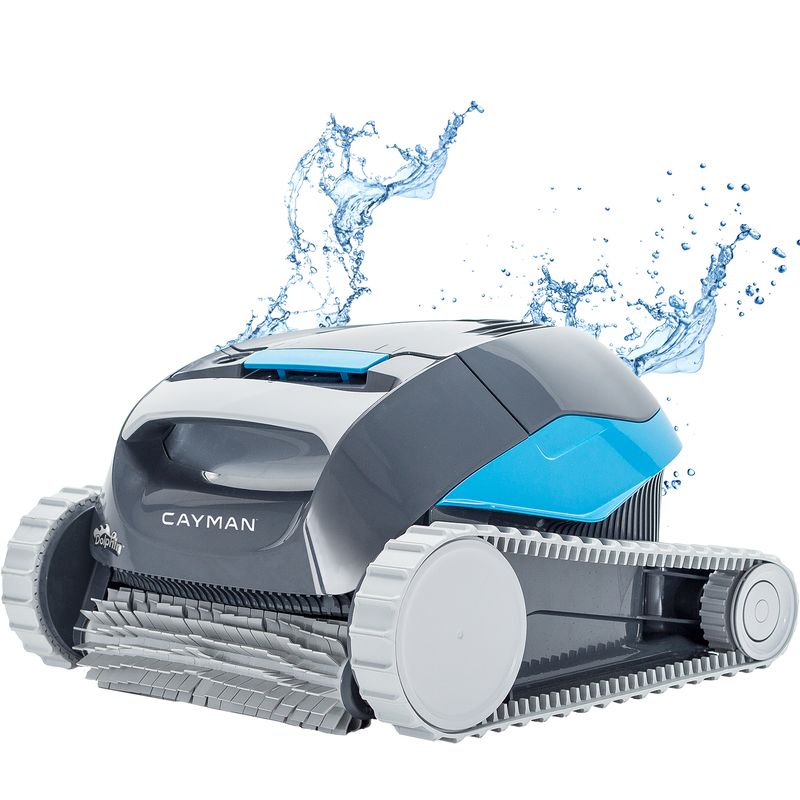
Nearly as light, with a longer cable
The Cayman weighs 14.6 lb, less than half a pound more than the Escape, so the lift is practically the same. Its 50 ft cable reaches across longer pools and lets the power supply sit farther from the water, and the top hatch opens with one tab for emptying. The timer on the power supply runs a cycle every day, so the robot can stay in the pool between scheduled runs and you retrieve it on your terms. The rating is pools up to 33 ft, in-ground or above-ground, with a 2-hour cycle on floor and walls.
Temporarily out of stock
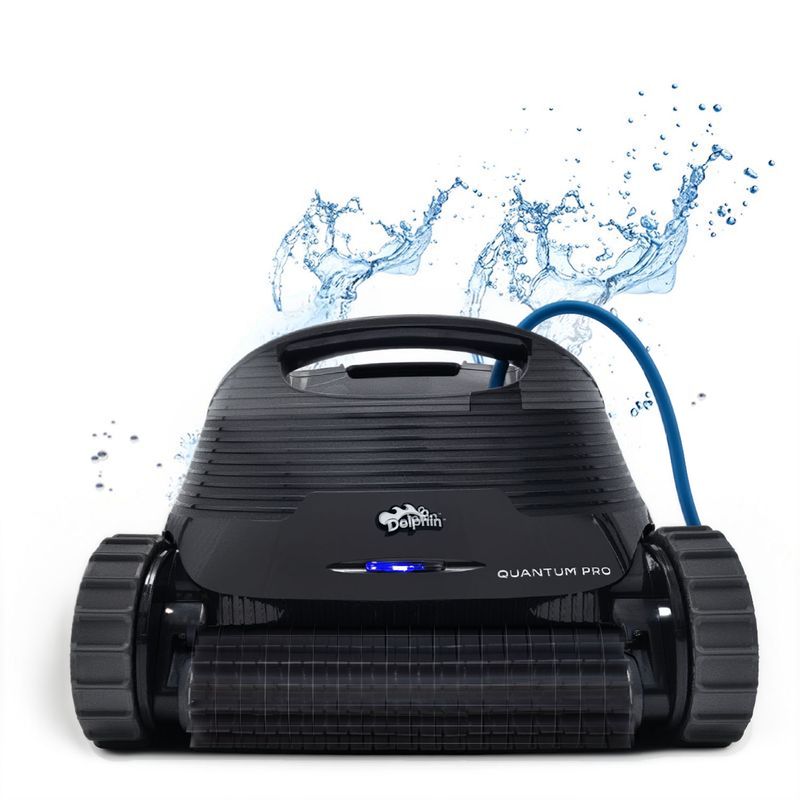
Easiest lift among waterline cleaners
If the pool is in-ground and you want the waterline scrubbed, the lightest robot here that does it is the Quantum at 18.3 lb. That is about four pounds more than the Escape, and well under the Premier at 20.3 lb or the Sigma at 24.6 lb. It cleans floor, walls, waterline, sun shelves, Baja ledges and stairs in a 2-hour cycle, and the XXL MaxBin opens from the top with one click. Its 55 ft cable has an anti-tangle swivel, which keeps the cable from fighting you as you draw the robot in.
How to judge a robot for this
This is the number that counts. The Escape is 14.2 lb and the Cayman 14.6 lb. The Quantum is 18.3 lb, the Premier 20.3 lb and the Sigma 24.6 lb. A robot also holds water as it leaves the pool, so it feels heavier than its dry weight until it drains.
With no parking feature, the cable is the retrieval line. Draw it in slowly and the robot rises to the surface, where you take it by the handle. The pull should be gentle and steady. Jerking the cable is hard on the connection and gets the robot up no faster.
Hold the robot at the surface for several seconds before lifting it clear. The water inside runs out and the load drops. A basket that opens from the top helps here: debris stays put while the robot drains, and comes out on the deck without turning anything over.
The lift from the pool is short. The carry to storage is not. None of these robots includes a caddy, so decide where the robot and its power supply will live between runs. A caddy turns the carry into a roll, cable included.
Side by side
| Specification | Dolphin Escape | Dolphin Cayman | Dolphin Quantum |
|---|---|---|---|
| Price today | $659 | $1049 | $1599 |
| Cleans | Floor and walls | Floor and walls | Floor, walls, waterline, sun shelves and stairs |
| Scheduling | Optional Automation Timer: every 24, 48 or 72 hours | Timer: every day | Weekly timer: every day, every 2 days or every 3 days |
| App | No app | No app; controls on the power supply | myDolphin Plus (Wi-Fi) |
| Filtration | MaxBin basket; NanoFilter panels optional | MaxBin basket with fine panels; NanoFilter panels optional | XXL MaxBin basket with standard and NanoFilter panels |
| Brushes | HyperBrush | HyperBrush | Dual HyperBrush |
| Navigation | SmartNav 2.0 | SmartNav 2.0 | SmartNav 2.0 |
| Cable | 40 ft | 50 ft | 55 ft with anti-tangle swivel |
| Warranty | 2 years | 2 years | 2 years |
The technique takes a minute. Wait for the cycle to finish, or switch the robot off at the power supply, then work through the steps below in order.
Two habits make it easier. Stand where the cable enters the water so the pull is straight, and coil the cable loosely as it comes in so it is ready for the next run.
Waterline parking solves one part of the job: getting the robot from the floor to the surface. It does nothing about the lift from the water to the deck, the trip to storage, or emptying the filter. On a corded robot the cable already handles the first part, which is why weight is the better thing to shop on.
A caddy handles the rest. None of these robots includes one, but the caddy holds the robot, the power supply and the coiled cable, so the whole set rolls to the pool edge and back. If even 14.2 lb is awkward to carry across a yard, that is the add-on to consider before a heavier, more expensive robot.
A robot with a timer does not have to come out after every cycle. The Quantum has a weekly timer and app scheduling, and the Cayman runs every day from its power supply, so both can stay in the water between scheduled cycles. That brings the lifting down to about once a week: out to rinse the filter, back in. Take the robot out before shocking or adding chemicals. The Escape gets the same convenience only with the optional Automation Timer power supply.
Questions, answered
No. None of the five Dolphins compared here lists a parking or pickup mode, and it is mostly a feature of cordless robots. Each of these stops where its cycle ends. You bring it up with the cable and lift it by the handle, which is why this guide ranks on weight.
Drawing the robot to the surface with a slow, steady pull on the cable is the normal way to retrieve it. What you should not do is jerk the cable or hoist the robot clear of the water with it. Once the robot reaches the surface, the handle takes the weight.
Heavier than its listed weight for the first few seconds, because the body is full of water. Hold it at the surface and let it drain before lifting. After that you are lifting the listed figure plus whatever is in the basket: 14.2 lb for the Escape, 14.6 lb for the Cayman, 18.3 lb for the Quantum.
A robot with no cable has nothing to bring it up, so without parking its owner has to fish it off the floor with a hook or pole. A corded robot already has a line attached. Parking answers a problem the cable solves another way, and the cable also means there is never anything to charge.
The verdict
No Dolphin in this guide parks itself, so stop looking for the feature and look at the scale. The Escape at 14.2 lb is the least robot that does the job for above-ground pools and in-ground pools up to 33 ft. Choose the Cayman when the cable run is long or you want the daily schedule. Choose the Quantum when the pool is in-ground and the waterline has to be cleaned. If lifting is the real worry, add a caddy.
Keep reading
