

Try it in your pool for 30 days. Exchange it for another Dolphin for free, or return it with no restocking fee.
Your bag is empty.
By debris and dirt problem
Top pick: Dolphin Quantum
$1599 today · Free shipping · 30 day trial
The short answer
Length is what makes a stick a problem, so this guide sorts twigs into what a robot should collect and what you should net, then ranks four Dolphins for the first kind.
The Dolphin Quantum is the best robot for twigs. Its XXL MaxBin basket is big and open, so short sticks drop in and tip out without a fight. The Dolphin Premier is the runner-up: choose it when twigs arrive with heavy leaves, because its oversized leaf bag takes both. For pools up to 33 ft, the Dolphin Escape and the Dolphin Cayman collect short twigs in a MaxBin basket at a lower price.
Twigs are the debris that robots get blamed for. A stick two inches long rides into the basket like a leaf. A stick eight inches long lies across the intake like a gate, collects whatever arrives behind it, and the robot spends the rest of the cycle pushing a small dam around the floor.
That is why the best robotic pool cleaner for twigs is half machine and half habit. The machine part is a large, open basket with room for stiff debris that will not fold. The habit is netting anything longer than a finger before you press start. Skip the habit and no robot at any price will look good.
Our picks, in order
Temporarily out of stock
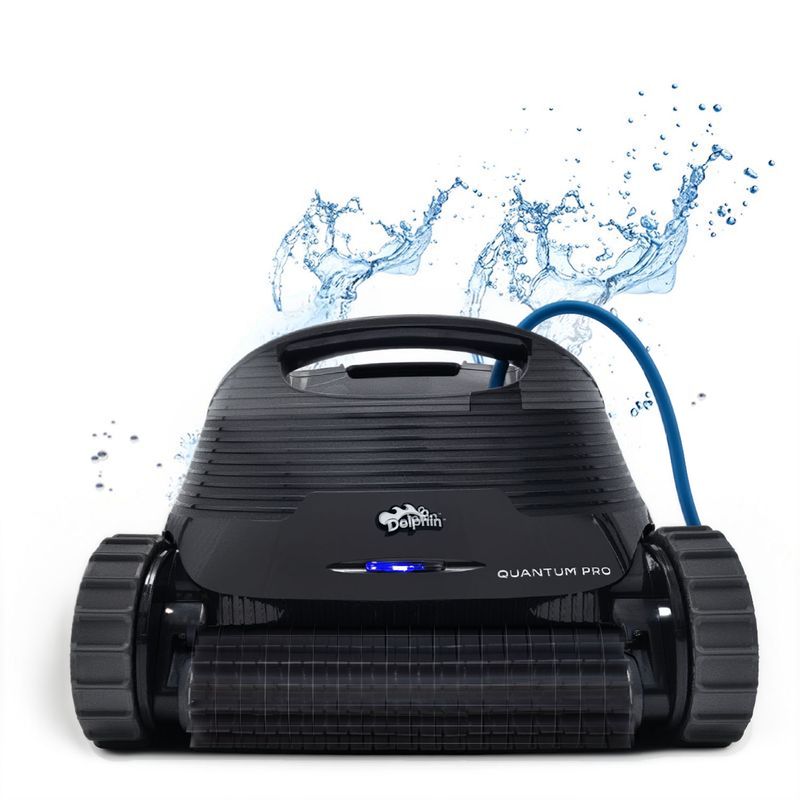
Roomiest basket for stiff debris
Sticks do not compress, so basket room is what counts, and the Quantum has the most of it: an XXL MaxBin with over 400 square inches of filter area, the largest basket of the five Dolphins compared here. It opens from the top with one click, so a tangle of twigs and leaves lifts straight out.
Dual HyperBrushes spinning at twice the speed of standard brushes sweep short twigs off the floor, HyperGrip continuous rubber tracks help it keep moving across a littered pool, and it is the lowest-priced robot in this guide rated for 50 ft. It is an in-ground machine.
Temporarily out of stock
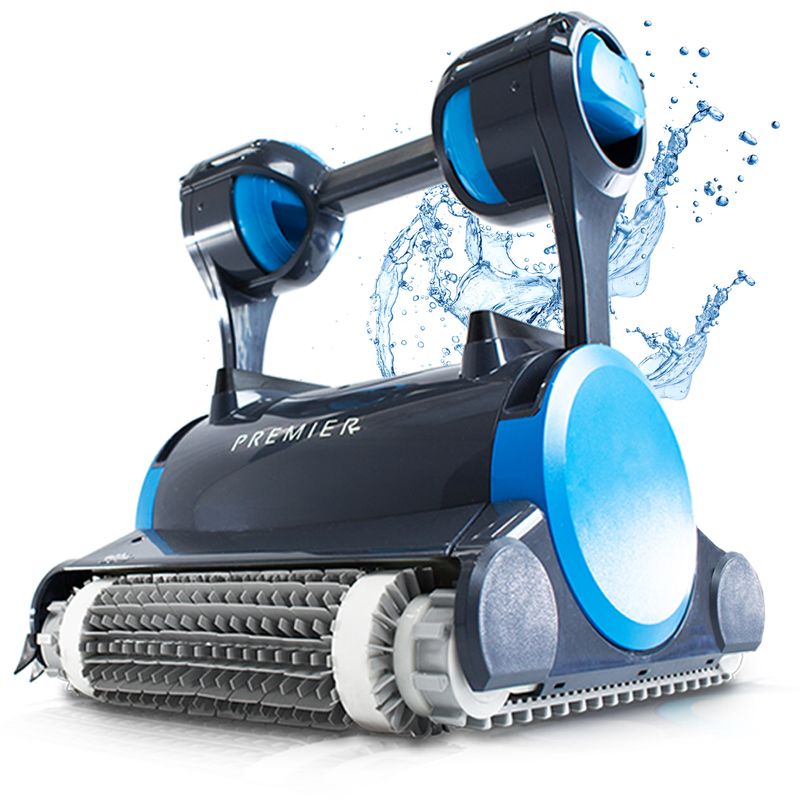
Leaf bag for twigs mixed with leaves
Twigs rarely arrive alone. After wind they come down with leaves, seed pods and bark, and that mixed load is where the Premier's oversized leaf bag earns second place. A bag takes bulk that would crowd a basket. When the storm debris is gone, swap to the standard fine filters in seconds and go back to everyday cleaning.
Dual commercial-grade ProLine motors move 4,500 GPH, the weekly timer runs without a phone, and the warranty is 3 years. It sits behind the Quantum because it costs more, and sticks alone do not call for four kinds of filter media.

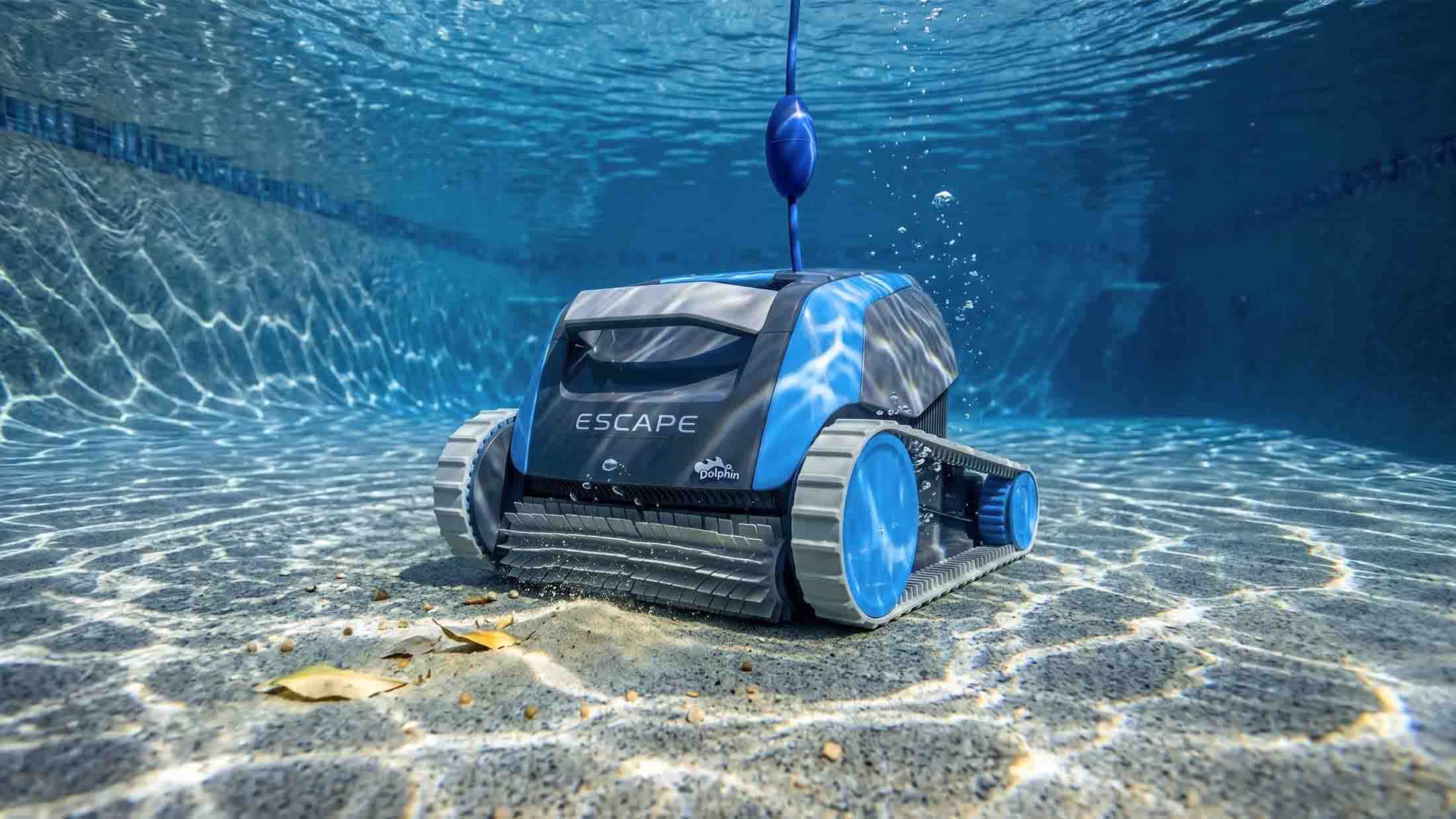
Temporarily out of stock
Lowest-priced way to collect short twigs
The Escape picks up short twigs the way the bigger robots do: through the underside and into a top-load MaxBin basket that is 50% larger than standard Dolphin filters. Dual 24-volt DC motors give it over 4,000 GPH of flow, and a HyperBrush works the floor and walls. For sticks, that is the working part of the job covered.
It is the lowest-priced pick here, it runs in above-ground and in-ground pools up to 33 ft, and it finishes in 1.5 hours, so a second cycle after a storm still fits in one evening. At 14.2 lb it is easy to turn over when a stick needs pulling from underneath.
Temporarily out of stock
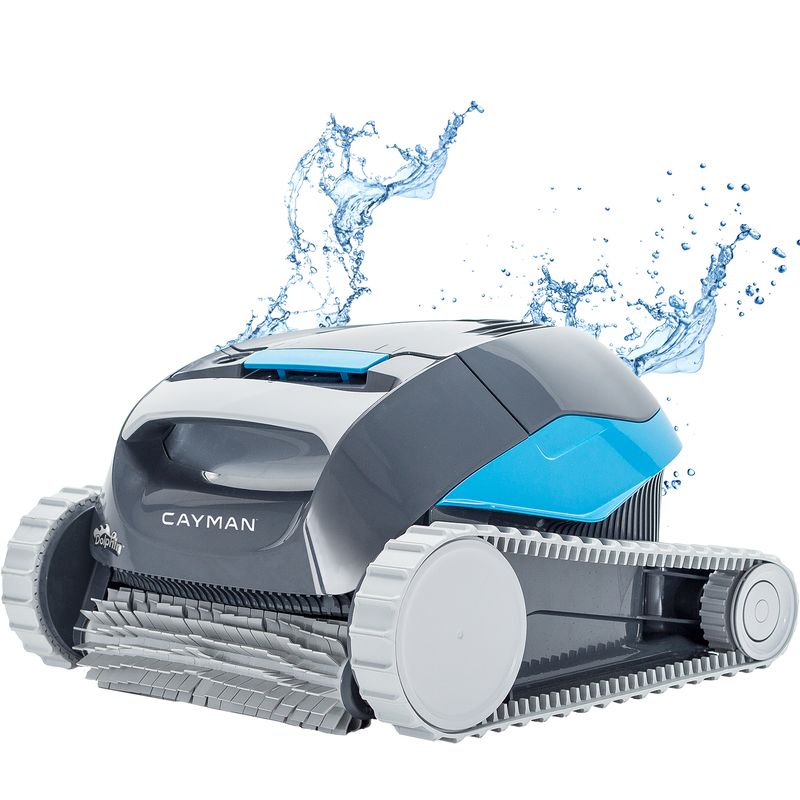
Same style of basket, longer cable, daily timer
The Cayman collects twigs in a MaxBin basket much like the one above it, reached through a top hatch with one-tab emptying. What it adds sits around the edges of the job: a 50 ft cable for a longer run from the power supply, a built-in timer that runs every day, and a published surface list that names concrete, plaster and pebble alongside vinyl, fiberglass and tile.
It is rated for in-ground and above-ground pools up to 33 ft and runs a 2-hour cycle. It sits fourth because none of those extras picks up more sticks. If you need one of them, it is the right step up.
How to judge a robot for this
Twigs are rigid. They need a wide space to drop into and a wide opening to tip out of. The Quantum's XXL MaxBin, the Premier's leaf bag and the MaxBin baskets on the Escape and Cayman all give them that. Fine cartridges are the wrong media for sticks.
Every robot draws debris through openings on its underside. A twig shorter than the opening goes in. A longer one bridges it and blocks everything behind. No specification changes this, so sorting sticks by length before the cycle is part of the job with any robot.
Sooner or later a stick lodges where it should not. A filter that opens from the top lets you see and reach the load in seconds, and a lighter robot is easier to turn over at the pool edge to check the brush, tracks and intake.
The Quantum and Premier are in-ground robots rated to 50 ft. The Escape and Cayman each cover both pool types, above-ground and in-ground, up to 33 ft. Settle that before you think about sticks.
Side by side
| Specification | Dolphin Quantum | Dolphin Premier | Dolphin Escape | Dolphin Cayman |
|---|---|---|---|---|
| Price today | $1599 | $1949 | $659 | $1049 |
| Filtration | XXL MaxBin basket with standard and NanoFilter panels | Multi-Media: NanoFilters, oversized leaf bag and standard fine filters | MaxBin basket; NanoFilter panels optional | MaxBin basket with fine panels; NanoFilter panels optional |
| Filter access | Top-load, one-click open | Top-load, no tools | Top-load | Top hatch, one-tab emptying |
| Brushes | Dual HyperBrush | Dual scrubbing brushes | HyperBrush | HyperBrush |
| Flow rate | 4,000 GPH | 4,500 GPH | Over 4,000 GPH | Over 4,000 GPH |
| Cycle time | 2 hours | 3 hours | 1.5 hours | 2 hours |
| Cleans | Floor, walls, waterline, sun shelves and stairs | Floor, walls and waterline | Floor and walls | Floor and walls |
| Scheduling | Weekly timer: every day, every 2 days or every 3 days | Weekly timer: every day, every 2 days or every 3 days | Optional Automation Timer: every 24, 48 or 72 hours | Timer: every day |
| Warranty | 2 years | 3 years | 2 years | 2 years |
Hold a twig against your index finger. Shorter than the finger, the robot can have it. Longer, it goes in the net. It is a rough rule, and it works because it stops you handing the robot the one thing it cannot swallow.
A long stick causes trouble in two ways. Lying flat, it bridges the intake and holds back the leaves and grit that should be passing through, so the floor behind the robot stays dirty. Lodged at an angle, it can wedge under the body or against a track and stop the robot climbing.
After a storm, do a hand pass before the cycle. Walk the pool with a leaf rake, take out the branches and long sticks, then let the robot deal with the hundreds of small pieces that would take you an hour.
A robot that moves normally but leaves a trail has a blockage until proven otherwise. Unplug the power supply, lift the robot out and check three places in order.
Most of the time the cause is the first or the second. If all three are clear and pickup is still weak, talk to a Dolphin Expert before you run it again.
Questions, answered
There is no published figure, so use a rule of thumb: anything shorter than your finger is fair game, and anything longer goes in the net. Short pieces pass through the intake into the basket. Long ones bridge the opening and block what follows. Thin, bendy twigs are more forgiving than stiff, straight ones.
Yes, and the order barely changes. The open basket that takes short sticks takes leaves too. The Quantum's XXL MaxBin and the Premier's leaf bag hold the most, which matters when both fall together. In pools up to 33 ft the Escape's MaxBin does the same work in a smaller volume, so empty it more often.
Small pieces, yes. Bark chips and mulch that blow or wash in from planting beds are light, so they often float for a day before sinking. Skim what floats, then let the robot collect the rest. Large chips behave like long twigs, so net them. Edging between the beds and the deck stops most of it at the source.
It will pick up short twigs, and it is a capable in-ground robot. But it filters through cartridges, which suit fine debris better than sticks, and it is the highest-priced of the five Dolphins compared here. Sticks do not need what it adds, so the four picks above do this job for less.
The verdict
Sort the sticks, then size the robot. Long ones are yours whichever robot you own. For the short ones, capacity decides: the Quantum for in-ground pools up to 50 ft, the Premier if leaves come down with them. In a pool of 33 ft or less, above-ground or in-ground, the Escape is enough. The Cayman is the step up when you need a longer cable or a daily schedule. Either way you get a 30 day in-pool trial with free exchanges, so a wrong guess is easy to put right.
Keep reading
