

Try it in your pool for 30 days. Exchange it for another Dolphin for free, or return it with no restocking fee.
Your bag is empty.
By pool type and installation
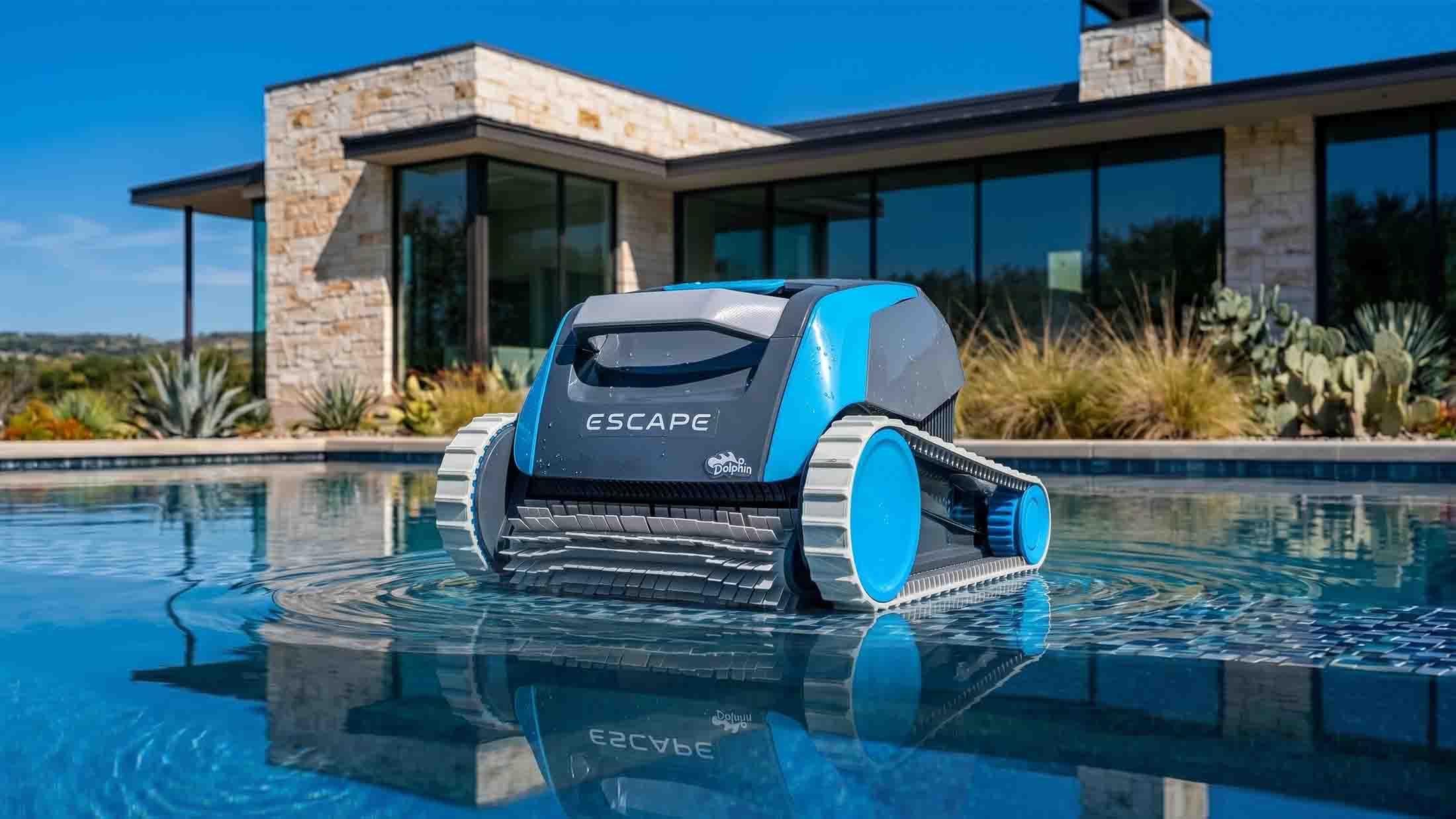
Top pick: Dolphin Escape
$659 today · Free shipping · 30 day trial
The short answer
Two robots are made for thin-liner ring and frame pools, and the honest question is less which one than whether your pool is big enough to deserve either.
Dolphin Escape is the robot for a soft-sided pool: published for above-ground use, 14.2 lb, a 1.5-hour cycle and a 40 ft cable sized for these pools. Choose the Cayman for the largest frame pools, where its 50 ft cable reaches farther and its timer runs every day. On small or shallow ring pools, skip the robot: it may not stay submerged.
Soft-sided pools are the inflatable-ring and metal-frame pools sold in a box: a thin PVC liner, flexible walls, 30 to 52 inches of water, set up on a ground cloth over whatever the yard offers. They get as dirty as any other pool. The trouble is that most robots were never meant for them. The best robotic pool cleaner for soft-sided pools has to be published for above-ground use, light enough to lift over a wall you cannot lean on, and easy on a thin floor.
That narrows the field to two. It also raises a question worth asking before any other: a robot can cost more than the pool it cleans. We will tell you when that still makes sense and when a hand vacuum is the smarter buy.
Our picks, in order

Temporarily out of stock
Best match for ring and frame pools
The Escape was designed around above-ground pools, and it shows in the numbers that matter here. At 14.2 lb it is the lightest of the robots in this guide, so lifting it over a flexible wall is a one-hand job. Its published surfaces start with vinyl liner. The 1.5-hour cycle is matched to pools of this size, and the 40 ft cable reaches across most of them without leaving yards of slack to tangle.
HyperGrip tracks give it grip on slick vinyl, and one HyperBrush, spinning at twice the speed of standard Dolphin brushes, loosens the film that small filter pumps leave behind. Debris goes into a top-load MaxBin basket, 50% larger than standard Dolphin filters. It is also the lower-priced pick, which matters when the pool itself was not expensive.
Temporarily out of stock
For the biggest frame pools
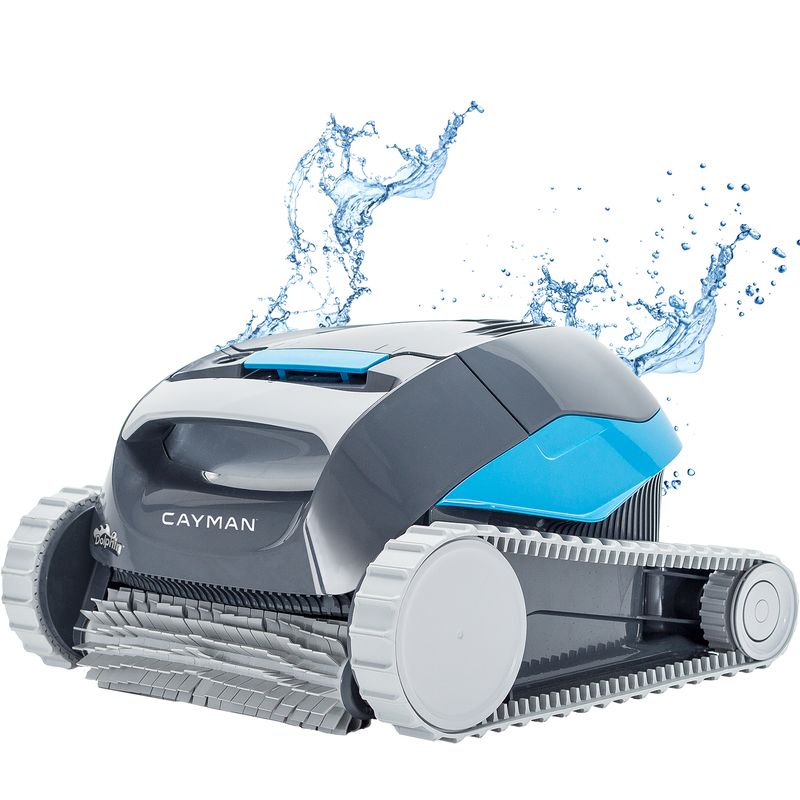
The Cayman is for owners at the top of the soft-sided range: the long rectangular and oval frame pools that approach 33 ft. Its cable is 50 ft, ten more than the first pick's, which is what gets it to the far end when the power supply has to sit well back. Its timer starts a cycle every day without anyone pressing a button, useful when a big pool with a small pump collects debris daily.
It is published for the same vinyl liners, weighs 14.6 lb, cleans floor and walls in 2 hours, and empties through a top hatch. It costs more, and in a pool under about 24 ft across you would be paying for cable you then have to manage.
How to judge a robot for this
Robots built for in-ground pools are heavier and tuned for rigid walls and deep water. In a soft-sided pool the only ones that belong are those published for above-ground use and vinyl liners. Of the five Dolphins compared in these guides, that means the Escape and the Cayman.
A robot has to be fully submerged to work. Frame pools filled to 42 inches or more give it room. Small ring pools holding 30 inches or less may not. Check the minimum depth in the robot's manual against your actual water level, not the wall height printed on the box.
You lift the robot over the wall every time, and a soft wall gives you nothing to brace against. Fourteen pounds is manageable with one hand on the handle. Never rest the robot on the top ring or the frame rail on its way in or out.
Thin liners over uneven ground wrinkle, and a deep wrinkle can stall a robot or keep it scrubbing one spot. Smooth the liner and the ground cloth before you fill, and work out the remaining folds with your feet while the water is still shallow.
Side by side
| Specification | Dolphin Escape | Dolphin Cayman |
|---|---|---|
| Price today | $659 | $1049 |
| Pool type | Above-ground and in-ground | In-ground and above-ground |
| Pool length | Up to 33 ft | Up to 33 ft |
| Cleans | Floor and walls | Floor and walls |
| Cable | 40 ft | 50 ft |
| Filtration | MaxBin basket; NanoFilter panels optional | MaxBin basket with fine panels; NanoFilter panels optional |
| Robot weight | 14.2 lb | 14.6 lb |
| Warranty | 2 years | 2 years |
Start with the uncomfortable fact: for a small seasonal pool, a robot can cost more than the pool did. That does not make it a bad purchase, but it changes the test. Ask what the robot saves you over a summer, not how its price compares with the pool's. A large frame pool holds thousands of gallons, takes most of an hour to vacuum by hand, and usually has a pump too small to keep the floor clean. Used daily from June to September, that is where a robot pays its way. A ring pool that goes up for six weeks of knee-deep water is not.
| Pool | Typical wall height | Our advice |
|---|---|---|
| Inflatable-ring pool under 12 ft | 30 in or less | Skip the robot; it may not stay submerged |
| Ring or frame pool, 12 to 14 ft | 30 to 42 in | Borderline; check depth against the manual |
| Frame pool, 15 to 24 ft | 42 to 52 in | Escape |
| Large rectangular or oval frame pool | 48 to 52 in | Escape if the cable reaches, otherwise Cayman |
Most robot trouble in a soft-sided pool starts under the liner. These pools sit on a ground cloth over lawn, sand or pavers, and every stone, root and fold shows through the vinyl. A robot will find each one.
On a rigid pool wall a robot climbs most of the way up. A soft wall bows under water pressure and gives under the tracks, so any robot climbs less of it. On an inflatable-ring pool, whose wall leans inward toward the ring, it may only work the lowest part. Expect a clean floor and a cleaned lower wall. Wipe the band near the surface by hand; neither robot here scrubs the waterline in any pool.
That is the honest limit of the category, not a fault in the machine. A robot also does not replace the pump, the filter or the chlorine. It takes over the job they do worst: the floor.
Questions, answered
A robot published for vinyl liners is made to run on them, and both picks here list vinyl liner as a surface. The real risks sit underneath and around the liner: a stone under the floor, a deep fold, or grit caught under a track. Clear the site well and rinse the tracks before each run.
Not if the pool is large and used all season. Judge the robot by the hours it saves and how the floor looks in August, not by the pool's price tag. For a small ring pool used a few weeks a year, it is too much.
Deep enough to cover the robot completely with room to spare. The exact minimum is in the manual, and we do not quote one. As a practical guide, frame pools with walls of 42 inches or more are fine when filled to the line. Ring pools with 30 inches of water or less are where robots struggle.
Partly. Both picks are wall-climbing robots, but a flexible wall gives under them, so they clean the floor and the lower wall and rarely reach the top. Frame pools with taut liners do better than inflatable-ring pools. Plan on wiping the upper band by hand.
Measure the cable path. If the route from the power supply, over the wall and on to the farthest corner sits comfortably inside 40 ft, the Escape is the best robotic pool cleaner for soft-sided pools of that size, and the lower-priced one. If it does not, the Cayman's 50 ft cable solves it.
The verdict
Size up the pool before you size up the robot. If it is a frame pool about 15 ft or larger, filled to 42 inches or more, and it stays up all summer, buy the Escape. If it is one of the biggest rectangles or ovals and the cable run is long, or you want a clean every day without touching anything, buy the Cayman. If it is a small or shallow ring pool, keep your money and use a hand vacuum. No in-ground robot belongs in any of them.
Keep reading
